Buyer Guide
Importing Custom Inflatables into the UAE: Duty, VAT and Who Files What
Customs duty under the GCC Common Customs Tariff is generally 5% of the CIF value on most goods, and VAT is charged at 5% on imports. A licensed importer or customs broker clears the shipment and confirms the classification. Plan the sequence backwards from the event: the importer or broker needs the commercial invoice, packing list and transport document, and the tariff classification is confirmed before the goods move, not after they land. Express or air freight usually takes express or air usually 4–15 working days after dispatch and sea routes sea, rail or truck usually 20–45 days, after dispatch and subject to route and customs DDP options are reviewed by quotation rather than assumed.
By InflatCraft Product Team • Last updated
What the duty and tax actually are
Customs duty under the GCC Common Customs Tariff is generally 5% of the CIF value on most goods, and VAT is charged at 5% on imports. A licensed importer or customs broker clears the shipment and confirms the classification.
Two figures decide the landed cost: the duty on the CIF value and the import VAT charged on top. A quotation that only shows the goods price is therefore not the landed cost, and the difference is visible before you order if you ask for the CIF value and the intended incoterm in writing.
An inflatable is not one commodity. The fabric body, the blower, any lighting and the accessories can sit under different codes, and the importer or a licensed broker confirms classification from the materials, the use, the structure and photographs. Ask for that confirmation before the shipment moves; a reclassification while the goods sit at the port is the expensive version of the same conversation.
Who acts as the importer
The clearance is filed by the importer of record, or by a licensed customs broker acting for them. For an agency buying on behalf of a brand, the question of whose licence is used comes up early: the entity on the customs paperwork is the one that needs the import permissions and the one that carries the VAT position.
A free zone destination behaves differently from a mainland one. Goods entering a free zone follow that zone's own procedures, and moving them onto the mainland afterwards is a separate step. If the event is in a free zone venue, say so before the commercial invoice is issued, because the consignee details are not something to correct later.
The documents that travel with the goods
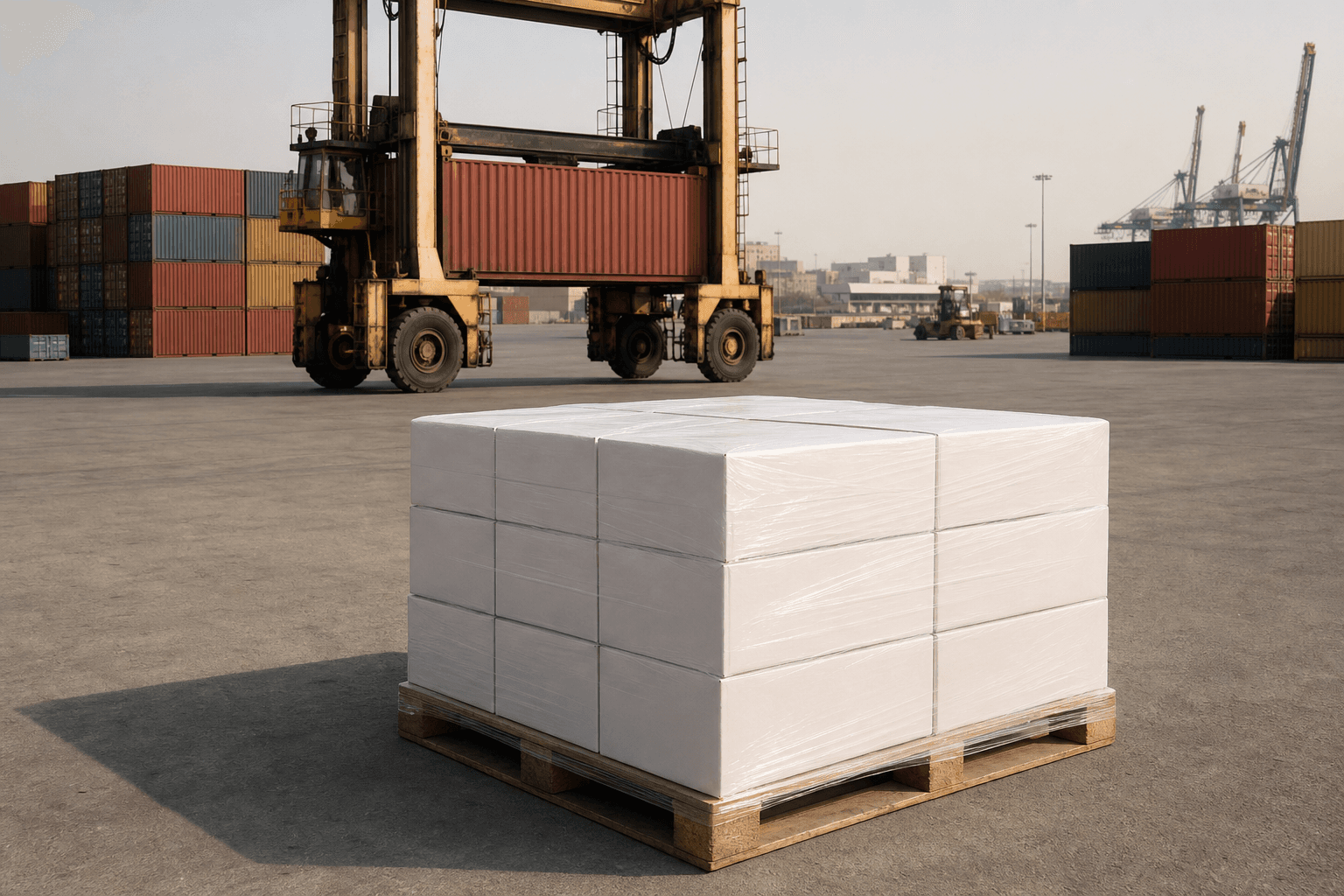
A commercial invoice, a packing list and the transport document — bill of lading or air waybill — accompany every shipment. The invoice has to match what is actually in the cartons, including accessories: a blower that is on the packing list but not on the invoice is a delay waiting to happen.
For an inflatable, the packing list matters more than buyers expect, because freight is charged on volume as well as weight. Ask for the packed dimensions, the number of cartons and the gross weight in the quotation, so the freight figure is a quote rather than an estimate.
Timing it against an event
Work back from the installation date. Bulk production typically takes 3–8 days for simple items, 7–15 days for standard custom work and 15–25 days for complex or large pieces, counted from final design approval. Working back from National Day on 2 December, that means approving artwork by early September for a complex piece shipped by sea, or by mid-October for air freight.
The cooler months are when most outdoor campaigns run, and they are also when the shipping lanes are busiest for this market. Book freight earlier than feels necessary for a Q4 event, and keep the artwork approval date as the real deadline rather than the dispatch date.
What to send so the quote is accurate
Send the product type, the target size, the quantity, print-ready artwork, the destination city, whether the venue is mainland or free zone, and the event date. For the blower, confirm the plug type for the site: both the 650 W electric pump and the 1600 W electric pump run on 110–240 V, 50–60 Hz, but the socket at the venue is what decides the lead.
MOQ is 1 piece for most custom projects, so a first piece can be imported and reviewed before a repeat order. Pattern and print setup are paid once per design, which is why a second unit lands cheaper than the first.
Verified Specifications
Figures this guide is written against.
Lead time
- Typical: Bulk production typically takes 3–8 days for simple items, 7–15 days for standard custom work and 15–25 days for complex or large pieces, counted from final design approval
- Can be shorter: Repeat orders on an approved design can run shorter
- Freight and import time come on top. Lead time is confirmed per project once artwork, size, quantity and destination are fixed; treat any figure quoted before that as indicative.
Sourcing and Ordering Guides
More on quoting, terms and shipping.
Dubai Event Permits for Inflatable Installations
Who issues an event permit in Dubai, what the venue or mall adds on top, and which drawings and specifications the supplier is asked for.
Planning Gulf Outdoor Inflatables Around the Summer
Why Gulf campaigns cluster in the cooler months, how the trade fair calendar sets the deadlines, and what changes for a piece that has to stand outdoors in summer.
SABER and SALEEM for Imported Inflatables
How the SABER platform works for a custom inflatable shipment to Saudi Arabia, which certificate covers what, and where the process usually stalls.
Saudi Event Approvals for Inflatable Installations
The layered approvals behind a Saudi event — municipal site permit, event licensing and entertainment permits — and what the inflatable supplier is asked to provide.
Compare sizes, materials and air systems on the custom advertising inflatable product range page before sending an RFQ.
Relevant Product Pages
Compare specifications before submitting an RFQ.
Buyer FAQ
Additional specification questions.
Where to order
Order direct from the manufacturer.
Published by InflatCraft, operated by Tianjin Mufeng Trading Co., Ltd., a custom inflatable manufacturer founded in 2005 and based in Tianjin, China. We export to the United States, United Kingdom, Canada, Australia, Germany, France, Spain and Italy.
Request a quote
Send the brief and get a specification-based quotation.
MOQ and lead time
What sets the minimum order and where the time goes.
Sourcing from China
Brief, approval, Incoterms, freight and import, in order.
Verified specifications
Materials, air systems and lead time this site quotes against.
Export planning by country: United States, United Kingdom, Canada, Australia, Germany, France, Spain, Italy.
