
Buyer Guide
What Affects the Cost of a Custom Inflatable? A Practical Buyer's Guide
The cost of a custom inflatable is usually shaped by material choice, total size, structural complexity, artwork and print coverage, accessories, quantity, and shipping. A simple shape made in one material can cost far less than a detailed replica or a display that needs lighting, sealed air, or special packaging. Buyers should send a complete RFQ so the factory can quote the actual project instead of guessing from one photo.
By InflatCraft Product Team • Last updated
How does a manufacturer calculate the price?
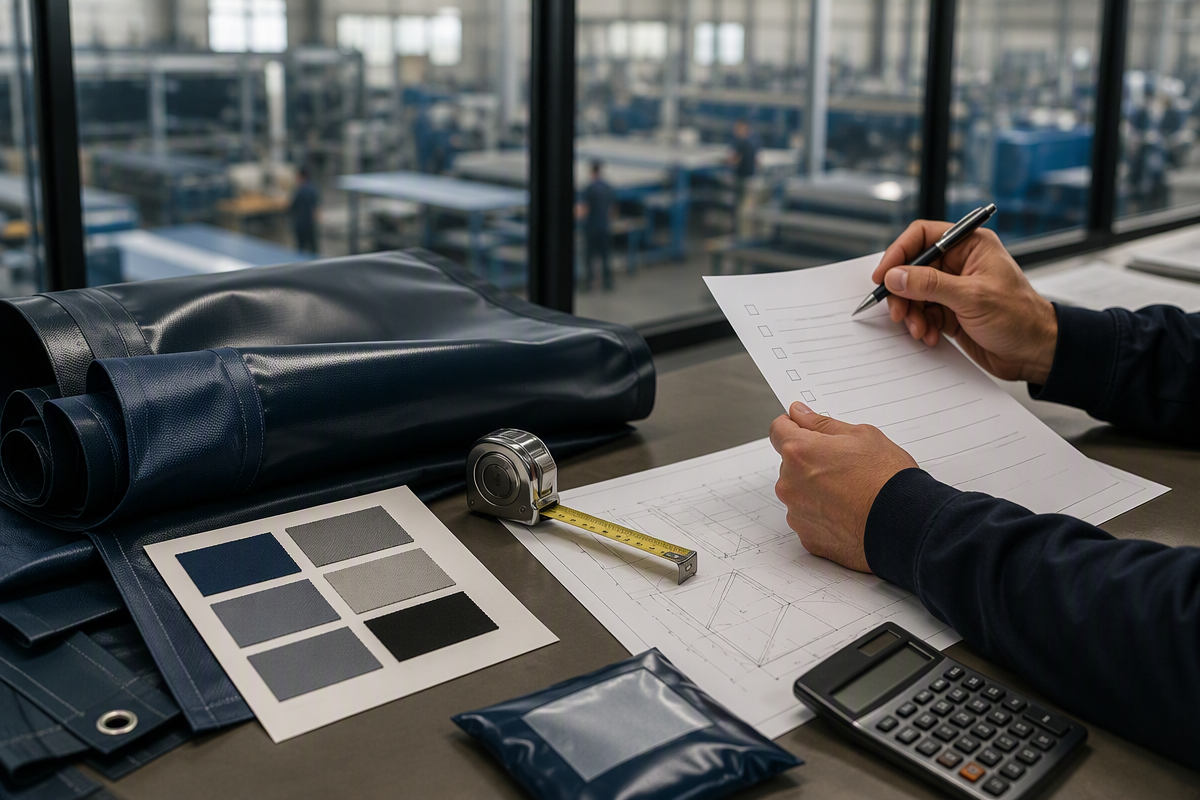
A factory quote reflects more than fabric and air. It also covers pattern making, stitching, printing, reinforcement, testing, packing, and the labor needed to build the approved shape. When a project is more detailed, the price can rise even if the finished display is not dramatically larger.
The most useful way to think about pricing is to separate the visible shape from the engineering behind it. A complex form with many seams, chambers, or custom details can take much more time to produce than a simple arch or block shape.
Why does size matter so much?
As size increases, the surface area, reinforcement needs, and packed volume usually increase too. That means more material, more stitching, more handling, and often higher freight cost. The final size should always be reviewed together with the installation space and the destination plan.
Buyers should give the manufacturer the target width, height, and depth rather than only saying “big” or “small.” The quote is much more accurate when the factory can see how the display will actually fit the event space or storefront.
How do shape complexity and product type affect cost?
A simple inflatable arch or a rectangular wall is usually straightforward. A giant product replica or mascot with curves, hands, handles, or other fine details needs more pattern work and more manual assembly. That extra labor is a real part of the cost.
If the project uses multiple chambers, unusual angles, or a custom sculpture-like shape, the factory will usually need more design time and more checking before production starts.
Which material is right: PVC or Oxford?
Oxford fabric is often a good choice for indoor events or shorter-term use because it is light and easy to pack. PVC is usually preferred when the project needs stronger outdoor durability, easier cleaning, or more robust construction. The right answer depends on the project environment.
Material grade also affects sewing time, seam structure, and the amount of finishing work. Buyers should ask the supplier to explain why one material is recommended instead of assuming the cheapest option is always the best fit.
Which material specification is being quoted?
Asking for "PVC" does not describe a build. The same shape quoted in a standard double-layer construction and quoted in a heavier engineered mesh are different products at different prices, and a quote that does not name the specification cannot be compared against another quote that does.
Standard double-layer PVC is the default for most promotional structures. Heavier PVC is used on large-format work, and PVC mesh is specified where the structure carries load, spans further, or faces sustained wind rather than a weekend of mild weather. Moving up the range costs more per square metre and is worth it only when the installation genuinely demands it.
The practical step for a buyer is to ask every supplier to state the material specification on the quotation. A cheaper number against an unnamed material is not a saving, it is an unknown.
How much does the air system add?
Anything that stays inflated needs a pump running the whole time it is on display, and the pump is a real line on the quotation rather than a rounding error. Two classes are in regular use: a smaller one for compact displays and short indoor runs, and a larger one for large-format structures and continuous outdoor operation.
Specifying the larger class where the smaller one would do adds cost for nothing. Specifying the smaller one where the structure actually needs the larger is worse: the display underperforms every day it is up. Give the supplier the installation duration, whether it is indoors or outdoors, and the available power, and let the specification follow from that.
What other options can raise or lower the quote?
Artwork coverage, logo placements, internal LED lighting, continuous blowers, sealed-air technology, and special accessories all affect the price. More print coverage generally means more artwork work and ink usage, while lighting and sealed-air systems add extra parts and assembly steps.
Outdoor inflatables may also need reinforced D-rings, weighted bases, weather-resistant details, or repair kits. Those accessories should be listed in the RFQ so the quote reflects the complete project.
How do quantity, packing, and shipping change the final number?
Sample orders usually cost more per unit because setup and artwork work are spread across one piece instead of many. Bulk orders lower the unit cost because the fixed work is shared across more units. This is why quantity should always be listed clearly in the RFQ.
Packing method, carton or crate size, and destination country all affect freight. A factory quote is often EXW or FOB unless another shipping basis is requested, so buyers should ask the supplier to separate product cost from logistics cost when comparing offers.
When a custom inflatable is the wrong thing to spend the money on
There are projects where the honest answer is that this product does not suit them, and a supplier who never says so is not being helpful. Three cases come up often enough to name.
The first is time. Bulk production runs 3–8 days for simple items, 7–15 days for standard custom work and 15–25 days for complex or large pieces, counted from final design approval — and freight is on top, at 4–15 working days by air or 20–45 days by sea. If the event is three weeks away and the artwork is not approved yet, a custom piece is not a schedule, it is a hope. A printed banner, a rented arch or a stock shape will be on site; a custom piece may not be.
The second is the artwork. Everything here is built from print-ready vector files with colour references. If the only thing available is a logo pulled off a website, the first task is redrawing it, and that work happens before production starts rather than in parallel with it. A campaign that cannot supply usable artwork should fix that before asking for a quotation.
The third is single use at small scale. A one-day indoor activation with a two-metre display, used once and not stored, is a case where a printed rigid display or a rental can genuinely be the better commercial decision. A custom inflatable earns its cost through reuse, through size that nothing else achieves, or through a shape nothing else can make. If none of those three applies, the quotation will look expensive because it is.
Why two quotations for "the same thing" can differ by half
Buyers comparing offers usually assume they are comparing the same product at different prices. More often they are comparing different products at appropriate prices.
The variables that move a number most are the ones least likely to appear on a one-line quote: the material specification, whether the air system is included and which class it is, whether ballast and fixings ship with the piece, whether the price is EXW or FOB, and whether artwork redraw time is inside the figure or billed later. A quotation missing any of those is not cheaper, it is incomplete.
The practical defence is a short list sent to every supplier: name the material specification, state whether the blower is included and at what rating, list the accessories, state the incoterm, and state what the lead time is counted from. Offers that answer all five can be compared. Offers that do not, cannot — and the gap will appear later as a variation.
Where the cost curve actually bends
Buyers often assume cost scales smoothly with size, and it does not. It steps, and knowing where the steps are is worth more than shaving a percentage off a quotation.
The first step is the move from a shape that can be built in standard double-layer PVC to one that needs a heavier specification because it carries load, spans further or faces sustained exposure. That is a material decision driven by the installation, not by the size alone, and it changes the cost per square metre rather than the total by a little.
The second is the air system. A compact display and a large-format structure use different classes of pump, and the larger class is a different line on the quotation. Pushing a design just past the point where the smaller pump copes moves that line, so a piece that is fractionally larger can cost noticeably more to run as well as to buy.
The third is packed volume. Freight is charged on volume as much as weight, so a design that no longer fits the carton size the factory normally uses can add freight cost out of proportion to the extra material. Asking for packed dimensions at quotation stage is what makes this visible before it is committed.
Reading a quotation you cannot compare
The commonest problem is not that a quotation is too high. It is that two quotations describe different things while appearing to describe the same one, which makes the cheaper number meaningless.
Four variables account for most of it. The material specification, where a PVC build quoted around the 0.40–0.55 mm reference range is not the same object as one quoted without a thickness at all. The accessories, where a blower and fixings included in one price and excluded from another can move the comparison by more than the difference between the two quotes. The incoterm, where an ex-works figure and a delivered figure are not comparable numbers. And whether a production drawing is part of the work or something that gets improvised later.
The fix is to send the same specification to everyone and ask for the same line items back. It takes an extra message and it converts an unreadable comparison into a readable one.
Verified Specifications
Figures this guide is written against.
Material specifications
| Specification | Typical use | Notes |
|---|---|---|
| Double-layer PVC | General construction for custom advertising inflatables | The default build for most promotional structures. |
| 0.4 mm PVC | Large-format projects | Used on delivered large-format orders. |
| 0.5 / 0.6 / 0.7 mm PVC mesh | Engineered structures | Specified where the structure carries load, spans further, or faces sustained wind exposure. |
Size ranges
| Category | Range | Notes |
|---|---|---|
| Inflatable spheres and balls | 30 cm to 5–6 m diameter | Small hand-held spheres through to large suspended and ground-mounted balls. The workable range narrows once print detail, lighting or suspension is added. |
| Arches, mascots, replicas and custom shapes | Defined per product category | Sized against the venue opening, sight lines and transport limits rather than a catalogue size. Send the target dimensions and the constraint that drives them. |
Air system specifications
| Pump | Airflow | Pressure | Suits |
|---|---|---|---|
| 650 W electric pump | 1,600–2,000 L/min | 2.0 psi | Smaller spheres, compact displays and short-duration indoor installations |
| 1600 W electric pump | 4,800–5,200 L/min | 4.5 psi | Large-format structures, arches and continuously inflated outdoor displays |
Both pumps cover 110–240 V at 50–60 Hz, so the same air system suits 110 V and 220–240 V markets. Confirm the plug type for the destination country.
Lead time
- Typical: Bulk production typically takes 3–8 days for simple items, 7–15 days for standard custom work and 15–25 days for complex or large pieces, counted from final design approval
- Can be shorter: Repeat orders on an approved design can run shorter
- Freight and import time come on top. Lead time is confirmed per project once artwork, size, quantity and destination are fixed; treat any figure quoted before that as indicative.
Sourcing and Ordering Guides
More on quoting, terms and shipping.
Custom Inflatable MOQ Explained
How minimum order quantity is reviewed for custom advertising inflatables, including one-off production, material, accessories, packing, and quantity planning.
Factory-Direct vs Trading Company: How to Verify
Learn how to tell a real custom inflatable manufacturer from a trading company before you order — what to ask, what to look for, and why it affects price, communication, and production visibility.
Payment Terms and Deposits for Custom Inflatable Orders
A buyer's guide to how payment terms and deposits typically work when ordering custom inflatable products — what's standard, what varies, and what to confirm before ordering.
How to Brief a Custom Inflatable Manufacturer
A step-by-step checklist for briefing a custom inflatable manufacturer — what information to prepare before you request a quote, from product type to shipping details.
Compare sizes, materials and air systems on the custom advertising inflatable product range page before sending an RFQ.
Relevant Product Pages
Compare specifications before submitting an RFQ.
Related Project Example
Buyer FAQ
