
Buyer Guide
Reusable Custom Advertising Inflatables: Accessory, Storage and Repair Checklist
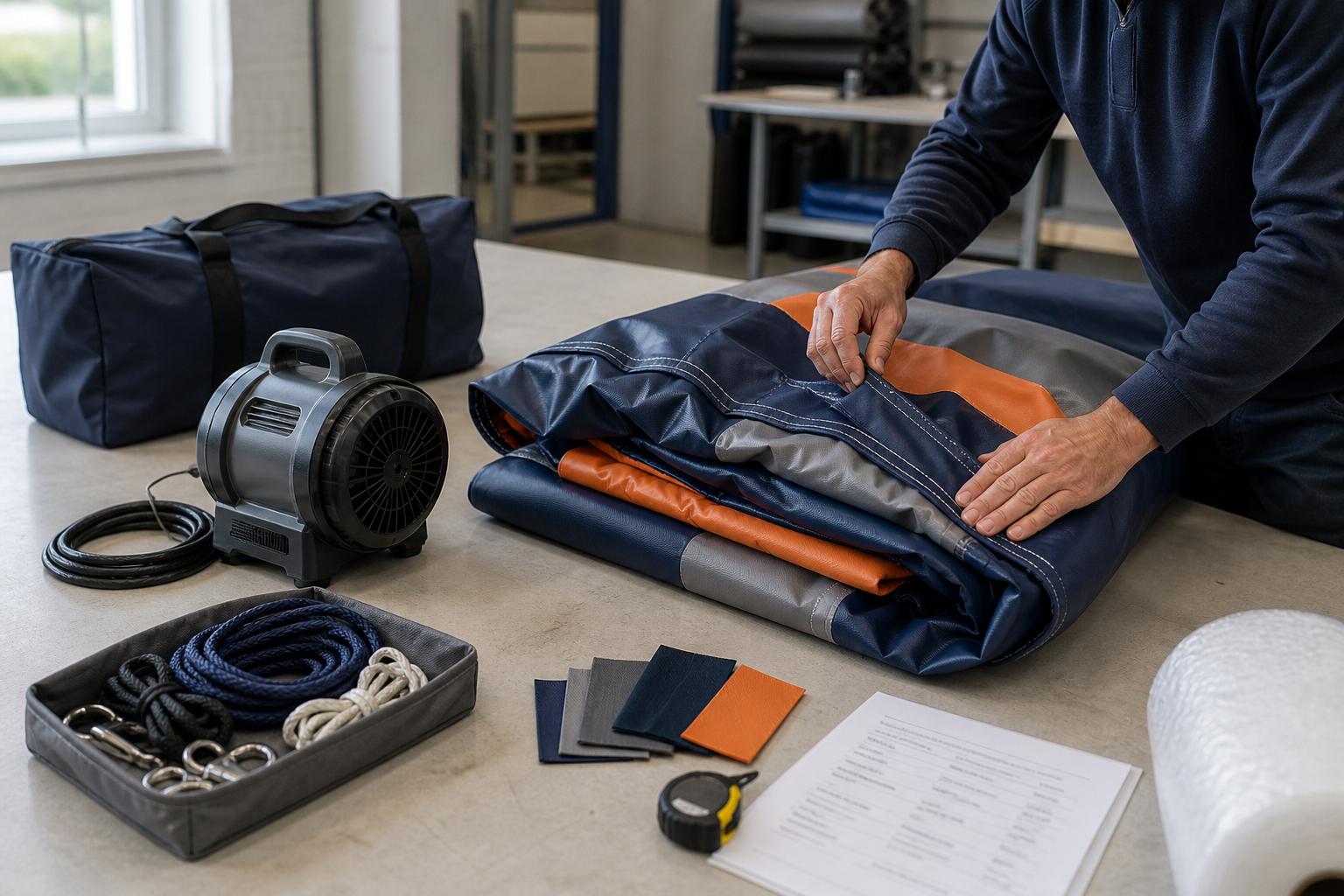
Reusable custom advertising inflatables work best when the buyer plans the full operating kit, not only the printed inflatable body. Before ordering, confirm the event schedule, artwork that must stay permanent, any sponsor graphics that may change, the blower or air system, anchoring method, storage bag, repair material, packing size and who will handle setup after delivery. If the inflatable will travel between events, include those reuse conditions in the RFQ so the quotation can review material, seam reinforcement, accessory scope and packing needs instead of treating the order as a one-time display.
By InflatCraft Product Team • Last updated
Why reuse planning should happen before quotation
Many custom advertising inflatables are ordered for one launch, race, exhibition or retail promotion, but the same display may be expected to appear again at later events. That changes the purchasing question. A one-time campaign may focus on the first date and location; a reusable campaign asset also needs a plan for packing, installation, changeable graphics, accessory control and storage between uses.
The best time to answer those questions is before the quote is final. Once the artwork layout, panel structure and packing scope are approved, changes become harder and more expensive. Tell the quoting team when a unit is intended for a dealer group, event series, seasonal retail campaign or exhibition tour so the scope reflects the life of the asset rather than only its first setup.
Start with the actual reuse scenario
Do not only write “reusable” in the inquiry. State how many events or locations will use the inflatable, whether the same crew will install it, whether it travels by courier, truck or container shipment, and whether it will operate indoors, outdoors or in both environments. Those inputs affect the review of material, seams, accessories and packing.
Also identify who stores the unit between events. A trained event team can follow a different packing and inspection routine from rotating retail staff. If the unit moves between stores or distributors, clear labels and a simple accessory inventory may be as important as the inflatable body itself.
Separate permanent branding from graphics that may change
Divide the artwork into permanent brand elements, campaign elements and sponsor or partner elements. Core logos, brand colours and a product silhouette may stay useful for years, while dates, locations, promotional messages and sponsor logos may change after one event.
Depending on the product geometry, the quotation can review whether changeable areas should be printed permanently, attached as removable panels, carried on a separate banner or kept outside the inflatable body. This is especially relevant to inflatable arches used for races, sponsor activations and retail entrances. Availability and attachment method still need to be confirmed for the specific structure; a removable panel is not automatically suitable for every shape.
Confirm what the operating kit includes
A buyer should not assume every accessory is included. Ask the quotation to identify the inflatable body or printed sleeve, the blower or air system, voltage and plug assumptions, ropes or other applicable anchoring accessories, the storage or carry bag, repair material, setup notes, export carton and packing dimensions. Ask for spare parts separately when the unit will tour or operate at several locations.
For temporary outdoor use, the site operator still needs to confirm venue rules, surface conditions, available power, public separation and the event weather policy. An accessory list supports setup, but it does not replace a project-specific site plan.
Plan storage before the first event
Storage is part of the purchase plan. A display that is folded wet, packed with missing accessories or stored without a clear label may be difficult to use again even when the inflatable body is still serviceable.
The operating team should let the unit dry before folding, keep the blower and accessories with the correct inflatable, label the bag or carton by campaign or location, avoid stacking heavy objects on printed areas, and inspect the unit after teardown. Damage should be photographed and recorded while the event team still knows how it happened.
Set realistic repair expectations
Small field repairs may be possible when the correct repair material is supplied and the damage is minor. Seam failures, damaged attachment points, blower problems and structural damage require a different review. Ask whether repair material is included or optional, what minor damage can be handled on site, what photographs are needed for support and whether spare accessories are sensible for the campaign schedule.
A repair kit is a backup for limited damage, not a substitute for correct setup, drying and storage. The quotation should also distinguish product defects from damage caused by handling, storage, site conditions or operation outside the agreed scope.
Match the format to repeated use
Inflatable arches can serve repeated races and entrances when the clear opening, sponsor zones, anchoring method and packing plan are fixed early. Air dancers are practical for repeated dealership or roadside promotions when the sleeve, blower base, operating routine and daily storage are controlled.
Product replicas offer strong recognition but are usually tied to one package or product identity. Mascots can support character-led campaigns across events, although their shape details may require more careful handling. Logo signs and inflatable letters can work well for repeat brand events when placement, lighting and surface protection are reviewed. The best reusable format is the one that fits the crew, site, travel route and artwork plan, not simply the largest structure.
What to send for a reusable-inflatable quote
Send the product type or closest reference, target size and any required clear opening, quantity, destination country and city, first event date, expected future use schedule, indoor or outdoor conditions, site photographs if available, logo files, notes on graphics that may change, voltage expectations and any storage or packing limitations.
State whether repair material, spare accessories, carry bags or changeable artwork areas should be reviewed in the quotation. If a detail is not decided, say so. A clear “not decided” tells the quoting team where assumptions must be written instead of hidden.
Buyer recommendation
For a one-time inflatable, focus the RFQ on the event date, size, artwork and destination. For an asset that will be reused, ask for the complete event-use scope: artwork strategy, accessory list, packing method, storage plan and repair support. That makes quotations easier to compare and reduces the risk of discovering missing items after delivery.
Product Buying Guides
More on choosing and ordering custom inflatables.
Air Dancer Replacement Tubes: Blower Fit | InflatCraft
Buying an air dancer replacement tube? Check the blower model, connection, tube dimensions and air requirements before ordering fabric-only replacements.
Inflatable Hanging Signs: Venue Checks | InflatCraft
Plan an inflatable hanging sign with the right venue approvals, dimensions, rigging review, documents and power arrangements before placing your order.
Inflatable Entrance Tunnels: Site Planning | InflatCraft
Specify a custom inflatable entrance tunnel around clear internal space, the full footprint, visitor routes, blower placement and event branding.
Static Inflatable Mascot Production Approval Checklist
Approve a custom inflatable mascot for retail or events: review 3D shape, facial details, site limits, inspection proof, accessories and RFQ scope.
Compare sizes, materials and air systems on the custom advertising inflatable product range page before sending an RFQ.
Relevant Product Pages
Compare specifications before submitting an RFQ.
Buyer FAQ
Additional specification questions.
Where to order
Order direct from the manufacturer.
Published by InflatCraft, operated by Tianjin Mufeng Trading Co., Ltd., a custom inflatable manufacturer founded in 2005 and based in Tianjin, China. We export to the United States, United Kingdom, Canada, Australia, Germany, France, Spain and Italy.
Request a quote
Send the brief and get a specification-based quotation.
MOQ and lead time
What sets the minimum order and where the time goes.
Sourcing from China
Brief, approval, Incoterms, freight and import, in order.
Verified specifications
Materials, air systems and lead time this site quotes against.
Export planning by country: United States, United Kingdom, Canada, Australia, Germany, France, Spain, Italy.
