
Buyer Guide
Air Dancer Replacement Tubes: Matching Your Existing Blower
An air dancer replacement tube lets you refresh the fabric or campaign message while keeping a suitable existing blower. Before ordering, confirm the blower model, outlet connection, tube dimensions and attachment method, then ask the supplier to review the air requirements of the proposed design. Matching the base diameter alone does not establish compatibility.
By InflatCraft Product Team • Last updated
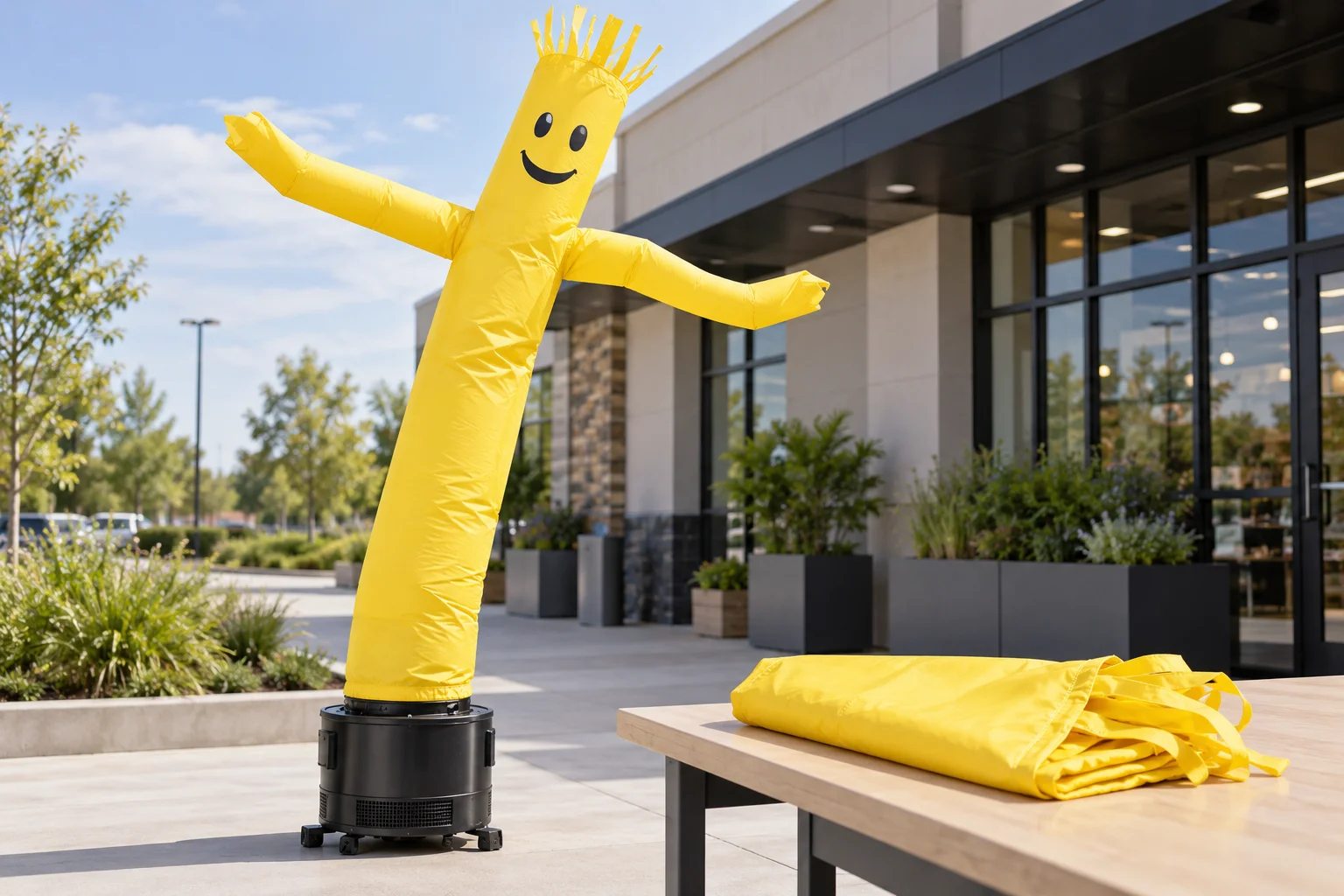
Planning the purchase
For retail buyers, distributors and rental operators, the useful purchasing question is simple: can this new tube work with the equipment already in service? A clear compatibility brief helps answer that question before artwork is approved or a batch of replacement covers is made.
Replacement tube or complete air dancer kit?
A replacement-tube order should identify exactly what is being supplied. The fabric body, blower and connection accessories are separate items unless the quotation explicitly includes them.
Use this decision guide:
| Your situation | Best next step |
|---|---|
| The blower is serviceable and its model and specifications are known | Request a tube-only compatibility review. |
| You want new artwork on the same approved tube design | Supply the previous order reference and confirm whether any construction details have changed. |
| The blower came from another supplier | Send its label, manual and connection photographs before requesting a fit confirmation. |
| The blower's identity or condition is uncertain | Resolve those questions before committing to a replacement batch; compare a matched tube-and-blower proposal if necessary. |
| You want a taller tube or a different number of legs | Treat it as a new configuration review, even if the base looks similar. |
The air dancer replacement tube product page is the starting point for a fabric-only enquiry. State “replacement tube only” prominently in the request so the quotation does not assume a new blower is required.
Record the physical connection accurately
Begin with the existing equipment switched off and disconnected according to its instructions. Gather measurements and photographs without dismantling the blower or modifying its guards.
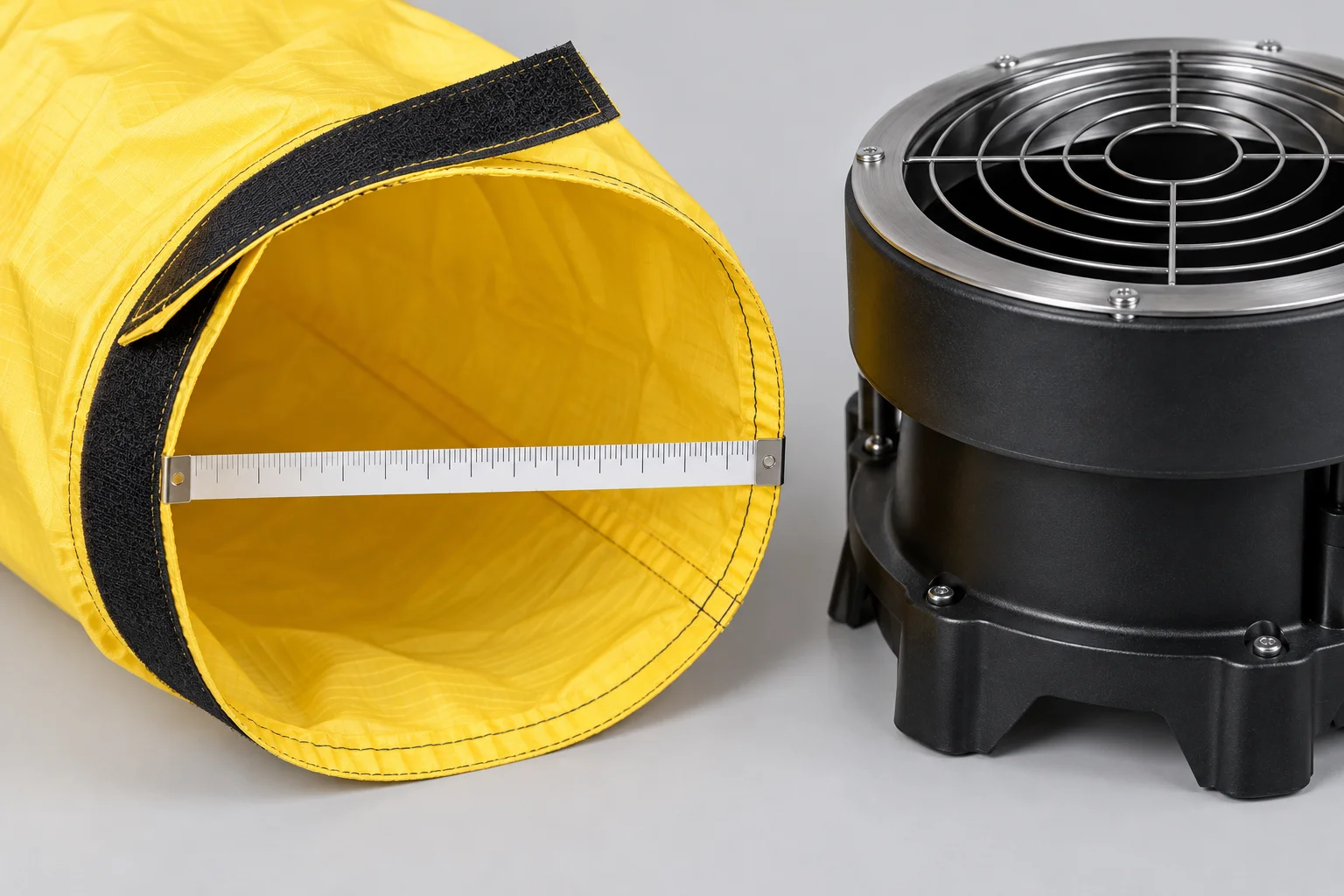
Record the outlet dimensions, the old tube's base opening and the way the two connect. Note whether the attachment uses a particular fastening strip, cuff or other fitting, and photograph the complete connection as well as its details. If a measurement is a circumference, label it as a circumference. A number without a measurement type can easily be mistaken for a diameter.
Include a ruler or tape in close-up photographs and use the same units throughout. Identify which dimensions describe the blower and which describe the fabric. Older fabric may have stretched or become distorted, so the worn tube should be considered alongside the original specification and blower information.
The supplier should return a proposed connection detail for review. The purchasing objective is a clearly defined interface, rather than an instruction to make the fabric “roughly the same.”
Check air-system suitability as well as fit
A tube can attach physically and still be the wrong match for the blower. Its height, proportions, openings and construction affect the air-system requirements and the movement the finished display produces.
Send the blower manufacturer, model and available operating specifications. Include the manual or product sheet if you have it. Motor wattage alone is not a sufficient compatibility specification, and neither is a generic airflow figure without its context. Ask the supplier what information is needed to assess your exact blower against the proposed tube.
Avoid assuming that a stronger blower will automatically improve the result or that two blowers with similar-looking outlets are interchangeable. If the existing model cannot be assessed from the information available, ask what further evidence or evaluation is needed before a compatibility commitment can be made.
For repeat fleet orders, record the approved pairing by blower model and tube revision. That creates a usable reorder reference when multiple visually similar units are stored together.
Keep the old design and the new brief distinct
When the original display performed as intended, tell the supplier which features should stay the same: standing height, body proportions, number of legs and connection. Then identify the requested changes separately.
For example, changing a printed offer while retaining the approved geometry is a different request from adding arms, extending the body or changing the movement. A photograph of the old display is useful, but it does not explain which features the buyer expects to preserve.
Artwork should also suit a moving surface. Prioritize a recognizable logo, short message and clear contrast. Ask to see the printable panel layout so important lettering does not fall awkwardly across seams or wrap out of view.
When a replacement will run beside an older tube, flag color matching early. A fresh print and weathered fabric may look different even when the same artwork file is used. Agree how color will be reviewed rather than expecting an exact visual match to aged material.
Review the location if dimensions change
A replacement order can accidentally change the space the display needs. A taller body or additional moving sections may bring the fabric closer to a canopy, sign, tree, vehicle route or overhead obstruction.
Review the full movement area, the blower position and the surrounding public space. Keep operating and weather decisions tied to the actual equipment instructions and site requirements; a previous installation does not establish a rating for the new configuration.
For a storefront or dealership, the retail promotions planning page helps connect the product brief with placement, operating hours and power access. If the site has changed since the original purchase, include new photographs rather than relying on the old order alone.
Purchasing checklist: a replacement-tube worksheet
Copy these fields into the enquiry and mark unknown items clearly:
- Order scope: tube only, or tube plus specified accessories
- Existing blower: manufacturer, model, label photograph and available manual
- Connection: outlet measurements, tube opening measurements and attachment photographs
- Current tube: standing height, configuration, previous order reference and useful photographs
- Requested changes: artwork, color, height, proportions or configuration
- Quantity: total tubes and any distinct versions
- Use: location, operating pattern and whether new and old tubes will run together
- Delivery: destination and required on-site date
- Confirmation requested: proposed fit, air-system suitability, included items and evaluation method
Before approving production, check that the quotation identifies the specific configuration under review. Ask the supplier to list any assumptions or unresolved compatibility points. For a large replacement order, agree how fit and operation will be assessed before committing the full quantity.
Request a replacement-tube review
Start with your blower model, tube dimensions, quantity and destination on the replacement tube enquiry page. Specify fabric only or a complete matched system. After the reply, share connection photographs and artwork by email or WhatsApp; the form has no file-upload field. These details help the factory review fit and prepare a quotation.
Product Buying Guides
More on choosing and ordering custom inflatables.
Inflatable Hanging Signs: Venue Checks | InflatCraft
Plan an inflatable hanging sign with the right venue approvals, dimensions, rigging review, documents and power arrangements before placing your order.
Inflatable Entrance Tunnels: Site Planning | InflatCraft
Specify a custom inflatable entrance tunnel around clear internal space, the full footprint, visitor routes, blower placement and event branding.
Static Inflatable Mascot Production Approval Checklist
Approve a custom inflatable mascot for retail or events: review 3D shape, facial details, site limits, inspection proof, accessories and RFQ scope.
Reflective Event Spheres or Helium Advertising Balloons? | InflatCraft
Compare air-filled reflective spheres with helium advertising balloons by installation, artwork, operating responsibilities and quotation scope.
Compare sizes, materials and air systems on the custom advertising inflatable product range page before sending an RFQ.
Relevant Product Pages
Compare specifications before submitting an RFQ.
Related Project Example
Buyer FAQ
