
Buyer Guide
What Rental Operators Should Check Before Bulk Ordering Inflatables
Before a bulk order, a rental operator should put one unit through real hires, handle it exactly as crews will, inspect the points that wear first, and write the full specification into the order — material, air system, accessories, bag and repair kit for each unit. Then agree how the batch will be checked before it ships, including how colour and dimensions are kept consistent from the first unit to the last.
By InflatCraft Product Team • Last updated September 2, 2026
Order one before you order twenty
A bulk order multiplies every decision in the specification, good or bad. A tie point that is slightly too close to a seam is a small flaw on one unit and a fleet-wide repair job on twenty. The cheapest time to find that flaw is before the batch exists.
Order a single unit of the design and use it for real hires, with your own crews, on the surfaces you normally work on. Give it enough jobs to see how it behaves after repeated setup, not just after the first. If the budget allows only one test, choose the format you plan to buy in the largest number.
Handle it the way your crew will
Suppliers fold and pack units carefully for shipping. Your crew will not, and should not have to. Inflate and deflate the pilot unit the way it will be done on a busy day: quickly, by one or two people, often in poor light. Fold it without instructions and see whether it goes back into its bag.
Time the setup and note every step that needed explaining. If a new crew member cannot set it up from a short written note, the design or the instructions need to change before the batch is ordered. Ask the supplier for setup and folding guidance written for hire crews, not for a single client.
Check the weight of the packed unit too. A bag that one person cannot lift into a van means two people for every job, for the life of the unit.
Inspect the points that wear first
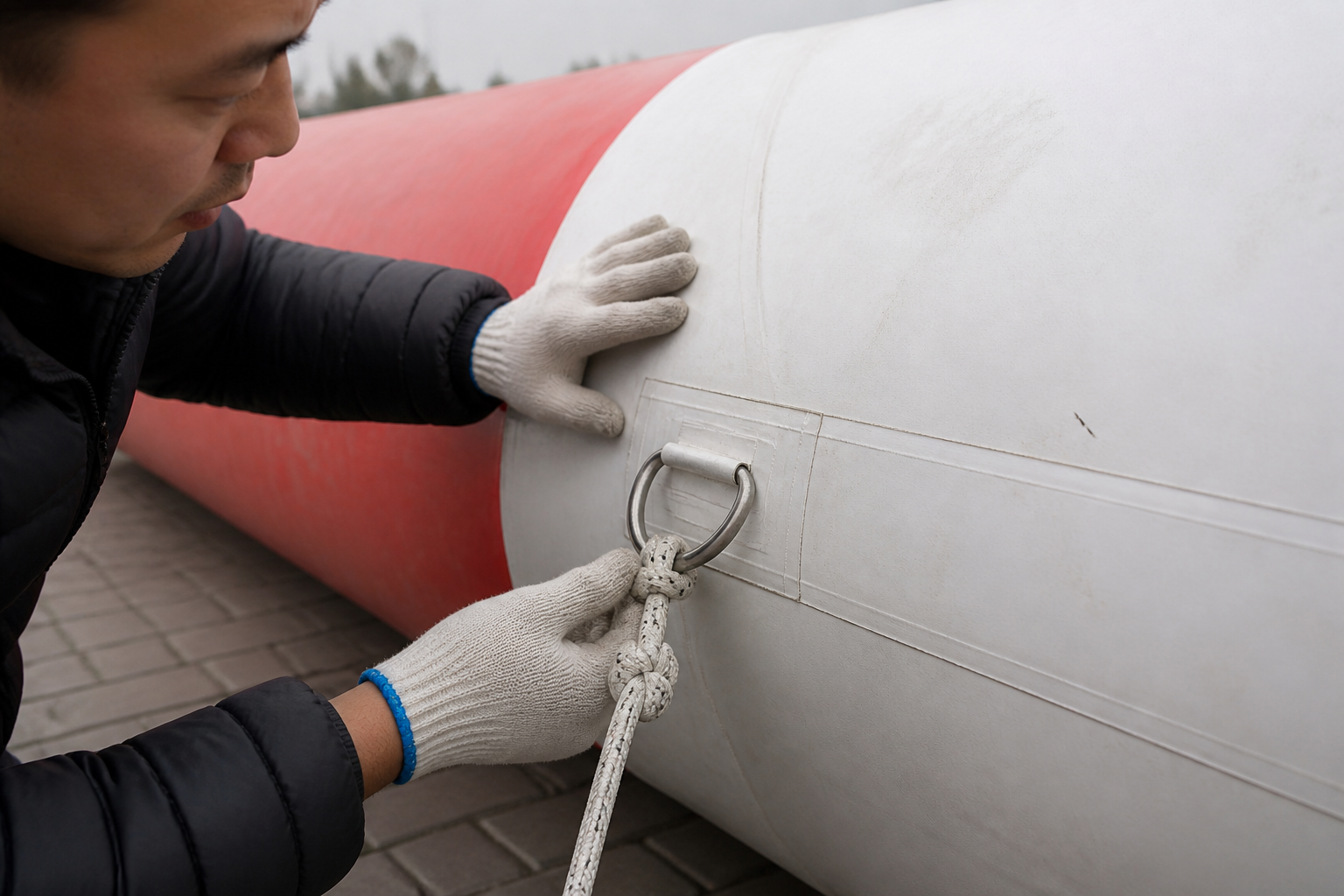
After several hires, look closely at the places where stress and abrasion concentrate. The base and bottom panels, which drag across the ground. The tie points and the fabric around them, which take load every time. The seams nearest those tie points. Valves, zips and access openings, which are opened and closed by different hands every week. The edges of printed areas, where cleaning and folding first show wear.
Photograph anything that has started to change and send the photographs to the supplier with the dates of the hires. Specific evidence gets specific answers: extra reinforcement, a relocated tie point, a different zip, a change to how panels are joined.
Fix the specification in writing
Once the pilot has settled the design, write it down in the order in full. Dimensions, material specification, air system, print and colour references, tie-point layout and reinforcement, and a per-unit list of accessories: blower, ropes, ballast bags or stakes where relevant, repair kit, bag and label.
The accessory list matters more for a fleet than for one event. A missing repair kit on one unit is an inconvenience; missing across a batch, it is an order of spares after the season has started. Ask for any change from the pilot unit to be stated in writing before production, so the batch is built to what you tested.
Check consistency across the batch
A batch of identical units should be identical. In practice colour can drift between print runs, and small differences in dimensions can appear across a production run. For a rental fleet that matters: clients booking two of the same arch expect them to match, and parts and bags are supposed to swap between units.
Agree before production how consistency will be checked. Ask for colour to be matched to a physical reference kept for your order rather than to a screen, and for photographs or video of every unit inflated before shipping, not a sample of the batch. Agree what happens if a unit does not match.
Packing, labelling and documentation for a fleet
Ask for each unit to be packed with its accessories, labelled with a unit identifier on the bag and on the unit itself, and shipped with setup and care instructions. Labels that survive cleaning and weather save a surprising amount of time when a fleet grows past a handful of units.
Keep the order specification, the pilot record and the pre-shipment photographs together. They are the reference for reorders, for warranty discussions and for training new crew. How minimum quantities and lead times work for batch and repeat orders is covered on the MOQ and lead time page.
Receiving the batch and the first weeks in service
When the batch arrives, inflate every unit before it goes into the fleet, not only the one that happens to be needed first. Compare each against the pre-shipment photographs and the specification in the order: dimensions, colours, tie-point layout, and the accessory list for that unit. A missing repair kit or a blower that does not match is easy to raise while the delivery is new and much harder three months later.
Label and log each unit as it passes inspection, then store it the way it will live for the rest of its working life. Units that go straight from the delivery pallet into a van tend to lose accessories and skip the first record entry, which is the one every later comparison depends on.
For the first few weeks, send new units out with the most experienced crews and ask them to report anything unusual after every job, however small. Collect those notes together rather than raising issues one at a time, and send the supplier a single, dated summary. A consolidated report of the batch's first weeks is far more useful to a manufacturer than scattered messages, and it is the best basis for adjusting the next order.
Rental Fleet Guides
More for rental and hire companies.
How Rental Companies Source Commercial Inflatables
A rental fleet is bought for repeated handling, not one event. How hire companies decide the fleet mix, write an RFQ for wear, standardise parts across units and judge a first order.
Inflatable Rental Fleet ROI and Replacement Cycle
What decides the return on a rental inflatable, why it has to be tracked unit by unit, the costs that never show in the purchase price, and how to decide between repair and replacement.
Custom vs Stock Inflatables for Rental Fleets
When stock designs earn more for a hire company, when custom pieces do, why most fleets combine neutral structures with changeable branding, and how cost and lead time differ.
Compare sizes, materials and air systems on the custom advertising inflatable product range page before sending an RFQ.
Relevant Product Pages
Compare specifications before submitting an RFQ.
Buyer FAQ
Additional specification questions.
Where to order
Order direct from the manufacturer.
Published by InflatCraft, operated by Tianjin Mufeng Trading Co., Ltd., a custom inflatable manufacturer founded in 2005 and based in Tianjin, China. We export to the United States, United Kingdom, Canada, Australia, Germany, France, Spain and Italy.
Request a quote
Send the brief and get a specification-based quotation.
MOQ and lead time
What sets the minimum order and where the time goes.
Sourcing from China
Brief, approval, Incoterms, freight and import, in order.
Verified specifications
Materials, air systems and lead time this site quotes against.
Export planning by country: United States, United Kingdom, Canada, Australia, Germany, France, Spain, Italy.