
Buyer Guide
Inflatable Rental Fleet ROI: When to Repair, Retire and Replace
The return on a rental inflatable is decided less by its purchase price than by how often it is booked, how much each hire costs in cleaning, repair and handling, and how long it stays hireable. Track every unit individually, count the costs that do not appear on the invoice, and retire a unit when repairs start recurring at the same points or when its appearance starts costing bookings. Plan replacements before the busy season, because a manufacturer's lead time does not shrink when your calendar fills.
By InflatCraft Product Team • Last updated September 2, 2026
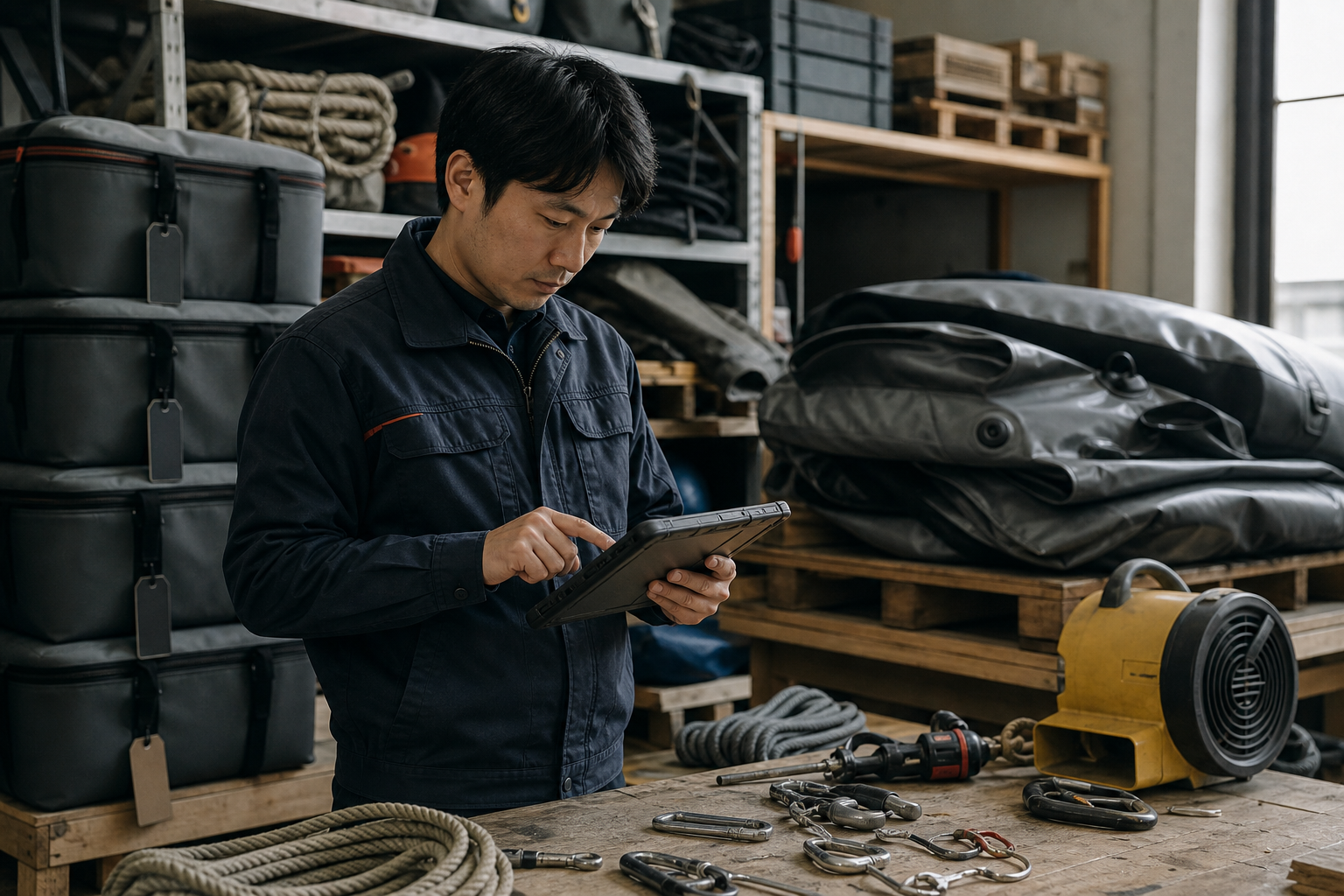
What actually drives the return on a rental unit
A rental inflatable earns only on the days it is out. Everything else is cost: the time it sits in storage, the hours spent cleaning and drying it after each job, the repairs, the van space, the crew time to set it up. Two units bought for the same price can produce very different returns simply because one suits the bookings the business actually gets and the other does not.
That is why the first question is not "how much does it cost" but "how often will it go out". A modest arch that is booked most weekends of the season can outperform an impressive custom piece that is booked a handful of times. Before buying, estimate utilisation from real enquiries rather than from how good the unit looks.
The second driver is cost per hire. A unit that comes back needing an hour of cleaning, a patch and a long drying time is more expensive to own than one that packs away clean, even if both earn the same fee.
Track every unit, not every category
Most rental companies know how their arches perform as a group. Far fewer know how each arch performs. Averages hide the unit that is always the one sent back for repair, and the unit that is booked constantly because it happens to be the right size.
Give each unit a permanent identifier on a label that survives cleaning, and record every hire, every repair, every day out of service and every client complaint against it. A spreadsheet is enough. After one season the record shows which units earn, which cost, and which design decisions to repeat or avoid in the next order.
That record is also the most useful thing to send a manufacturer when ordering again. It turns "make them stronger" into "the tie points on these two units tore at the same place".
The costs that never appear on the invoice
The purchase price is the smallest cost that is easy to see. The larger ones are spread across the year. Repair material and the labour to apply it. Cleaning products and the space and time to dry units properly. Transport damage. Replacement blowers and accessories. Storage.
Then there are the costs that do not look like costs. A hire that fails on the day — a unit that will not stay inflated, a torn seam discovered on site — usually means a refund or a discount, and sometimes a client who does not book again. A unit whose print has faded or yellowed may still work perfectly and yet lose bookings to a competitor's newer stock.
None of these are visible when comparing supplier quotes. All of them are affected by what was specified at purchase: material, reinforcement at wear points, replaceable parts and how easy the unit is to clean.
When to repair a unit and when to retire it
A single repair says little. A pattern says a lot. When the same seam, the same tie point or the same part of the base needs attention again and again, the unit is telling you where its design meets your conditions, and each repair buys less time than the last.
Retire or replace a unit when repairs start recurring at the same points, when the fabric has become stiff or started cracking at the folds, when it no longer holds its shape reliably, or when its appearance has started costing bookings. Compare the cost of the next round of repairs, plus the risk of a failed hire, against a replacement quote.
Before retiring a unit completely, check what can be salvaged. Blowers, bags, ballast and some attachable panels often outlive the structure and can be kept as spares.
Plan replacements before the busy season
A manufacturer's production lead time does not shrink when your calendar fills. Custom inflatables are built after the specification and artwork are approved, then shipped, then imported — and many rental businesses order at the same time of year, just before their season starts.
Review the fleet at the end of each season, while the repair record is fresh. Decide which units to retire, which formats to add, and place orders early enough to receive, test and label new stock before the first busy weekend. How lead time and minimum quantities work for custom orders is covered on the MOQ and lead time page.
Buying for a longer replacement cycle
The cheapest way to lengthen a replacement cycle is to specify for it at purchase. Tell the manufacturer the unit is for hire, describe how it will be handled and where it will be set up, and ask which material suits that use. The verified materials offered on this site, and what each suits, are on the specifications page.
Ask for reinforcement at the points that take load, parts that can be replaced without returning the unit, and branding that can be changed so the structure outlives any single client. Then give crews a short written routine for setup, cleaning, drying and folding. Handling decides as much of a unit's life as its material does.
Rental Fleet Guides
More for rental and hire companies.
How Rental Companies Source Commercial Inflatables
A rental fleet is bought for repeated handling, not one event. How hire companies decide the fleet mix, write an RFQ for wear, standardise parts across units and judge a first order.
What to Check Before Bulk Ordering Inflatables
Before ordering a batch of commercial inflatables: pilot one unit in real hires, handle it the way crews will, inspect the wear points, fix the specification in writing and check consistency across the batch.
Custom vs Stock Inflatables for Rental Fleets
When stock designs earn more for a hire company, when custom pieces do, why most fleets combine neutral structures with changeable branding, and how cost and lead time differ.
Compare sizes, materials and air systems on the custom advertising inflatable product range page before sending an RFQ.
Buyer FAQ
Additional specification questions.
Where to order
Order direct from the manufacturer.
Published by InflatCraft, operated by Tianjin Mufeng Trading Co., Ltd., a custom inflatable manufacturer founded in 2005 and based in Tianjin, China. We export to the United States, United Kingdom, Canada, Australia, Germany, France, Spain and Italy.
Request a quote
Send the brief and get a specification-based quotation.
MOQ and lead time
What sets the minimum order and where the time goes.
Sourcing from China
Brief, approval, Incoterms, freight and import, in order.
Verified specifications
Materials, air systems and lead time this site quotes against.
Export planning by country: United States, United Kingdom, Canada, Australia, Germany, France, Spain, Italy.