
Buyer Guide
Long-Term Storage Guide for Commercial Inflatables
Store a commercial inflatable only when it is completely clean and completely dry, folded or rolled loosely without sharp creases through print, in a breathable bag, off the floor, in a dry space away from heat, direct sunlight and rodents. Inflate and inspect it well before the next season, not on the morning of the first booking, so any problem found in storage can still be repaired in time.
By InflatCraft Product Team • Last updated September 2, 2026
Why storage damages more inflatables than use does
An inflatable in use is exposed to sun, abrasion and handling, but it is also inflated, airing and being looked at. An inflatable in storage is folded tight, in the dark, often for months, and nobody checks it. Anything that went into the bag with it — moisture, dirt, a small leak, a sharp fold — has the whole off-season to do its work.
The damage found when units come out of storage follows a familiar pattern: mould spots and staining from moisture, print cracking along permanent fold lines, discoloration where dirt was left on the surface, and chewed fabric where rodents found the bag. Almost all of it is preventable before the unit is put away.
Dry it completely before packing
The single most important step is drying. A unit that looks dry on the outside can hold moisture in folds, around seams and inside the structure, especially after an event on wet grass or in a humid climate. Folded and bagged, that moisture has nowhere to go.
Dry the unit inflated wherever possible, in a sheltered, ventilated space, and give it time. Pay attention to the underside, the seams and the inside of the structure, where condensation can collect in a continuous-air unit. When in doubt, dry it longer; there is no such thing as too dry for storage.
Clean it before it goes away
Dirt on the surface holds moisture against the fabric and provides the material mould grows on. Grass, soil and food residue can also stain the print if left for months. Clean the unit before storage, not when it comes out, when stains will have set.
Use mild soap and water with a soft brush or cloth, rinse, and dry again completely. Avoid solvents, strong cleaning chemicals and abrasive pads, which can damage the coating and the print. Cleaning is covered in more detail in the guide to cleaning and mould prevention.
Folding: rolling beats creasing
A sharp fold held for months becomes a permanent crease, and a permanent crease through printed artwork is where ink cracks first. Where the unit allows, roll it loosely rather than folding it tight, and avoid placing folds directly across logos and large printed areas.
If the unit has to be folded, vary the fold lines between seasons rather than using exactly the same folds every time. Push out trapped air as you go so the bundle is not under internal pressure, and do not compress it to force it into a bag that has become too small.
Where and how to store it
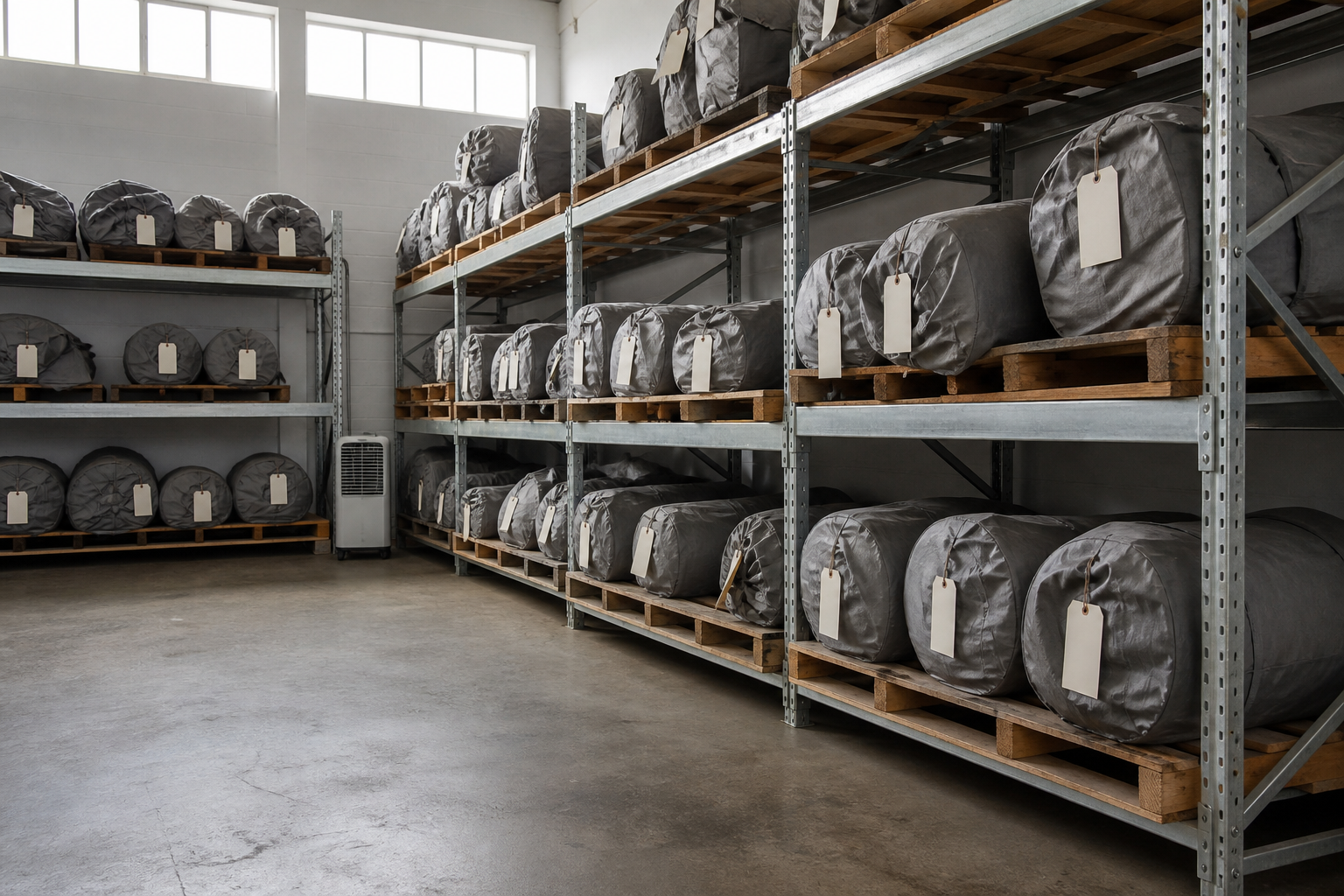
Store inflatables in a dry space with stable conditions, off the floor on shelves or pallets, away from direct sunlight, heaters and hot roofs, and away from anything sharp. A breathable storage bag lets residual moisture escape; a sealed plastic wrap traps it.
Rodents are a real risk in warehouses and garages, and a folded inflatable makes a good nest. Keep storage areas clean, check bags periodically, and deal with signs of rodents before they reach the stock. Label each bag clearly with the unit and its accessories, so nobody has to open and refold units to find the right one.
Check stored units before the season
Take each unit out, inflate it and inspect it well before its first booking. This is the moment to find mould, leaks, cracked print or damage from storage — while there is still time to clean, repair or order a replacement.
Run the blower, check the accessories are all present, and put right anything that has changed. A unit discovered damaged on the morning of an event is a failed booking. The same unit discovered a month earlier is a routine repair.
Storing blowers, ropes and accessories
A stored inflatable is only usable next season if its accessories are stored with the same care. Blowers should be cleaned of dust and grass, completely dry and kept somewhere they cannot be knocked or crushed. Coil their power cables loosely rather than wrapping them tightly around the housing, which stresses the cable where it enters the blower.
Ropes and straps should be dried before storage, because damp rope stored in a bag with the inflatable brings moisture straight back to the fabric that was carefully dried. Ballast bags that were filled on site should be emptied and dried. Stakes, repair kits and adapters are small enough to go missing over an off-season, so keep them in a labelled container stored with, or clearly linked to, the unit they belong to.
Keep a simple storage record: which unit is in which bag, where it is stored, when it was cleaned, and anything noted about its condition when it went away. A unit that was put into storage with a small repair outstanding is easy to forget until the morning it is needed. The record turns the pre-season check into a short list of known jobs rather than a search.
If units are stored off site, in a rented unit or a shared warehouse, visit during the off-season rather than only at the start of it. Roof leaks, condensation, pests and other tenants moving stock around are all problems that are cheap to fix in the middle of winter and expensive to discover on the first busy weekend. Check that bags are still dry, still off the floor and still where the record says they are.
Care and Repair Guides
More on repairing, cleaning and storing inflatables.
Repairing PVC Inflatable Tears: Field vs Factory
Which tears in a PVC advertising inflatable can be patched on site, which should go back to the factory, how to make a field patch that lasts, and why tape repairs fail.
Cleaning and Mold Prevention for Inflatables
How to clean PVC and coated-fabric inflatables without damaging print or coating, dry them properly, deal with early mold spots, and which cleaning products to keep away.
How Many Seasons Can a Commercial Inflatable Last?
Why no honest supplier gives one lifespan figure for a commercial inflatable, what shortens and extends service life, the signs a unit is near the end, and what to ask a manufacturer instead.
Compare sizes, materials and air systems on the verified material specifications page before sending an RFQ.
Relevant Product Pages
Compare specifications before submitting an RFQ.
Buyer FAQ
Additional specification questions.
Where to order
Order direct from the manufacturer.
Published by InflatCraft, operated by Tianjin Mufeng Trading Co., Ltd., a custom inflatable manufacturer founded in 2005 and based in Tianjin, China. We export to the United States, United Kingdom, Canada, Australia, Germany, France, Spain and Italy.
Request a quote
Send the brief and get a specification-based quotation.
MOQ and lead time
What sets the minimum order and where the time goes.
Sourcing from China
Brief, approval, Incoterms, freight and import, in order.
Verified specifications
Materials, air systems and lead time this site quotes against.
Export planning by country: United States, United Kingdom, Canada, Australia, Germany, France, Spain, Italy.