Buyer Guide
Indoor Inflatable Displays: A Noise and Acoustic Acceptance Checklist
An indoor inflatable display should be assessed where people will listen, speak or record—not simply beside its blower. Define the intended activity, operating configuration and acceptance method before ordering. A quiet air system does not make a display soundproof or prevent sound from neighbouring spaces.
By InflatCraft Product Team • Last updated
Why “is it quiet?” is an incomplete buying question
A reception landmark, a sales conversation area and a recorded interview have different expectations. The same installation may be unobtrusive beside a busy entrance yet noticeable next to a microphone. Start the enquiry with the activity that matters rather than asking for an undefined quiet model.
An August 2025 Reddit discussion about inflatable conference rooms illustrates the distinction. Some commenters worried about inflation equipment, while an attendee reported barely noticing it; others discussed hearing neighbouring presentations. This is a useful set of user questions, not evidence that a particular inflatable product provides acoustic isolation.
For commercial buying, translate those questions into separate requirements. What equipment sound is acceptable? Can the intended conversation happen comfortably? Is privacy required? Does the venue need formal testing? Those are related questions, but they do not share one simple answer.
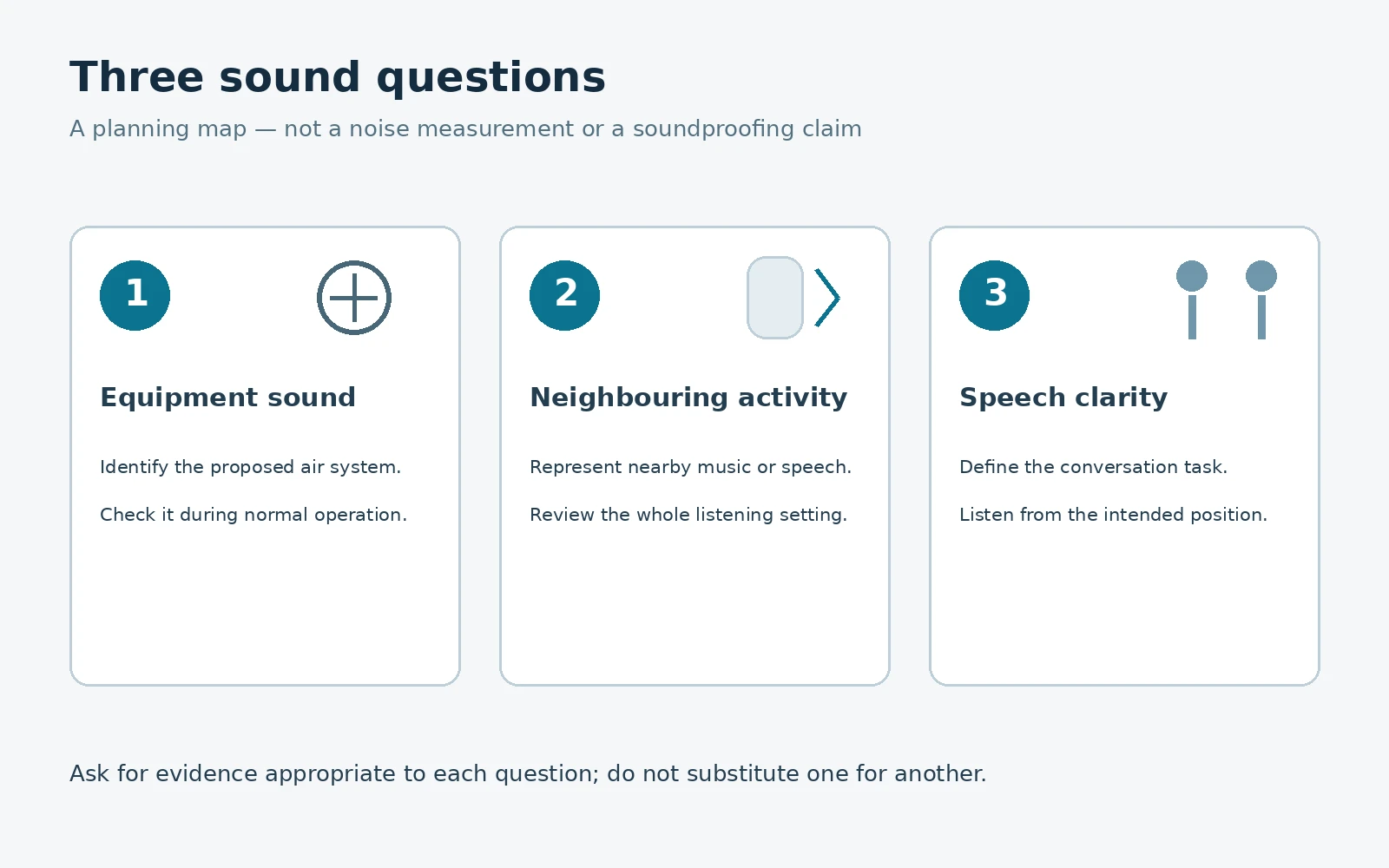
Separate the three acoustic concerns
| Concern | Question to ask | Evidence that helps |
|---|---|---|
| Equipment sound | Is the running air system noticeable at the intended activity position? | A documented observation or measurement with the proposed configuration operating |
| Sound from other activities | Can neighbouring presentations or music interfere? | A venue review with adjacent activities represented |
| Speech clarity within the space | Can the intended audience understand the speaker? | A task-based check, with specialist assessment where required |
An inflatable surface should not be described as soundproof just because it looks enclosed or feels flexible. Nor should an ordinary display be presented as an acoustic product without relevant evidence for that configuration.
NTi Audio's official speech intelligibility guidance explains that background noise, reverberation and the speech signal affect intelligibility. It also distinguishes objective measurement from informal impressions. For a buyer, the practical lesson is to assess the complete listening situation rather than treating the blower as the only variable.
Put the listening position in the specification
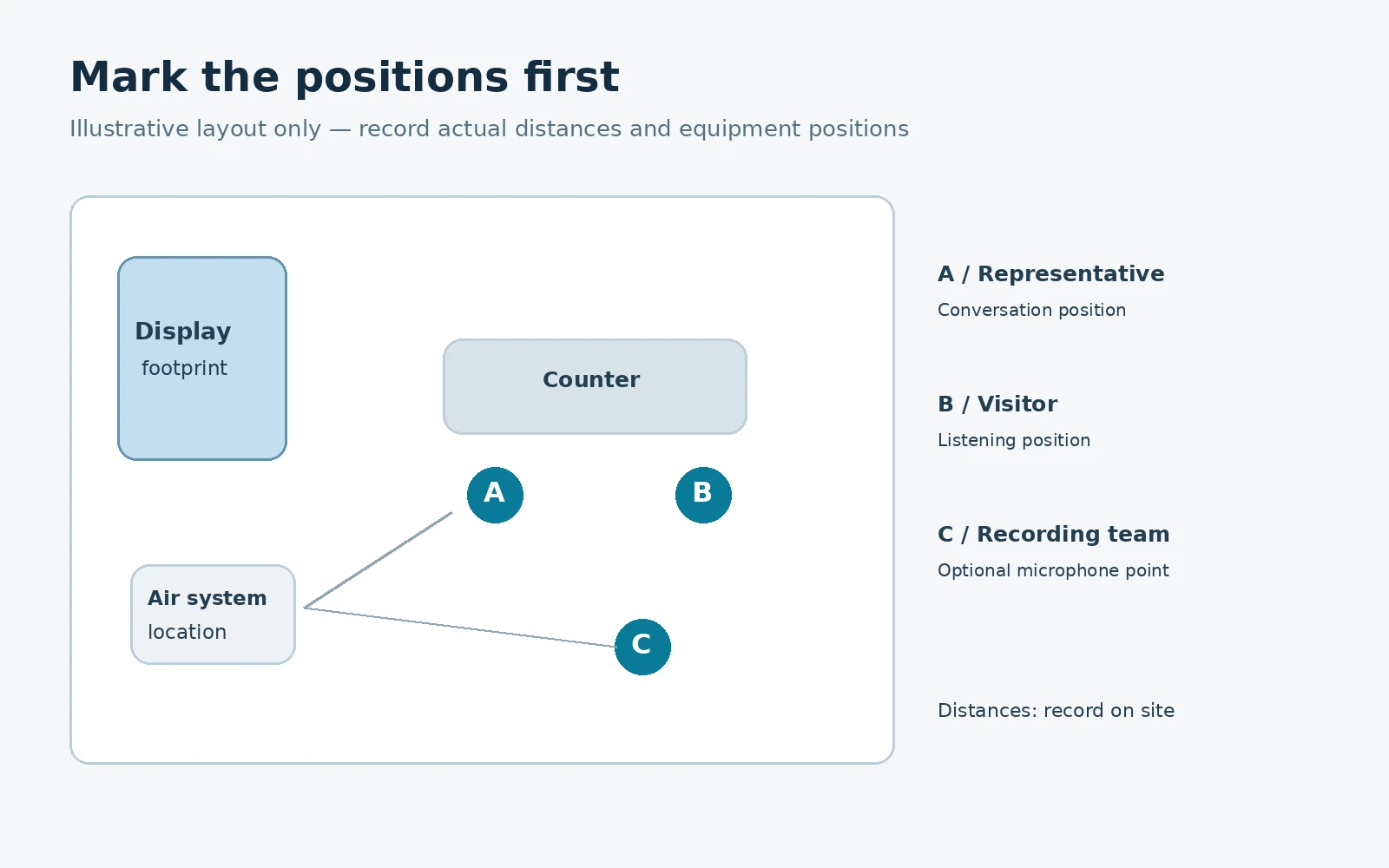
Mark the relevant positions on a simple floor plan: the seated visitor, the standing representative, the recording microphone or the presentation audience. Show the inflatable, its proposed equipment position and nearby sound sources. Include distances where they are known; do not let an unlabeled sketch imply precise dimensions.
Then describe the intended task. For example: “Two people discussing a product across the demonstration counter during normal hall operation.” That is more useful than “low noise,” although it still needs an agreed acceptance method.
If a measured criterion is necessary, the venue or competent acoustic adviser should define the metric, locations, operating conditions and threshold. Do not borrow a numerical limit from an unrelated product listing. A number without its measurement conditions can make two incomparable configurations appear equivalent.
Match the evidence to the proposed equipment
Ask for identification of the air-system configuration being quoted. Where it uses a continuous blower, record the model or identifying specification, intended connection arrangement and operating requirements. If another air system is proposed, confirm how its operation will be checked during the event.
A demonstration video can help show the equipment and layout, but phone microphones, automatic processing and playback volume make it a weak basis for acoustic acceptance. Ask what the recording demonstrates; do not interpret it as a calibrated noise test.
The evidence package should connect the proposed configuration to the observation. A test on another size, another blower or a different installation arrangement should be identified as reference information, not silently presented as a result for your order.
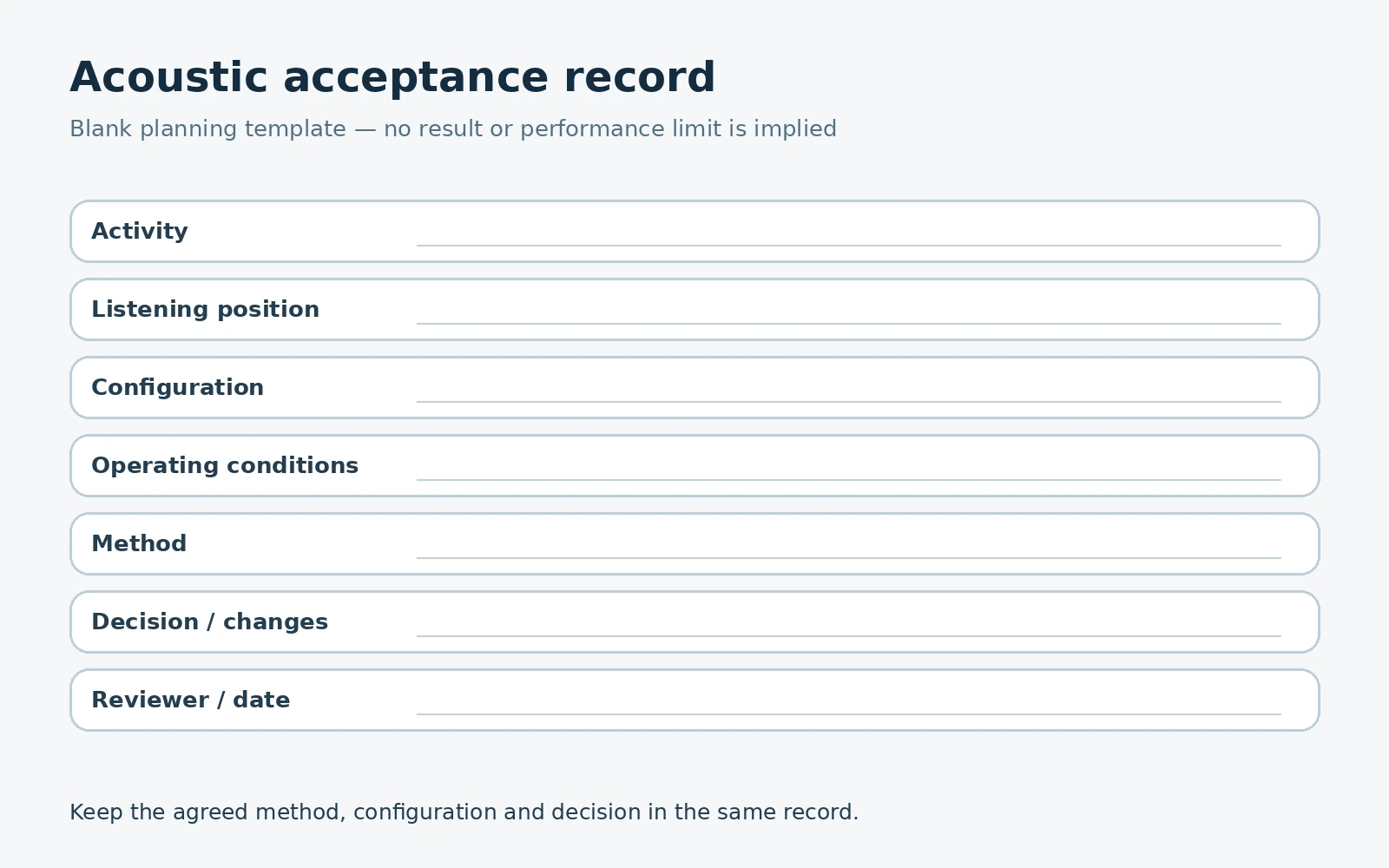
Use an acceptance sheet, not an adjective
| Field | What to record |
|---|---|
| Activity | Conversation, presentation, recording or another defined use |
| Position | A marked listening or microphone location |
| Configuration | Display, air system and relevant equipment identifiers |
| Conditions | Room, background activity, neighbouring sound and operating state |
| Method | Agreed practical check or specified professional measurement |
| Decision | Accepted, accepted with a documented change, or unresolved |
| Responsibility | Person who evaluates the result and approves any changes |
Agree how an unresolved result will be handled before the event. Options for review might include relocating the conversation point, revising the layout or selecting a different configuration. None should be assumed feasible until the relevant teams have checked the site and operating requirements.
Never solve a noise concern by covering an intake, enclosing equipment in an improvised box or modifying electrical components. Request an approved arrangement instead. Quiet operation is not a reason to bypass the equipment's instructions.
Check again in the actual venue
An empty demonstration space cannot reproduce every occupied hall. Keep a venue check in the plan and identify who will perform it. Run the proposed equipment normally and represent nearby activities as realistically as the site allows. Record material differences from the earlier test rather than simply writing “passed.”
For a recording position, involve the recording team. For presentations or venue announcement requirements, involve the relevant AV or venue specialist. This purchasing checklist does not certify hearing safety, speech privacy or an emergency communication system.
Use our exhibition and trade-show application page to connect this acoustic brief with the other project inputs: display dimensions, booth layout, access and venue requirements.
Request a configuration-led review
Send the intended activity, venue plan, approximate dimensions and known acoustic requirements through the InflatCraft project enquiry page. Include who will approve the acoustic result. Our buyer FAQ covers other ordering questions; the acoustic acceptance conditions should remain explicit in your project brief.
Product Buying Guides
More on choosing and ordering custom inflatables.
Custom Inflatable Spare Parts & After-Sales Scope | InflatCraft
Agree what happens after delivery: included spares, model records, written warranty terms, support evidence and replacement costs.
Custom Inflatable Columns: Single vs Multi-Column Layouts
Compare single inflatable columns and multi-column entrances. Plan footprint, artwork, inflation, lighting and a complete project quotation.
Custom Inflatable Mascots: Print vs 3D | InflatCraft
Decide which mascot details to print and which to build in 3D. Compare character recognition, construction review, packing and quotation scope.
Custom Inflatables Bulk Order Checklist | InflatCraft
Prepare a custom inflatables bulk order with a shared approval record for artwork, color, dimensions, accessories, unit IDs, packing and acceptance.
Compare sizes, materials and air systems on the custom advertising inflatable product range page before sending an RFQ.
Relevant Product Pages
Compare specifications before submitting an RFQ.
Related Project Example
Buyer FAQ
Additional specification questions.
Do not equate an air-system label with a complete acoustic result. Confirm the proposed operation and all associated equipment, then evaluate it for the intended use. Sound from the hall and neighbouring activities remains a separate issue.
Visual separation does not establish speech privacy. If confidentiality matters, request an appropriate room solution and specialist advice rather than relying on an untested display enclosure.
It can document a setup, but it should not replace a measurement or acceptance process that the project requires. State the limits of the video and record any remaining on-site check.