Buyer Guide
Custom Inflatable After-Sales Scope: Spare Parts, Warranty and Replacement Records
Ask for after-sales scope as a written part of the order, not as a general promise of support. List the inflatable body, blower and any optional electrical components separately; identify included spares, coverage and exclusions, claim evidence, responsibility for shipping and the process for paid replacements. A warranty period alone does not explain what remedy is available.
By InflatCraft Product Team • Last updated
1. Distinguish three different after-sales questions
A spare part supplied with the original order is not the same as a warranty remedy. A replacement purchased later is a third transaction. Keeping these separate prevents a quotation that mentions a repair kit from being mistaken for a promise to replace a blower or pay return freight.
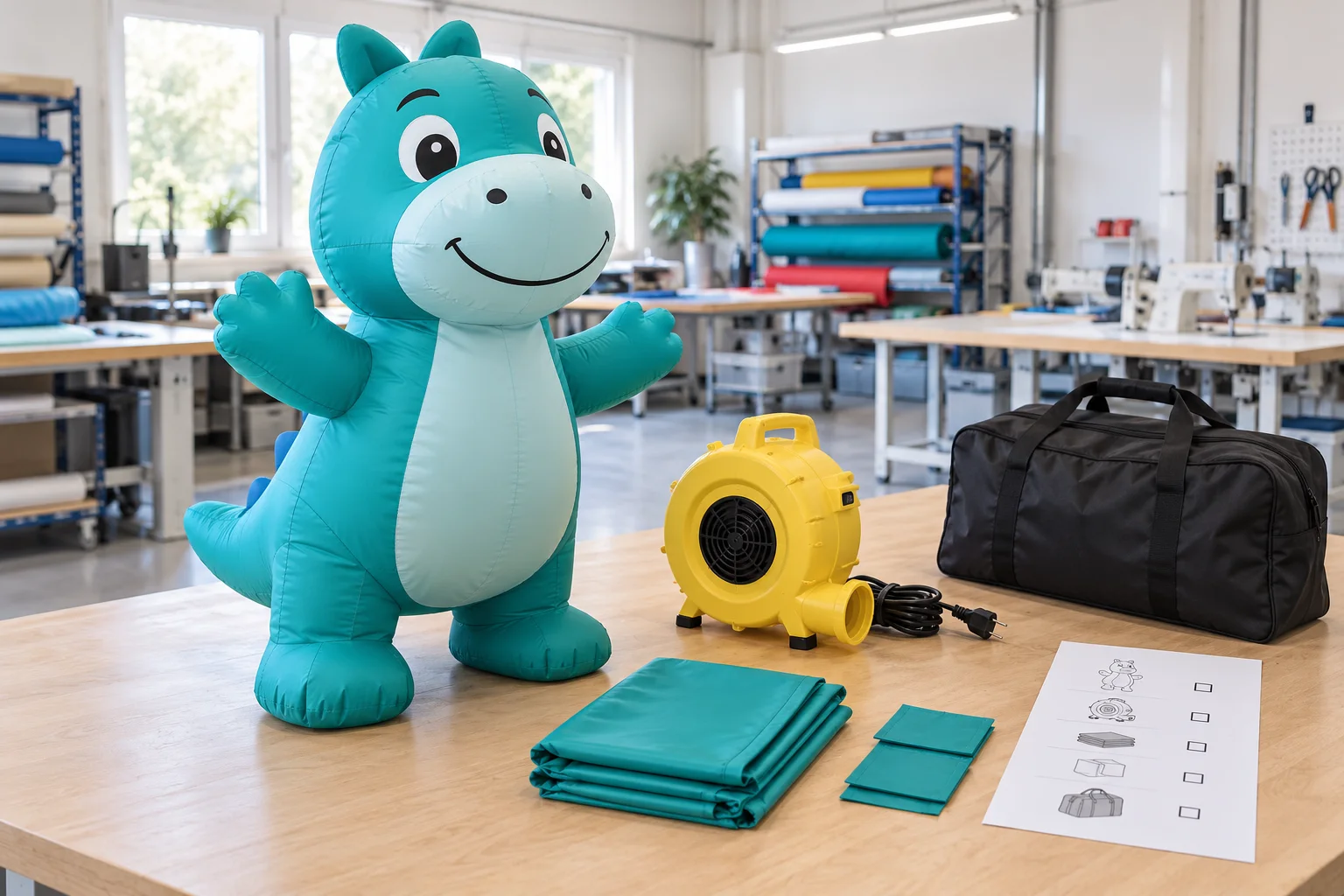
For a static inflatable mascot, begin with a component list: body, specified air equipment, carry bag and any agreed accessories. Add optional lighting or other equipment only when it is actually proposed. Record supplier-provided items, buyer-provided items and excluded items separately.
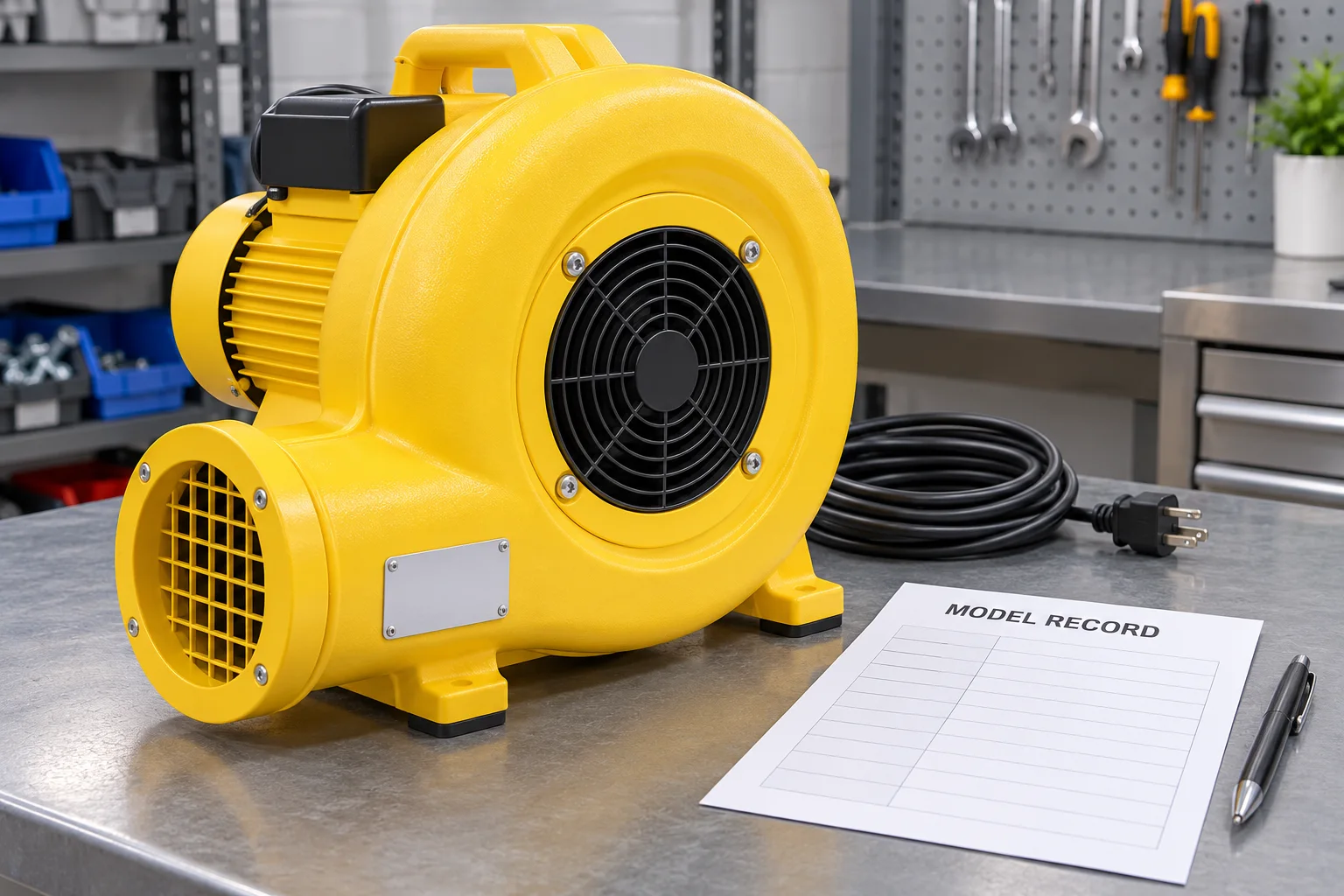
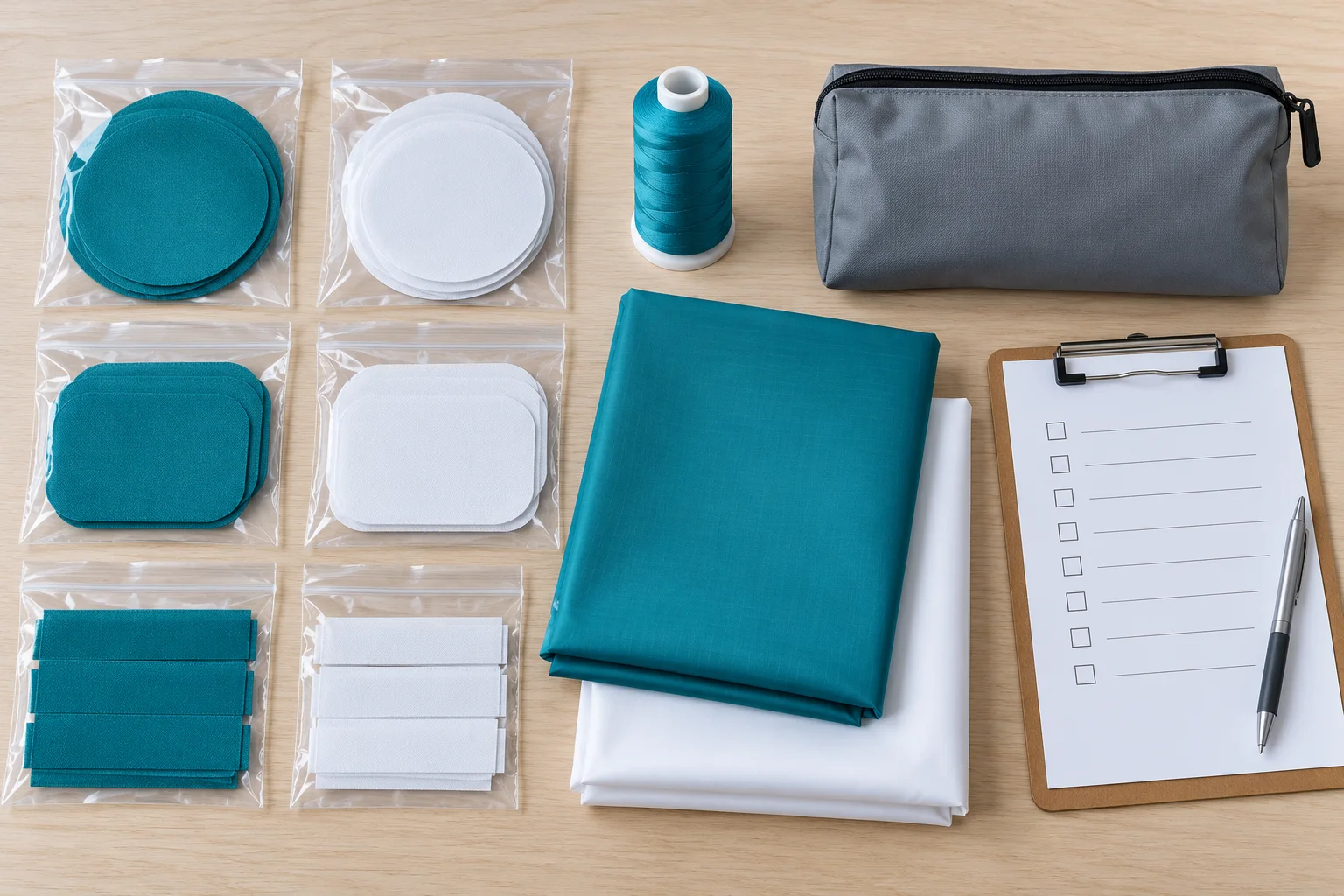
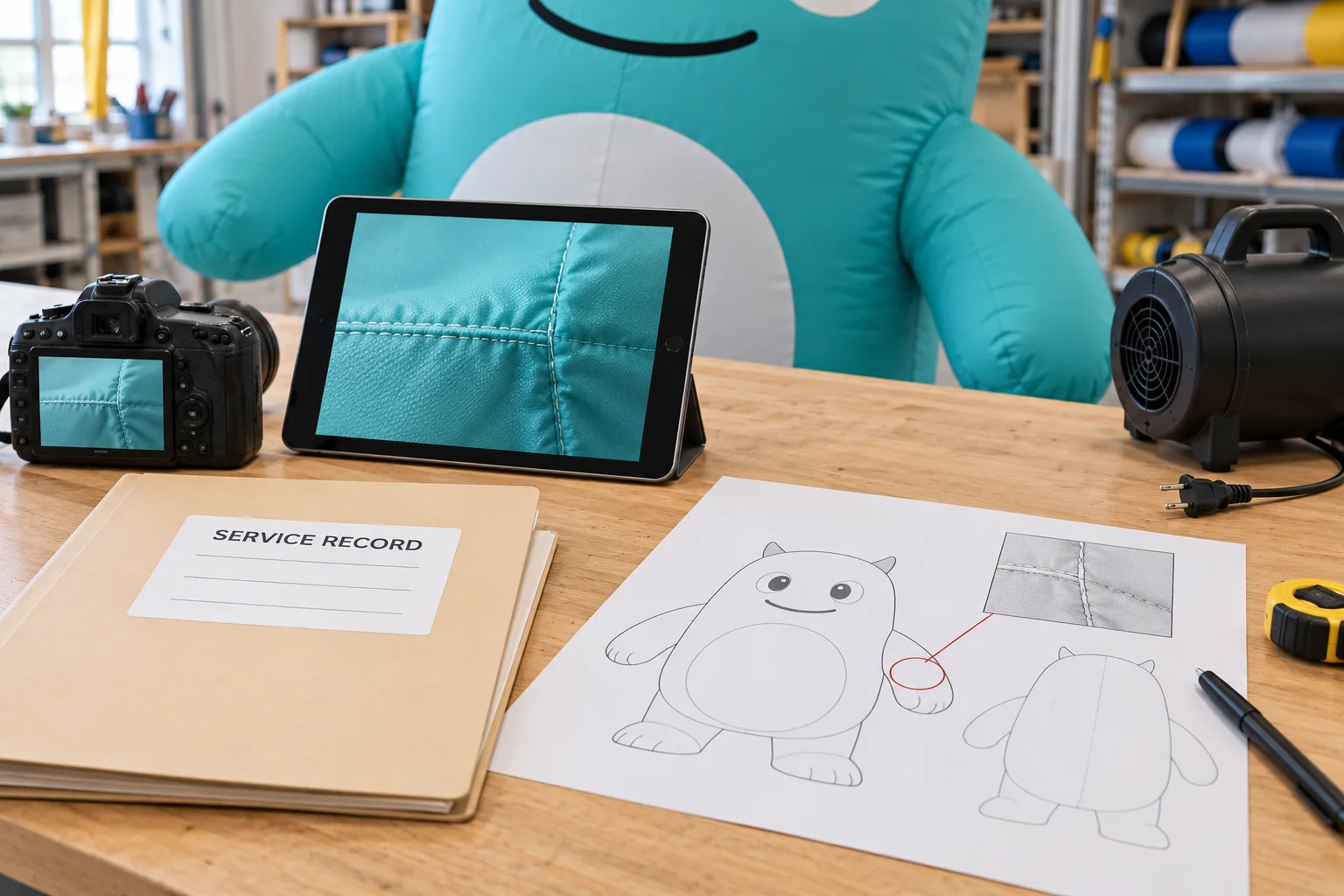
This article is a purchasing checklist for advertising displays, not a statement of InflatCraft warranty duration or a repair manual. Coverage and service terms must be confirmed for the actual order. All four photographs are AI planning illustrations, not delivered-order evidence.
2. Compare scope, not just the word warranty
Ask each supplier to complete the same comparison. Leave an unanswered term open rather than treating silence as coverage.
| Scope item | Question to resolve | Record to keep |
|---|---|---|
| Included spare materials | Which materials, sizes and quantities ship with the order? | Itemised packing list and instructions |
| Inflatable body | Which defects are covered, for how long, and with what exclusions? | Written terms tied to the order |
| Blower or optional electrical equipment | Who provides the remedy and which model is covered? | Equipment identification and applicable terms |
| Claim assessment | What photos, records or inspection are needed? | Support contact and evidence requirements |
| Remedy | Repair, replacement, parts or another agreed remedy? | Written decision and approval process |
| Shipping and related costs | Who pays each freight leg and any assessed charges? | Agreed allocation, not an assumed free shipment |
| Paid replacements | How are availability, compatibility and lead time confirmed? | Separate current quotation and specification |
3. Record the blower identity before a replacement is needed
Keep clear photographs of the actual blower identification and its supplied documentation. Connect that record to the inflatable body and order reference. A product shape or casing colour is not a reliable model identifier.
Before ordering a replacement, ask the supplier to confirm its compatibility with the particular inflatable and air connection. Provide the destination and electrical requirements for review. Do not choose an alternative solely because it has a similar appearance or advertised wattage, and do not improvise electrical modifications.
Keep the applicable instructions with the equipment. If damage or abnormal operation is suspected, follow those instructions and seek supplier or qualified service advice rather than continuing to use it to collect a more convincing demonstration video.
4. Define what a spare-material kit does and does not mean
Request the proposed contents by item, material and quantity. Ask whether the materials are appropriate for the supplied construction and which tasks, if any, the supplier authorises the user to perform. A piece of matching-colour fabric does not by itself establish a suitable repair method.
Some issues need manufacturer assessment or qualified servicing rather than a field patch. Ask how the supplier distinguishes those cases and how an unauthorised modification may affect the agreed support terms. This guide intentionally gives no adhesive, stitching or electrical repair procedure.
For displays used across several events, agree who checks inventory and who can authorise ordering replacement items. Do not describe optional stock held for convenience as warranty coverage.
5. Build a useful support request without exposing unnecessary data
A focused report connects the symptom to the actual item. Include the order reference, product identifier, affected component, when the issue was first noticed and the relevant operating or storage context. Attach a wide view locating the issue and a closer view showing it, where these can be obtained safely.
Keep the approved artwork revision, delivery record, packing list and equipment documentation accessible. Send only the information needed for the assessment; remove unrelated personal or customer information from photographs and documents.
Ask for a written response that identifies the proposed action, what remains to be checked, who approves the action and who bears each cost. An acknowledgement from support is not necessarily acceptance of a warranty claim. Likewise, an initial diagnosis is not a confirmed replacement dispatch date.
6. Clarify delivery and response expectations
Before purchase, ask which support channel is monitored and how availability is handled across time zones. If a particular response or dispatch commitment matters to the event schedule, request it in the written proposal. Do not infer a service-level commitment from a sales contact being available during the quotation.
For any replacement shipment, distinguish availability, production or preparation time, dispatch and expected arrival. Confirm the delivery address, receiving contact and responsibilities for freight and any applicable destination charges. A free replacement component does not necessarily mean every associated cost is free.
If the next event is time-sensitive, tell the supplier the required arrival date and ask for realistic options. Keep an event contingency plan independent of an unconfirmed shipment; a planning estimate is not an arrival guarantee.
7. Planning example: a repeat-use mascot display
Planning reference, not a completed customer case: a marketing team orders one static character for several store promotions. Its purchase record identifies the body, selected blower, carry bag and an optional material kit. The team asks for component-specific terms and a replacement enquiry process before accepting the quotation.
The useful result is a clear record of what is included, excluded and still awaiting confirmation. It does not establish a warranty period, guaranteed life, operating condition or repair outcome. Use the custom character category to begin the production enquiry, and attach the proposed after-sales schedule alongside the artwork brief.
Source question and purchasing context
A buyer in this Alibaba sourcing discussion asked about blower durability and warranty terms; replies also raised whether spare parts are included. The discussion concerns sports and play equipment, not InflatCraft advertising displays. It is used only to identify the cross-category purchasing question, not as technical evidence, a customer testimonial or a safety standard.
This guide responds with an original documentation framework for static advertising inflatables. Compare the completed scope alongside the custom inflatable quotation checklist, then ask for a project-specific written proposal.
Product Buying Guides
More on choosing and ordering custom inflatables.
Custom Inflatable Columns: Single vs Multi-Column Layouts
Compare single inflatable columns and multi-column entrances. Plan footprint, artwork, inflation, lighting and a complete project quotation.
Custom Inflatable Mascots: Print vs 3D | InflatCraft
Decide which mascot details to print and which to build in 3D. Compare character recognition, construction review, packing and quotation scope.
Custom Inflatables Bulk Order Checklist | InflatCraft
Prepare a custom inflatables bulk order with a shared approval record for artwork, color, dimensions, accessories, unit IDs, packing and acceptance.
Custom Advertising Balloon Quotes | InflatCraft
Request a custom advertising balloon quote with artwork, size, quantity, support method and destination. Review air-filled, suspended and helium proposals.
Compare sizes, materials and air systems on the custom advertising inflatable product range page before sending an RFQ.
Relevant Product Pages
Compare specifications before submitting an RFQ.
Related Buying Guide
Buyer FAQ
Additional specification questions.
No inclusion should be assumed. Ask for each item and quantity on the quotation and packing list, including whether any kit is optional.
Not necessarily. Request component-specific terms, the responsible provider, exclusions and the remedy process for the actual order.
Do not treat wattage alone as compatibility evidence. Provide the inflatable and equipment records and obtain confirmation for the proposed replacement and destination requirements.
The written terms and claim decision should specify that. Confirm each freight leg and related charges rather than assuming all shipping is included.
No. This article explains what to ask. The applicable period, coverage, exclusions and remedy must be stated in the project quotation or agreement.
Provide the order and item reference, affected component, description of the issue, safe-to-obtain overview and detail photos, and relevant equipment records. Exclude unnecessary personal data.