
Buyer Guide
Custom Inflatables Bulk Order Checklist: Sample Approval and Batch Consistency
A consistent bulk order starts with one agreed reference package: the approved artwork revision, sample or representative references, dimension definitions, accessory schedule and packing instructions. Record what was approved, what remains open and how the batch will be checked before production release.
By InflatCraft Product Team • Last updated
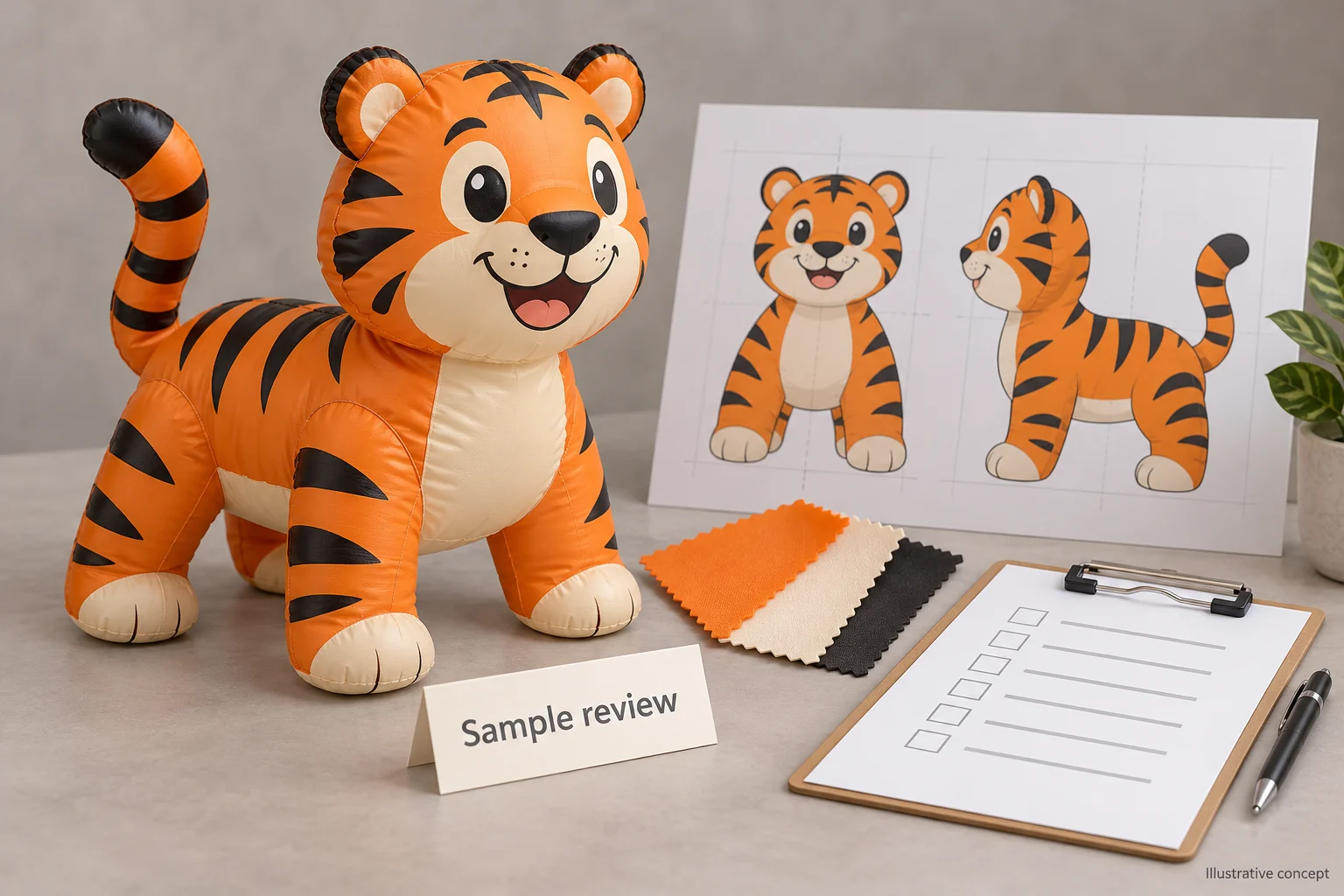
Build one approval record for the whole order
A custom inflatables bulk order can include several designs, sizes or delivery groups. “Same as the sample” is not enough if the sample used an earlier logo, different blower or temporary packaging. Give each style a clear identifier and build a reference record that links the purchase scope to the approved drawing, artwork files, sample evidence and accessory list.
For wholesale custom advertising inflatables, separate shared requirements from style-specific details. One campaign may use matching artwork on tiger mascots and printed columns, but the dimensions, air systems and packing can differ. Record the quantity for each configuration and identify which approved reference applies. Do not let an overall order total replace the style-by-style allocation.
Freeze artwork, color references and change control
Use an artwork filename or revision ID that appears in the approval record. Include logo placement, print orientation, language, panel alignment and any serial or location-specific text. Archive superseded versions separately and ask the supplier to acknowledge the active revision. A replacement file sent in a chat should not silently become a production instruction.
- Record the approved drawing and artwork revision for every style.
- Identify physical color references or other agreed color targets.
- Define the viewing conditions and comparison method for color review.
- List unresolved comments and require a revised approval when they affect the specification.
Screen previews, photographs and printed fabric can look different because of lighting, camera processing, material and display settings. Agree a practical reference and acceptable variation before production. Do not expect a digital color value alone to guarantee identical appearance across every unit or material batch, and do not treat a photograph as objective proof of an exact color match.
Specify how dimensions will be measured
State the unit of measurement and define each dimension: overall inflated height, widest body width, footprint or a particular opening. Identify the reference points on a drawing. Confirm the inflation state and setup conditions used for measurement so that different people are measuring the same feature rather than comparing a folded panel with an inflated body.
Agree dimensional tolerances suitable for the design and its use; this checklist does not prescribe universal tolerances. For a custom inflatable column, separate overall height from the usable artwork area. For a tiger mascot, clarify whether ears and projecting arms are included in the maximum dimensions. Small definition differences can create avoidable acceptance disputes.
Know exactly what sample approval covers
A print swatch can help assess color and material appearance, but it does not approve the full shape. A drawing can establish intended dimensions and layout without proving the final inflated profile. A physical sample may cover more of the finished configuration, yet its accessories or packaging may still differ from the planned batch. Name the approval type and explicitly list its exclusions.
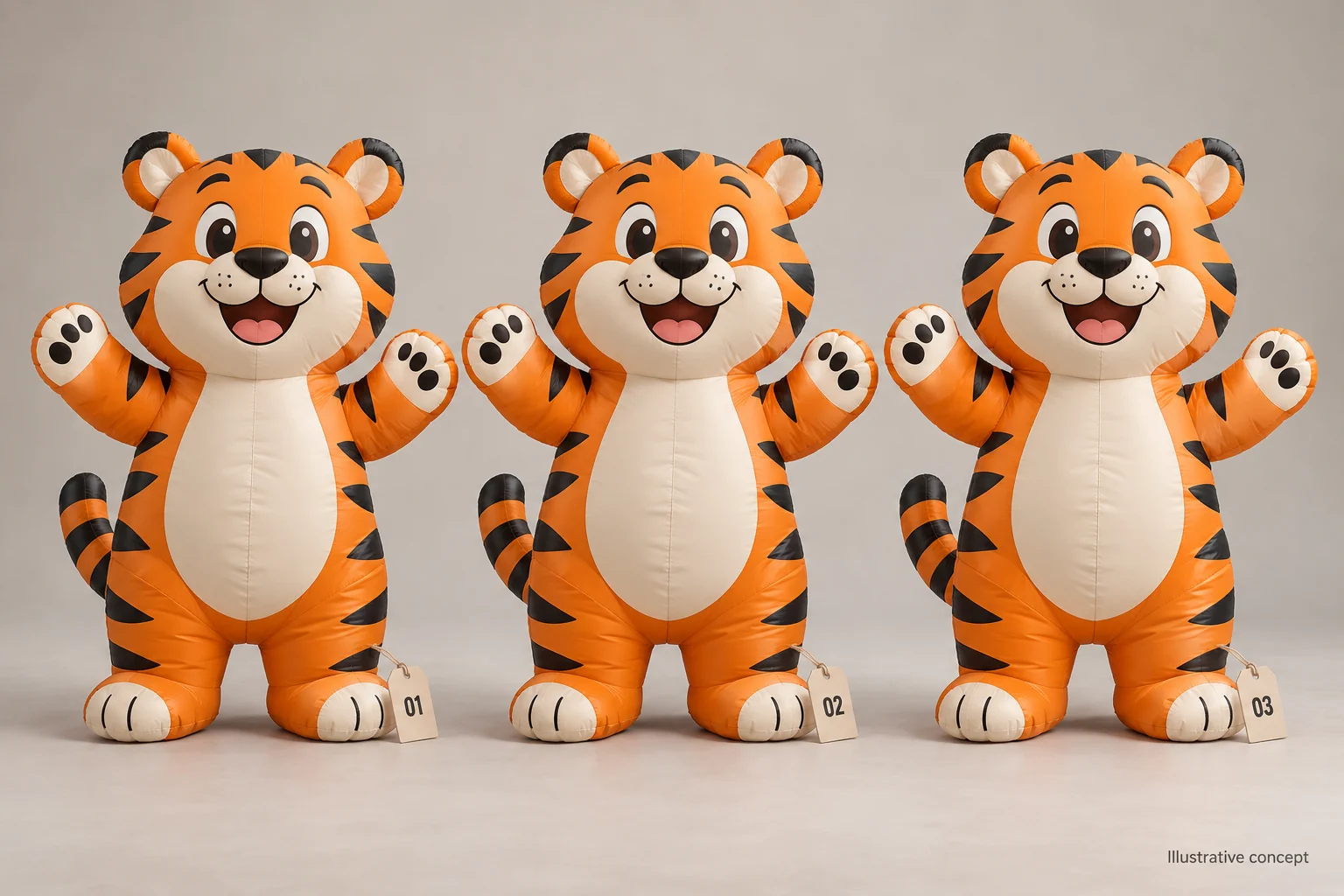
For OEM custom advertising inflatables, confirm authorization to use supplied branding and decide which labels, instruction documents or packaging graphics are included. Record requested changes after the sample review and agree whether a revised sample or another documented verification is needed. Approval with open comments should identify what must be resolved before the affected production stage proceeds.
Use a batch acceptance checklist with agreed evidence
| Check area | Record before release | Evidence to agree |
|---|---|---|
| Appearance and print | Active artwork, colors and feature treatment | Defined views and close-ups against the approved reference |
| Dimensions and configuration | Measurement points, tolerances and setup | Measurements linked to the relevant unit or sample ID |
| Air system and accessories | Model, quantity, voltage, frequency, plug and connections | Accessory identifiers, count and agreed functional checks |
| Identification and allocation | Style, size, unit or carton IDs and destination groups | Traceable unit list and packing list |
| Packing and documents | Protection, carton contents, labels and instructions | Packing photos and document review tied to shipment scope |
Agree whether checks cover every unit or a stated sampling plan, who performs them, when they happen and what happens if a discrepancy is found. This article does not assert an inspection standard, certification or pass rate. If your organization requires a particular method, put it in the purchasing requirements and confirm that it is included rather than assuming the supplier uses it.
Use consistent photo angles and identify the unit being shown. Photos can help verify visible details; they cannot independently prove every material property or operating condition. Functional checks, installation requirements and any third-party inspection need an agreed scope. Keep a record of corrective actions and rechecks before accepting a deviation or releasing the affected shipment.
Match accessories and packing to each delivery group
List blowers or other air-system components by the agreed model and specification. Confirm quantity, voltage, frequency, plug and connection compatibility for the destination. Treat a proposed substitution as a change requiring review, even if its appearance is similar. Include the agreed attachment accessories, repair materials, storage bags and operating instructions in the allocation.
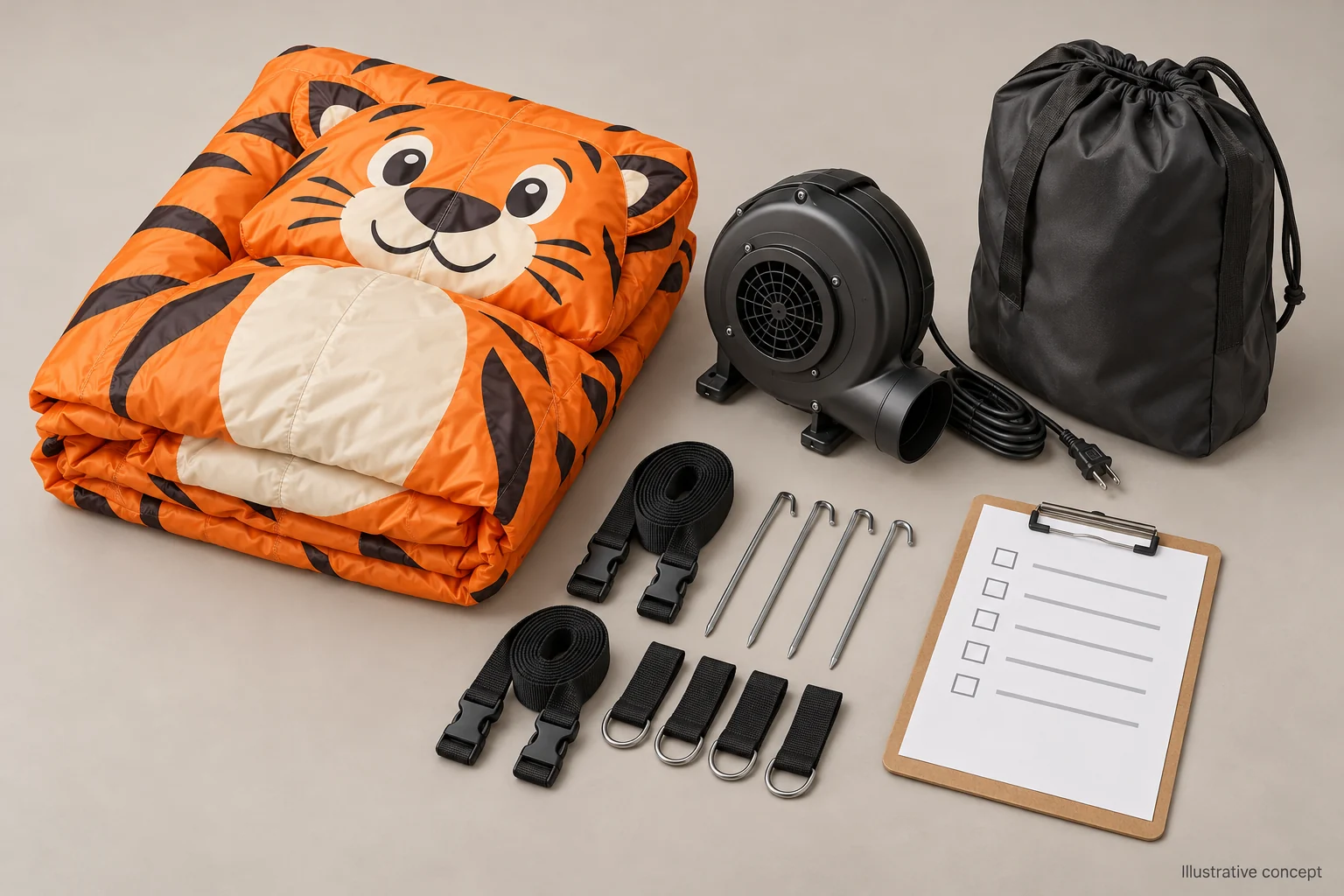
Define whether each carton holds a complete set or whether accessories ship separately. Use identifiers that receiving teams can match to the packing list without opening every package. Confirm the actual packed dimensions and weights for freight planning when available; a concept image is not a shipping measurement. Clarify how shortages, transit damage and other discrepancies should be reported under the agreed commercial terms.
Send an order brief that supports a useful quotation
Send InflatCraft the total quantity, style-and-size allocation, artwork status, sample requirements and acceptance priorities. Add delivery destinations, required arrival dates and any split-shipment needs. Identify the details that matter most, such as logo placement, facial features, accessory compatibility or carton identification, so they can be addressed in the proposal.
Ask the quotation to identify the sample and approval stages, production-release conditions, checking scope, included accessories and packing assumptions. Resolve open requirements before treating a sample approval as approval of the complete bulk supply package.
Product Buying Guides
More on choosing and ordering custom inflatables.
Custom Spheres vs Helium Balloons | InflatCraft
Compare air-filled reflective spheres with helium advertising balloons by installation, artwork, operating responsibilities and quotation scope.
Fixed Character Displays or Wearable Mascots? | InflatCraft
Compare a stationary character display with a wearable custom inflatable mascot by interaction, performer requirements, staffing and quotation scope.
Sports Entrance Tunnels or Event Tents? | InflatCraft
Plan a branded sports tunnel around usable passage, event operations and artwork, and distinguish it from an occupied event tent.
Custom Inflatable Displays for Trade Shows
A practical B2B guide for choosing custom inflatable arches, mascots, product replicas, logo signs, and air dancers for trade show booths.
Compare sizes, materials and air systems on the custom advertising inflatable product range page before sending an RFQ.
Relevant Product Pages
Compare specifications before submitting an RFQ.
Related Buying Guides
Buyer FAQ
