
Buyer Guide
Seam Construction Types in Inflatables and How Each One Fails
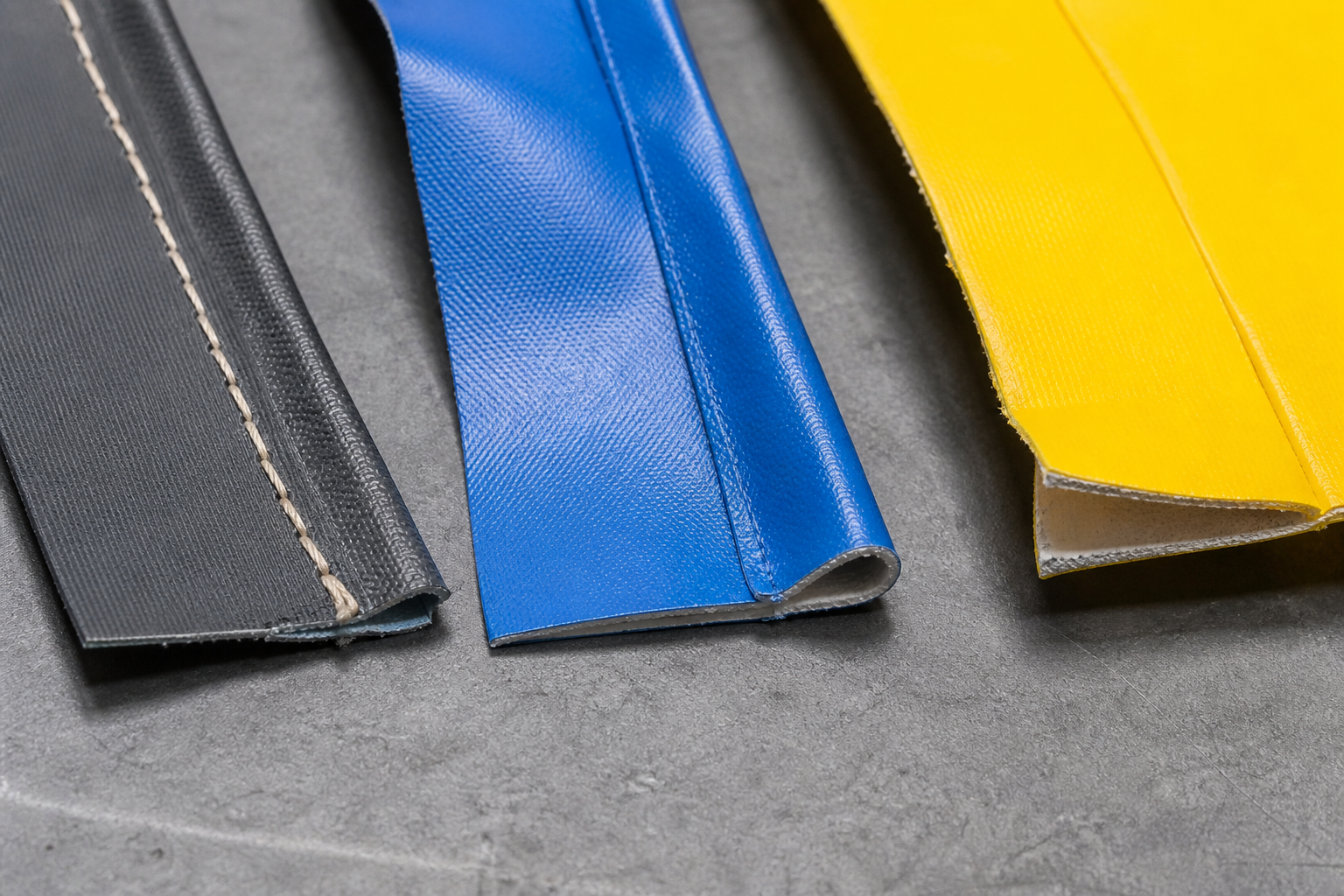
Commercial inflatables are joined with sewn, welded or bonded seams. Sewn seams suit lighter textiles and continuous-air units and tend to fail through thread wear and stretched stitch holes. Welded seams fuse PVC panels together and fail mainly where the weld was incomplete or where repeated flexing cracks the edge. Bonded seams rely on adhesive and can creep or peel under heat and load. Whatever the method, seams fail first where stress concentrates — tie points, the base, panel junctions and tight curves — so that is where reinforcement and inspection belong.
By InflatCraft Product Team • Last updated September 2, 2026
Why seams decide how an inflatable fails
An inflatable is a set of panels holding pressurised air, and every panel is joined to another at a seam. The panels themselves are usually continuous, uniform material. The seams are where two pieces meet, where the construction method matters, and where the load of the whole structure is transferred from one panel to the next.
That makes seams the most common place for an inflatable to start failing, and it makes seam construction one of the most useful things to understand when comparing suppliers. Two inflatables made from the same fabric can behave very differently in service because of how their seams were made and reinforced.
Sewn seams
Sewn seams join panels with thread, the same basic principle as clothing, usually with the seam folded or overlapped for strength. Sewing is widely used with lighter coated textiles, and sewn inflatables are commonly continuous-air units, where a blower keeps supplying air and small amounts of leakage through stitch holes do not matter.
Sewn seams typically fail gradually. Thread abrades and weakens with flexing and exposure, and stitch holes can elongate under repeated load until the seam begins to open. The warning signs are loose or broken stitches, visible gaps along the seam and holes that have stretched into slots.
Welded seams
Welded seams fuse thermoplastic material such as PVC so the two panels become one continuous piece along the joint. The fusion is made with heat, applied by hot air, or by high-frequency energy for suitable materials. A good weld is airtight and, along the weld itself, can be as strong as the surrounding material.
Welded seams tend to fail in two ways. Where the fusion was incomplete — too little heat, contamination on the surface, uneven pressure — the weld can peel apart under load, sometimes long after delivery. And where the material is flexed repeatedly at the edge of a weld, the transition between welded and unwelded material can crack. The signs are lifting edges along the seam and fine cracks running alongside it.
Bonded seams
Bonded seams join panels with adhesive rather than stitching or fusion. Adhesive bonding is also the basis of most repairs, including field patches, which is why it is worth understanding even where the original construction is sewn or welded.
A good bond depends on clean, dry surfaces, the right adhesive for the material and proper curing. Bonds tend to fail by creeping or peeling, particularly under sustained load and heat, starting at an edge or corner. Lifting edges, softened adhesive and panels that have shifted relative to each other are the signs to look for.
Where stress concentrates
Whatever the seam method, failure rarely starts in the middle of a long straight seam. It starts where stress concentrates. Tie points are the first: the load of securing the whole structure is focused into a small area of fabric, and the seams nearest them take it. The base is the second, because it carries weight and abrasion together.
Junctions where several panels meet, and tight curves where the material is forced into a small radius, are the third and fourth. A well-designed inflatable adds reinforcement at these points — extra layers, wider seams, load-spreading patches around tie points — rather than relying on the same construction everywhere.
Checking seams on delivery and in service
On delivery, inflate the unit and walk around it slowly. Look along every seam for gaps, lifting edges, uneven welds or loose stitching, and pay particular attention to tie points, the base and panel junctions. Photograph anything questionable and raise it with the supplier straight away, while the unit is new.
In service, check the same points after use, especially after windy days, rough surfaces or heavy handling. Catching a seam as it begins to open allows a planned repair rather than a failure on site. How to decide between a field repair and a factory repair is covered in the repair guide in this series.
What to ask a supplier about seams
Seam construction rarely appears on a quotation unless the buyer asks, so ask. Which joining method is used on which parts of the design, and why? Where is the structure reinforced — at tie points, along the base, at panel junctions — and how? Different parts of the same inflatable can reasonably use different methods, and a supplier who can explain the choice for each part usually understands the product well.
Ask how seams are checked during production and before shipping. A request for close-up photographs of seams at the tie points and base, taken on the finished inflated unit, is reasonable and quick to meet, and it creates a record of the condition the unit left the factory in.
Ask how each type of seam on your unit is repaired, and whether the materials needed for a field repair of the fabric are supplied with it. Knowing the repair route before damage happens makes the decision between a field patch and a factory repair much faster when it matters.
Finally, ask what reinforcement options exist for your specific use. For a unit that will be secured and moved often, extra reinforcement at a handful of points can add more to its service life than any change to the main material.
Materials and Durability Guides
More on inflatable materials and durability.
PVC Tarpaulin Weight Guide for Outdoor Inflatables
How PVC tarpaulin weight and thickness are stated, what the base fabric and coating each do, why heavier is not automatically better, and how to match material to outdoor use.
Oxford Fabric vs PVC for Inflatable Mascots
Why the material choice matters more for a mascot than for simpler shapes, how Oxford fabric and PVC differ in detail, print, weight, cleaning and outdoor handling, and how to choose.
UV Degradation in Outdoor Inflatable Fabric
What prolonged sunlight does to coated inflatable fabric and print, where the damage shows first, what to ask a manufacturer about outdoor exposure, and the habits that reduce it.
Compare sizes, materials and air systems on the verified material and air system specifications page before sending an RFQ.
Relevant Product Pages
Compare specifications before submitting an RFQ.
Buyer FAQ
Additional specification questions.
Where to order
Order direct from the manufacturer.
Published by InflatCraft, operated by Tianjin Mufeng Trading Co., Ltd., a custom inflatable manufacturer founded in 2005 and based in Tianjin, China. We export to the United States, United Kingdom, Canada, Australia, Germany, France, Spain and Italy.
Request a quote
Send the brief and get a specification-based quotation.
MOQ and lead time
What sets the minimum order and where the time goes.
Sourcing from China
Brief, approval, Incoterms, freight and import, in order.
Verified specifications
Materials, air systems and lead time this site quotes against.
Export planning by country: United States, United Kingdom, Canada, Australia, Germany, France, Spain, Italy.