
Buyer Guide
Blower and Air System Options for Outdoor Inflatable Displays
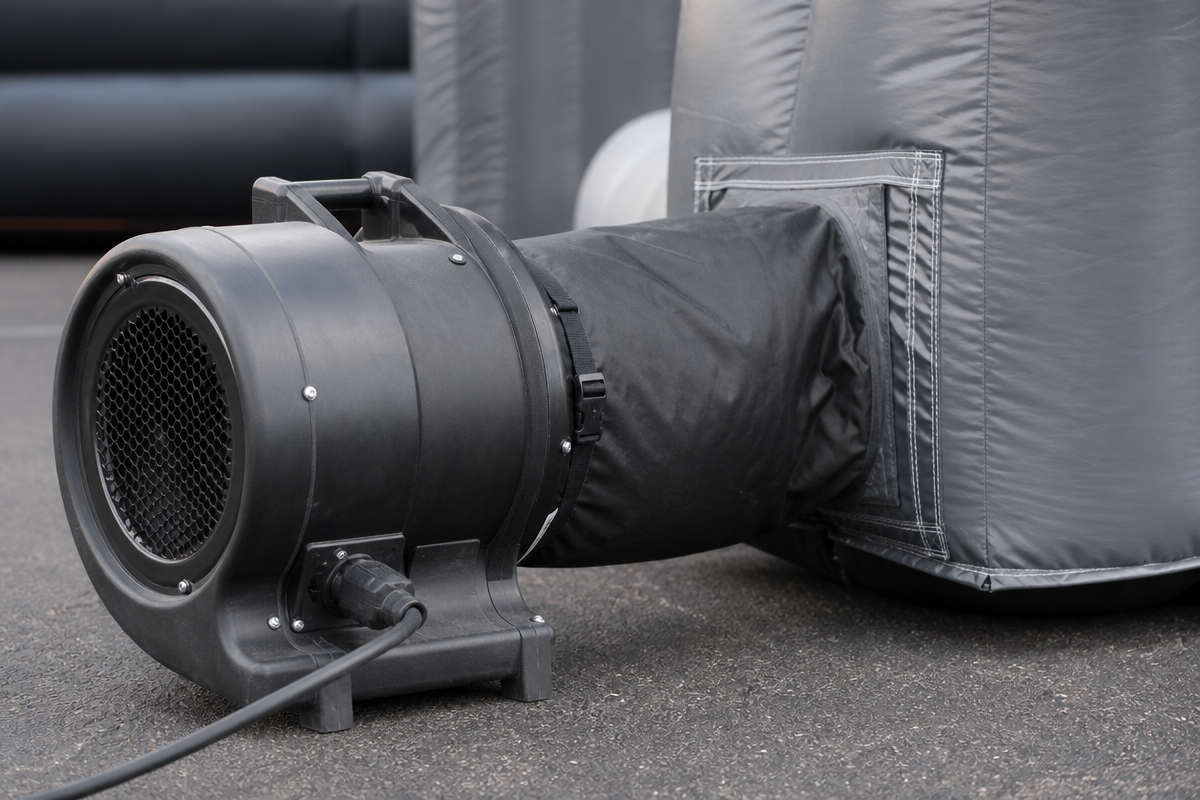
For many outdoor advertising inflatables, a continuous-air electric blower is the default air system, with 110–120V or 220–240V selected according to the destination market and site power. The final setup also depends on the structure, operating duration, blower position, cable routing, noise limits, weather exposure, anchoring, and access. Sealed-air or project-specific construction can be assessed when the approved design supports it.
By InflatCraft Product Team • Last updated
Which air system is normally used outdoors?
Continuous-air construction with an electric blower is common for applicable advertising inflatables. It supports ongoing inflation during operation, but the blower must be matched to the product structure and power supply.
Sealed-air construction can be assessed for suitable designs after diameter, event duration, suspension method, and surface finish are reviewed.
What power information should a buyer provide?
State the destination country, available voltage, plug configuration, power access, cable distance, operating hours, and any venue rules. InflatCraft commonly reviews 110–120V or 220–240V options by destination market.
Do not select a blower from voltage alone: airflow, position, access, noise, and protection also matter.
How should a blower be positioned for outdoor use?
The blower should be accessible for operation and maintenance without creating a trip hazard or disrupting visitor flow. Confirm cable routing, concealment, protection from rain or impact, and the distance from the inflatable.
The final accessory list and blower model are confirmed with the quotation and project specification.
What is the relationship between air system and anchoring?
A continuous-air system does not replace anchoring. Outdoor ground installations still require reinforced points, ropes, ballast, floor fixing, or another project-appropriate method matched to the site surface and expected conditions.
Materials and Durability Guides
More on inflatable materials and durability.
How Logo Printing Works on Inflatables
A buyer guide to artwork files, color references, panel layout, seams, printing placement, and approval steps for custom inflatable logos and graphics.
Waterproofing and Durability of Outdoor Inflatables
The outdoor durability questions buyers should ask about material, seams, blower protection, anchoring, surface conditions, packing, and operation.
PVC Tarpaulin Weight Guide for Outdoor Inflatables
How PVC tarpaulin weight and thickness are stated, what the base fabric and coating each do, why heavier is not automatically better, and how to match material to outdoor use.
Oxford Fabric vs PVC for Inflatable Mascots
Why the material choice matters more for a mascot than for simpler shapes, how Oxford fabric and PVC differ in detail, print, weight, cleaning and outdoor handling, and how to choose.
Compare sizes, materials and air systems on the verified material and air system specifications page before sending an RFQ.
Relevant Product Pages
Compare specifications before submitting an RFQ.
Buyer FAQ
