Buyer Guide
Custom Inflatable Package Box Replicas: Dieline, Flat-Face and Print-Proof Approval Guide
For a custom inflatable packaging box replica, provide the original carton dieline or dimensioned front, back, side and top views, approved artwork, target installed dimensions and venue information. Ask for a three-dimensional inflation concept that shows rounded corners, visible seams, logo positions and the proposed air and fixing system. Approve the structural proof separately from the print proof, then request a quotation covering the whole kit, inspection evidence, packing and destination.
By InflatCraft Product Team • Last updated
Who needs this approval guide and what it does
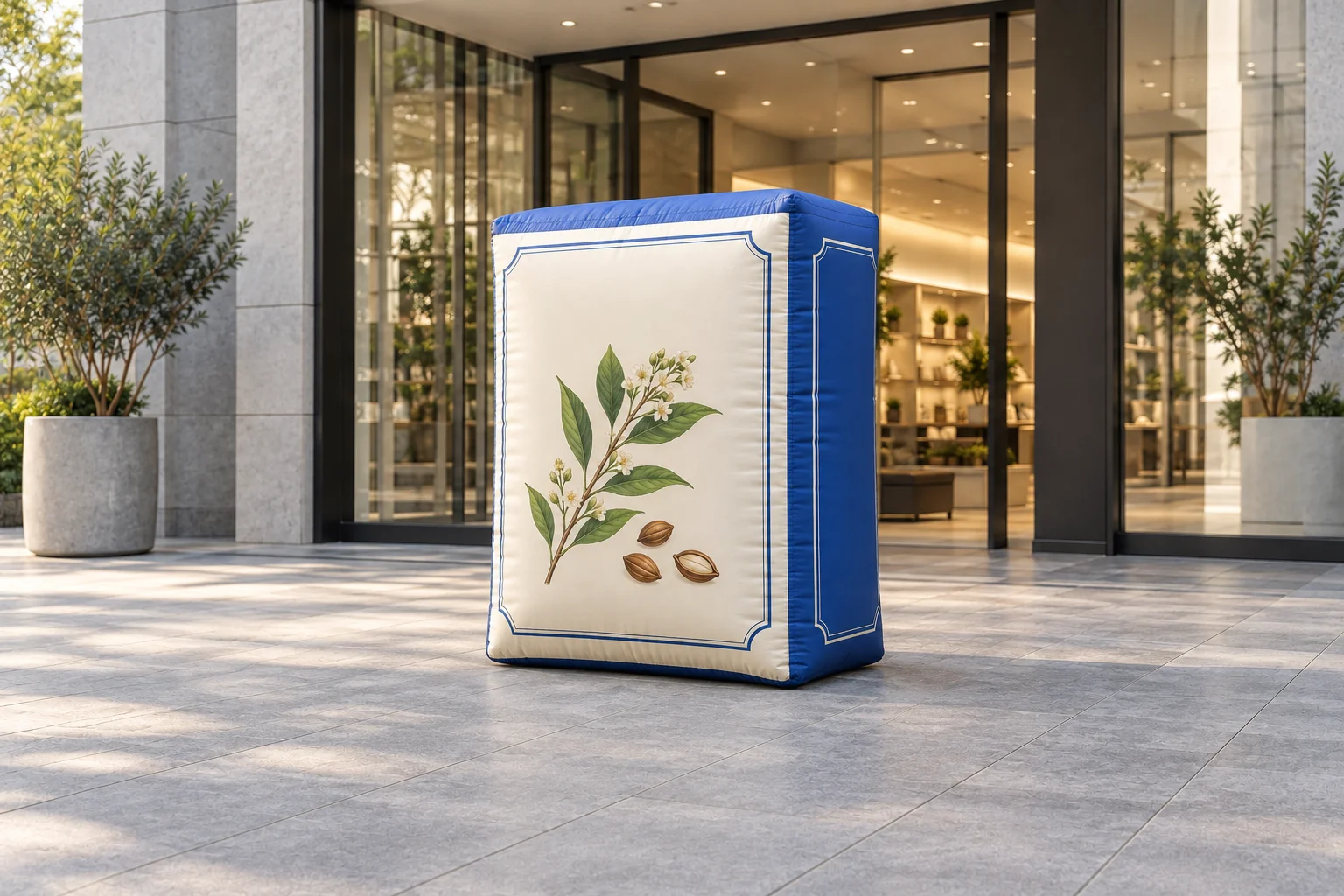
A retail brand may have a finished carton dieline and expect an inflatable replica to look exactly like its shelf packaging at several metres high. The original pack is a rigid object; an air-supported textile shell behaves differently. This guide is for brand procurement teams, advertising agencies, exhibition builders and distributors preparing a custom inflatable package box for US, UK and Australian launches. It sets out a verifiable proof-and-RFQ process, not a claimed manufacturing tolerance, performance rating or delivered client case.
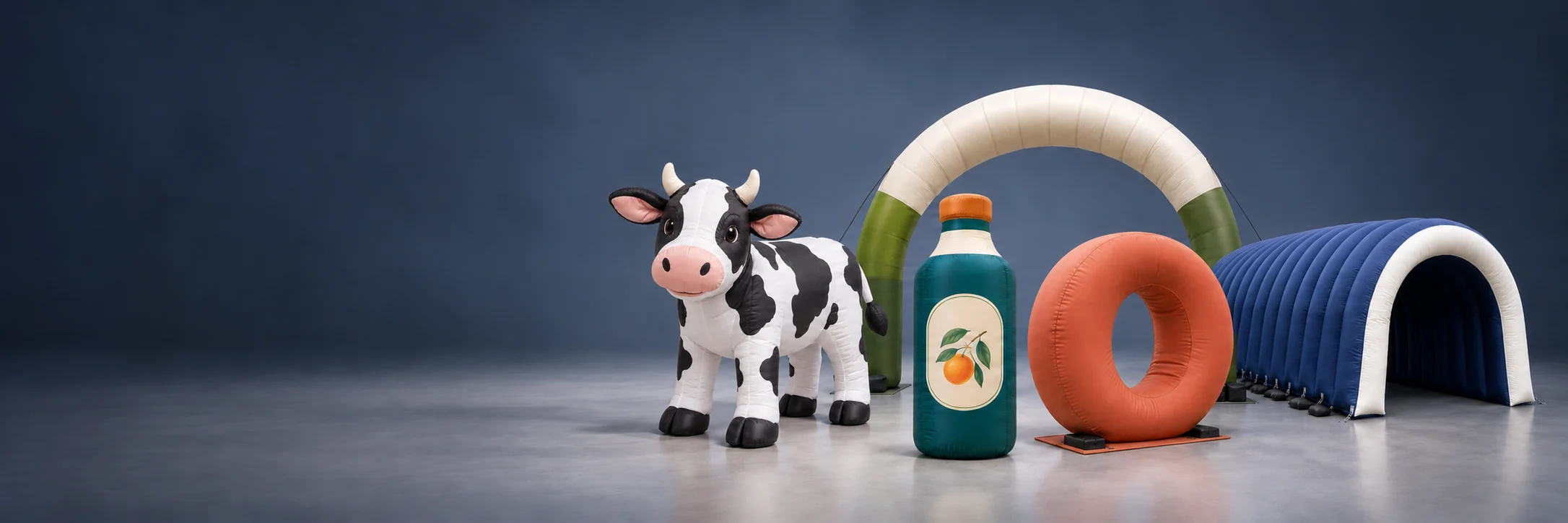
Start on the custom inflatable package and box replica product page. Compare other shapes in the product replica collection when the pack includes a prominent bottle, can or soft pouch silhouette rather than a reasonably box-like body. Choosing the right format avoids forcing an unsuitable structure to imitate every detail of a package.
1. Prepare the original packaging source pack
Request the approved carton dieline, dimensioned retail-pack views, brand artwork, color references and any mandatory wording. Mark the actual product's front, back, left, right, top and bottom faces, including fold lines, glue flap, tuck lid, perforations or handle cutouts that create recognition. The dieline is valuable evidence of where artwork belongs, but it is not a cutting template that can be enlarged and sewn unchanged.
Identify which information must read from the audience's approach: a central logo, hero product name, campaign message or distinctive color band. Separate this from tiny regulatory or ingredient copy that may be unreadable on a large fabric display, distorted by seams or inappropriate to reproduce as a visual claim. Use only artwork the buyer is authorised to reproduce.
Ask for a controlled source folder containing the editable artwork, placed images at suitable resolution, font details or outlined lettering, color references and a version identifier. A phone photograph is useful as a reference but cannot establish print-ready copy, exact fonts or correct color.
2. Define the installed box, not just a scale multiplier
Write down the desired installed height, width and depth, maximum permitted footprint, primary viewing direction and whether the display will sit at a retail entrance, inside an exhibition booth or in an outdoor promotional area. If the exact height is flexible, state the available range. Do not assume scaling a 200 mm carton by a fixed factor creates a stable or practical inflatable.
A packaging box may include a lid step, an open flap or a handle. Decide whether those details are essential three-dimensional recognition features or can be represented by print. Thin projections, cutouts and perfectly square corners demand a separate feasibility review. Ask the supplier to document simplifications before the brand signs off the visual concept.
For a retail promotion, photograph the approach and traffic route; for an exhibition or trade show, provide the stand plan and its organiser rules. Neither type of event receives automatic site approval through a product quotation.
3. Understand the shape compromises caused by inflation
A fabric surface under pressure tends to bulge, while an unsupported corner rounds. Pattern shaping, internal connections and other design methods may make a panel appear flatter, but no single method guarantees a rigid-carton appearance. Evaluate the proposed geometry at the intended scale and viewing distance instead of relying only on an idealised front-view rendering.
Ask to see front, side, three-quarter and top views. Mark where edges soften, where seams appear, whether the bottom is visually exposed, and whether the proposed base treatment changes the intended proportions. If the concept uses an internal shaping system, request an explanation of its purpose and the required access or inspection provisions, without assuming a specific construction specification before engineering review.
| Carton feature | Buyer approval question | What must remain open until review |
|---|---|---|
| Sharp corners | Which visible edge character is essential to brand recognition? | Actual achievable radius, pattern and support method |
| Large front panel | Where must the logo remain readable from the main approach? | Degree of bulge, seam placement and print alignment |
| Tuck-top or lid | Is this a real raised feature or a printed detail? | Simplified construction, attachment and profile |
| Handle or cutout | Does the opening matter to the campaign photograph? | Feasibility and any new structural/venue constraints |
| Base and underside | What will visitors see from ground level? | Inflation access, fixing points and any visual base treatment |
4. Build a print map for every visible face
The retail carton art may assume a perfectly straight fold at every panel edge. An inflatable's sewn or joined panels may round through that edge or interrupt the design. Request a print map showing the proposed inflatable pattern, seam locations, each graphic panel and the direction the audience will face. Critical lettering should not cross a panel break without an expressly reviewed solution.
For each face, designate either mandatory matching, reasonable visual approximation or nonessential detail. Use a brand-approved master version; prepare variant files separately for a multi-SKU campaign. If the display includes QR codes, barcodes or precise claims, discuss legibility and whether they should be printed at all; do not promise scanability without a realistic proof at the intended viewing distance.
Color should be reviewed against specified references, substrate choice, print process and lighting conditions. Screen color and photographic mockups cannot guarantee exact fabric color. If a physical color proof is commercially important, include its cost, sign-off method and consequences for the schedule in the quote.
5. Separate the structure proof from the artwork proof
Treat approval as two gates. First confirm shape, size envelope, important recognition details, seam layout, inflation approach and the relationship to the site. Then review print files against that approved three-dimensional shape. Signing off only a flattened graphic PDF can conceal a geometry change; signing off only an attractive rendering can leave major text, fonts or version details uncontrolled.
| Approval gate | Evidence to request | Decision owner |
|---|---|---|
| Geometry | Dimensioned installed views, suggested rounding and proposed configuration | Buyer design lead with supplier feasibility reviewer |
| Artwork | Dated face-by-face print maps with revision identifiers | Brand artwork owner or authorised agency |
| Venue | Footprint, height, access, power and fixing restrictions | Venue/event team or responsible installer |
| First-article review | Agreed inflation photos or inspection evidence against approved drawings | Buyer-appointed acceptance reviewer |
| Packing/dispatch | Finished piece count, accessory list, measured package sizes when available | Supplier shipping contact and buyer/forwarder |
A rendering is a design proposal; an inflation photograph may support a visual inspection; neither automatically proves electrical conformity, wind performance or compliance with the venue's rules. When an item remains unresolved, identify its owner and the required evidence rather than silently marking the whole project approved.
6. Match the construction and electrical scope to the site
Confirm whether the proposed display is continuous-air or suitable for a sealed-air configuration. Do not infer that all boxes are airtight or that every design requires a fan. The practical choice depends on geometry, handling, operating duration, access to power and manufacturer review. Include any pump or blower, power-cable requirements, service access and switching responsibility in the quotation.
For US, UK and Australian destinations, require the proposed equipment identification, local voltage/frequency and plug suitability to be checked for the specific location. An accessory described as 'universal' is not a substitute for its documentation or venue electrician review. The cross-market blower RFQ guide explains how to write an itemised electrical handover without claiming an automatic country certification.
Outdoor placement needs a separate, site-specific assessment of weather exposure, surface conditions, permitted fixing arrangements, pedestrian separation, supervision and shutdown responsibilities. No universal wind limit, ballast quantity or anchoring scheme is assumed here. Use the outdoor anchoring guide as a planning starting point and obtain the responsible site approval.
7. Compare one-unit and multi-store rollout scopes
A hero box for one product launch differs from several branded boxes for shopfronts. For a rollout, give the supplier quantities by packaging version and delivery destination, together with an agreed master drawing and a matrix of local installation constraints. Keep country-specific electrical accessories, translated artwork and different receiving requirements clearly separated.
Agree which approvals can be reused and which change when the size, artwork, internal construction, location or equipment varies. A prior approval is not a blank cheque for later revisions. Reorders should refer to the exact approved version and note any change to the package or print.
Use the United States, United Kingdom and Australia pages to frame destination planning, while confirming actual import, venue and transport obligations with responsible parties.
8. Request a quotation that a buyer can genuinely compare
Ask each supplier to quote the same approved concept: installed dimensions, quantity by graphics version, proposed material and construction, air equipment if required, artwork proofs, accessories, applicable sample/inspection steps, protective packing and delivery term. Separate assumptions from confirmed specifications. Prices, minimum quantities and production dates depend on the final reviewed scope; no universal figures are offered by this guide.
For shipping, request the packed piece count, external dimensions and gross mass for each piece once verified. A finished inflatable's installed height cannot be used to infer the carton size or freight chargeable weight. Specify destination city, full receiving address when available, required arrival window, nominated Incoterms rule and responsibilities for customs and on-site unloading. See the product replica packing and freight checklist when comparing delivery options.
Identify the consequences of changes after approval: new print artwork, revised flap shape, different display dimensions, additional sites and any reinspection costs. This prevents a low shell price from obscuring a much larger project scope.
9. Copy-and-complete RFQ for a giant inflatable box
Project: [brand/campaign]; original pack: [name and dimensioned views]; artwork revision: [file/version/date]; intended use: [storefront, product launch or trade show]; primary viewing face: [front/three-quarter]; installed height × width × depth: [target or range]; site plan and restrictions: [attached]; expected quantity by SKU: [table]; destination and required arrival date: [each site]; preferred inflation arrangement: [if known, otherwise request recommendation]; required proof/inspection steps: [list]; shipping scope: [Incoterms rule and named location, or request options].
Attach the carton dieline, artwork and site information. Mark unknown items clearly. Ask InflatCraft to return an itemised proposal with a feasibility drawing, print-map approval method, equipment and packing assumptions. The quote remains project-specific; a concept image should never be presented as a documented factory test or delivered installation.
10. Move from approved proof to a specific quote
Begin with the custom inflatable box product, then use the request-quote route to send your authorised artwork, reference dimensions, quantity, site type, destination and required date. The request-quote route takes buyers to InflatCraft's actual contact form; it is not a separate checkout or a promise of a fixed quotation.
The buyer, supplier, venue team and forwarder each have different responsibilities. Confirm the final design, procurement scope and operating plan in writing. Only a specifically reviewed drawing, appropriate project documentation and actual site acceptance can resolve details that a general article cannot.
Product Replica Guides
More on custom inflatable product replicas.
Custom Inflatable Replica Shipping & Packing Guide
Compare giant custom inflatable replica freight quotes using actual packing dimensions, gross weight, blower and accessory scope, Incoterms, receiving conditions and delivery dates.
Custom Inflatable Bottle Replica Artwork Approval Checklist
Approve artwork for custom inflatable bottle and can replicas: check label files, 3D proportions, seams, brand permissions, color proofs and RFQ evidence.
How Custom Inflatable Product Replicas Are Scaled
How a bottle, can or carton becomes an oversized custom inflatable: which dimensions the factory works from, which details survive enlargement, and what the venue and transport limits do to the final size.
Custom Inflatable Replica Quote Checklist
Prepare references, artwork, size, quantity, installation and delivery details for an itemized custom inflatable product replica quotation.
Compare sizes, materials and air systems on the inflatable product replica specifications page before sending an RFQ.
Relevant Product Pages
Compare specifications before submitting an RFQ.
Related Project Example
Buyer FAQ
Additional specification questions.
No. A rigid carton dieline identifies printed faces and fold structure. Inflatable patterning must account for fabric behaviour, pressure, seams, geometry and the selected inflation system. Ask for a separate three-dimensional proposal.
Do not assume that. Pressurised fabric can bulge and corners can round. Request front and side drawings and agreed first-article evidence for the specific proposed design.
Review face-by-face print maps overlaid with proposed seam locations. Move or redesign critical copy where necessary, and sign off one controlled artwork revision before production.
Possibly, if the underlying structure, size and print areas remain suitable. List each packaging version separately and confirm whether artwork changes require new proofs, construction changes or inspection.
Ask the supplier for project-specific equipment and material information, the proposed setup requirements and available supporting documents. The venue and responsible buyer must determine the actual local approval and import obligations. Do not assume one universal certificate.
Send the original packaging views/dieline, authorised artwork, target installed dimensions, intended site, quantity by design, destination and event date. State required drawing approval, equipment and freight scope, and mark unknowns for supplier review.