Buyer Guide
Custom Inflatable Mascot Costume Fit Test: Visibility, Movement and Power Access
Before accepting a custom inflatable mascot costume, review the actual wearable configuration with the intended wearer and event team. Record fit, sightlines, planned movements, communication, entry and exit, and access to the specified equipment. A character rendering or static display sample does not establish that a wearable version is suitable.
By InflatCraft Product Team • Last updated
Before the fitting review
This is a procurement checklist for agreeing what must be demonstrated. It is not a medical assessment, operating manual or substitute for the event team's risk assessment and the supplier's instructions. No universal safe wear duration, temperature limit or battery runtime is assumed.
1. Establish the wearable brief before a sample is made
Start with the job the performer is expected to do. Greeting visitors beside a display, following a parade route and moving through a busy indoor event create different requirements. Provide the intended movements, audience interaction and location instead of requesting only a character of a particular height.
Include the wearer's measurements, or a clearly agreed fit range if more than one person may use the costume. Identify the authorised character references and the features that must remain recognisable. Ask the supplier to explain which design choices depend on wearer fit and equipment placement.
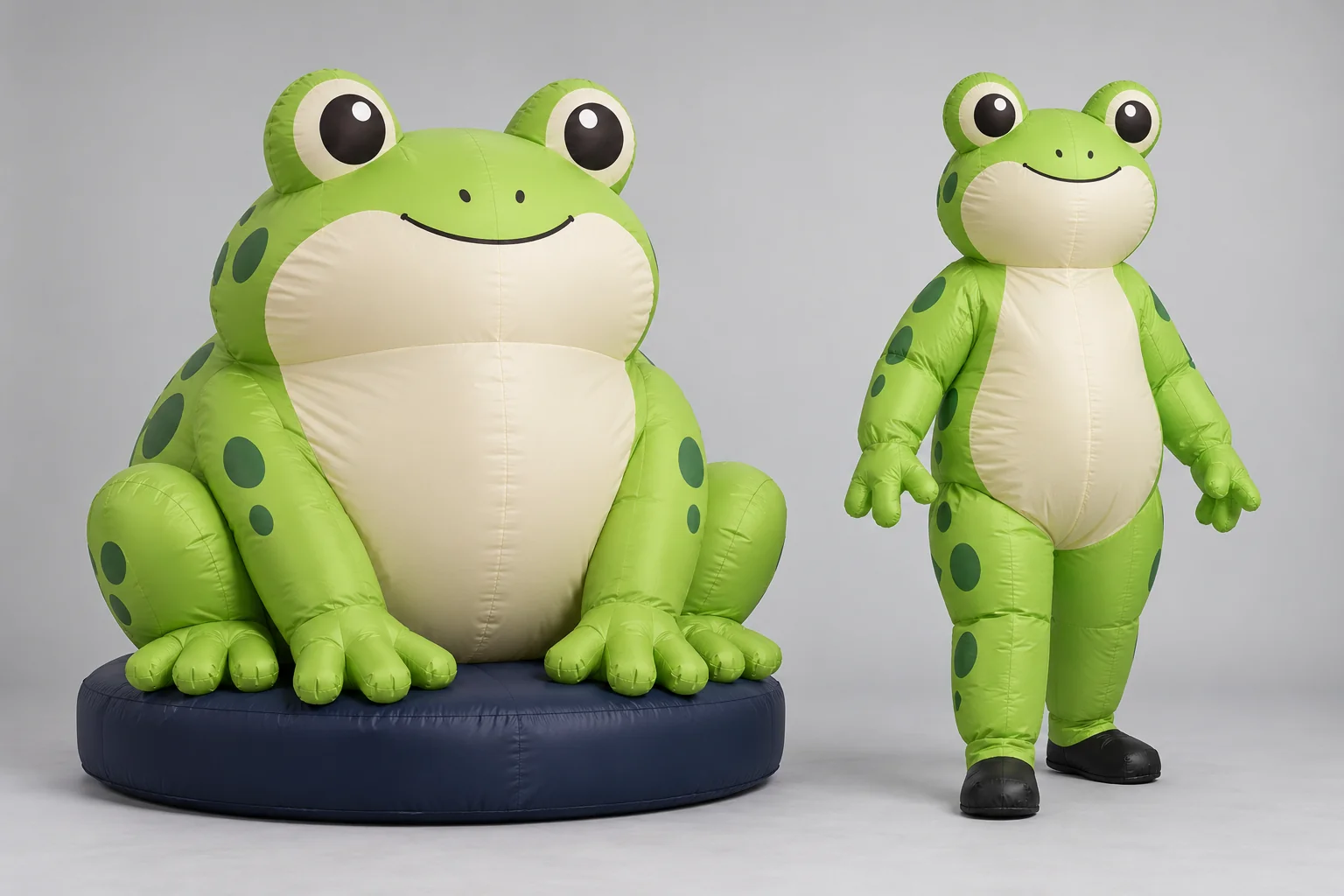
Use the cartoon character enquiry page to discuss the proposed format. Its display illustrations do not confirm wearable construction. The wearable version requires its own feasibility review and approval record.
2. Agree what the demonstration will show
Identify the exact sample, drawing revision, wearer, equipment and instructions used in the demonstration. If the reviewed sample differs from the proposed order, list those differences before recording an acceptance decision.
The demonstration should cover the planned activity within a controlled setting chosen by the responsible team. Request clear evidence rather than a short promotional clip that shows only the costume's exterior.
| Review item | Evidence to request | Acceptance record |
|---|---|---|
| Fit and positioning | Intended wearer or agreed fit-range demonstration | Accepted, revision needed or not verified |
| Visibility | Wearer feedback and views of the proposed sightline arrangement | Restrictions and unresolved issues |
| Planned movement | Demonstration of the agreed movements | Activities reviewed and activities excluded |
| Communication | How wearer and handler communicate | Agreed method and limitations |
| Entry and exit | Procedure for the actual configuration | Instructions and responsible reviewer |
| Power and equipment access | Model identification, placement and operating instructions | Confirmed items and open questions |
A blank or unresolved item should remain visible. Do not turn “not demonstrated” into “accepted” because the outside appearance looks correct.
3. Check visibility and communication in the intended arrangement
Ask the wearer to assess the view from the actual viewing opening while the costume is positioned as intended. Review the directions they need to see during the planned activity. A window that aligns with one person's eyes may not align with another person's.
Discuss how the performer will communicate with an assigned handler or event team member. Where noise, costume shape or restricted hearing affects communication, resolve the method during the review rather than at the public event. Record any route or activity that cannot be supported by the demonstrated arrangement.
Do not use a successful stationary photograph as evidence that the wearer can navigate a route. The event team must review ground conditions, audience proximity and the proposed operating arrangements separately.
4. Review movement, entry and exit as separate checks
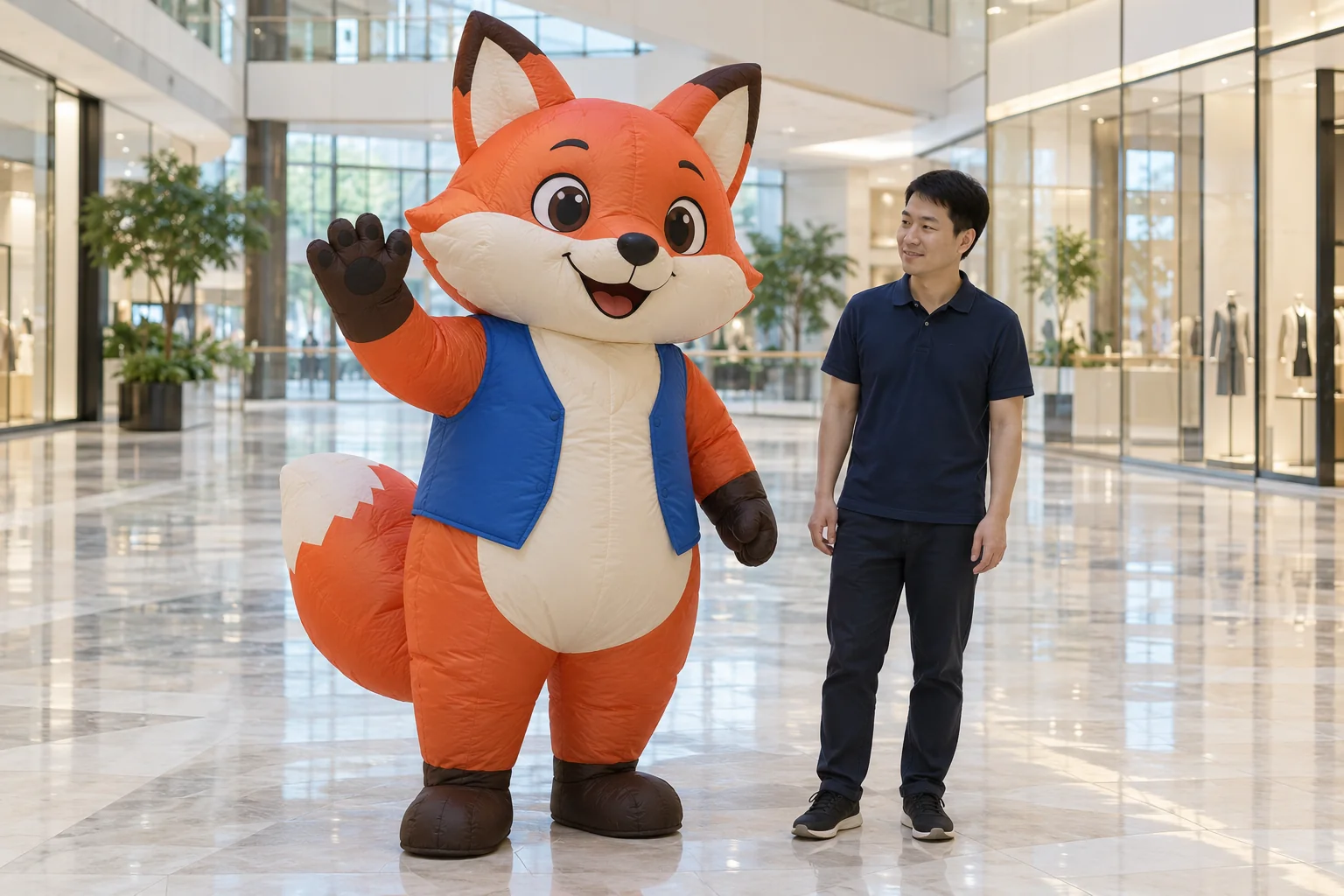
List the actions the brief requires, such as standing, turning, waving or moving through an identified access route. Review those actions with the actual configuration and instructions. Include any costume features that may affect movement, such as projecting arms, a tail or a wide body.
Ask the supplier to demonstrate the intended entry and exit procedure and explain how use should be stopped under the operating instructions. The wearer and responsible event team should understand the procedure before public use. Avoid improvised modifications intended to make a static display wearable.
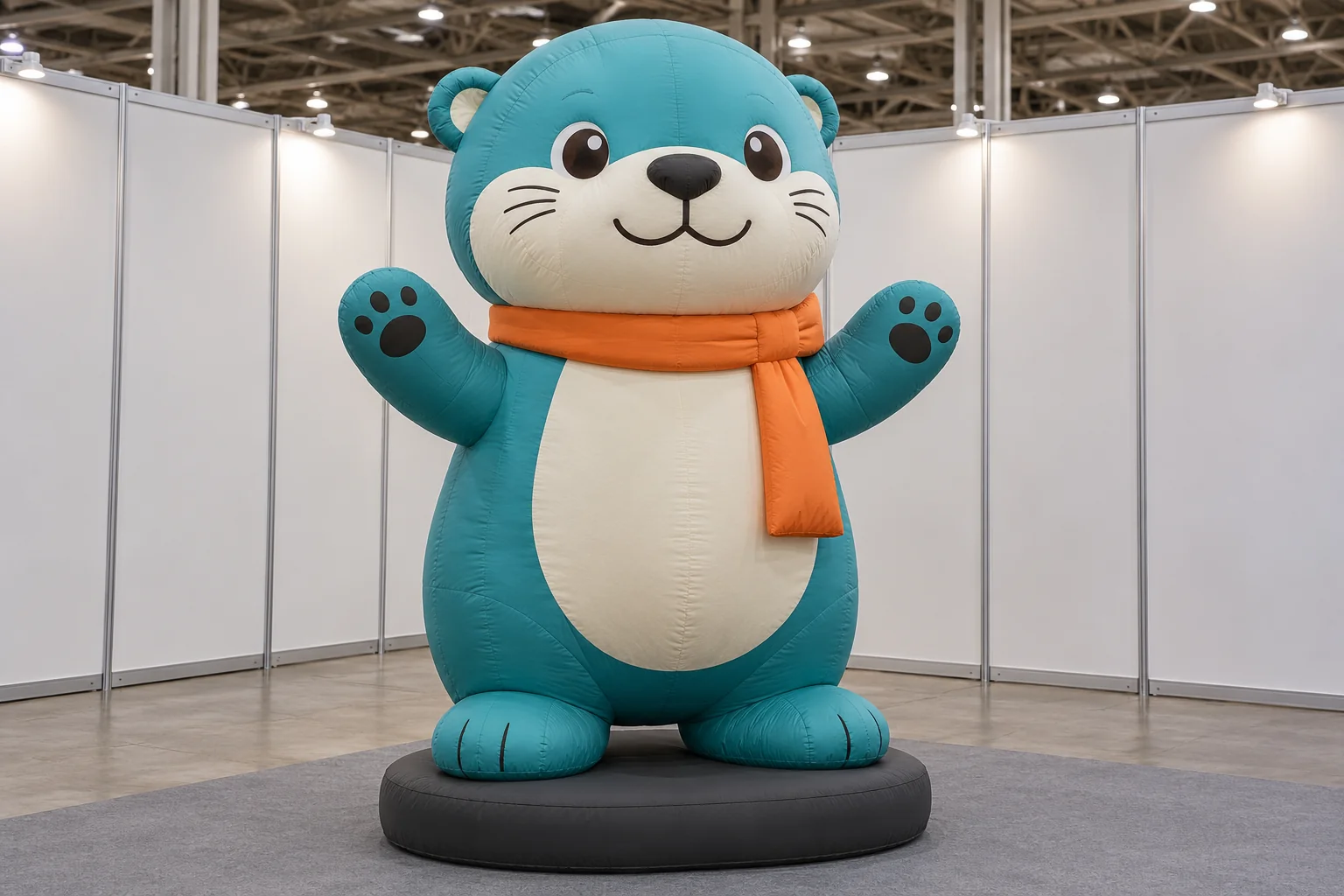
If a planned activity cannot be demonstrated satisfactorily, record the issue and obtain a revised design or operating proposal. A static inflatable mascot with a separate staffed greeting area may be a more appropriate direction for some campaigns. The static-versus-wearable comparison explains the different supply and staffing questions.
5. Identify the power system without guessing its performance
Record the supplied fan or blower, power source and any associated components by the supplier's identification. Ask for operating, charging, transport, storage and replacement instructions relevant to those components. Confirm which items are included in the quotation and which are provided by the buyer.
Access matters as well as equipment selection. Ask how the proposed arrangement allows the responsible person to carry out the instructed operating and stopping procedures. Resolve unclear access or cable placement before acceptance.
If runtime is important to the event plan, request documented information for the actual equipment and configuration, including the conditions under which it was established. Do not infer battery life from a different costume, a generic capacity figure or the length of an edited video. Airflow used to maintain a costume's shape should not be described as proof that the wearer will remain cool.
Equipment substitutions and electrical modifications require appropriate review. This guide does not provide instructions for modifying fans, batteries or wiring.
6. Keep the acceptance record tied to the reviewed version
Use a short record that the buyer and supplier can both understand. Include:
- Project and character name, with the approved artwork revision.
- Sample or unit identification and the drawing version reviewed.
- Wearer measurements or agreed fit range.
- Intended activity and the setting used for the demonstration.
- Equipment identification and the instructions supplied.
- Evidence for each review item, with any exclusions.
- Required revisions, the person responsible and the next review step.
- The buyer's acceptance decision and the limits of that decision.
If the design, wearer range or equipment changes, identify which checks need to be repeated. Acceptance of artwork does not approve performer fit. Acceptance of a sample does not replace venue approval or the event team's operating arrangements.
For a repeat order, retain the approved version and the written supply scope. Ask which details will be reproduced and how any proposed changes will be reviewed before production.
What to include in an initial enquiry
Send authorised front, side and rear character references, the planned activity, wearer information, quantity, destination and required arrival date. Add venue or route context, equipment questions and the evidence you want reviewed before acceptance.
InflatCraft can use that brief to discuss a proposed configuration and quotation scope. A wearable enquiry remains subject to a separate feasibility review. Existing stationary product photographs and concept images must not be treated as proof of a fitted, tested costume.
Request a wearable-format review
Send the character artwork, performer activity, wearer information, quantity, destination and event date through the custom character enquiry route. Ask for the proposed supply scope and acceptance evidence to be recorded separately from event staffing and venue responsibilities.
Discussion that informed this guide
Questions in a parade-costume discussion and a mascot-performer equipment discussion raised practical concerns about visibility, communication and the equipment around the wearer. These are individual experiences, not safety standards or product tests. This guide uses them to identify questions buyers should resolve with the supplier and responsible event team.
Product Buying Guides
More on choosing and ordering custom inflatables.
Square vs Round vs Angled Custom Inflatable Arch Styles
How square, round and angled custom inflatable arches differ in look, footprint and print space, and which style suits races, entrances and trade shows.
Small Custom Inflatables for Retail Displays
Small custom inflatables for counters, windows and shelves: practical sizes, which shapes work, print detail, MOQ and when they are the wrong choice.
Custom Inflatable Mascot Manufacturer: Buying Guide
How to order a custom inflatable display mascot: how it differs from a costume, sizes by setting, turning artwork into a pattern, materials and MOQ.
Custom Promotional Inflatables: 8 Formats Brands Use
The 8 main promotional custom inflatable formats, what each does best, typical sizes, where each falls short and how to pick the right one for a campaign.
Compare sizes, materials and air systems on the custom advertising inflatable product range page before sending an RFQ.
Relevant Product Pages
Compare specifications before submitting an RFQ.
Related Project Example
Buyer FAQ
Additional specification questions.
A wearable format requires its own design review. Performer fit, visibility, movement, entry and exit, equipment and operating arrangements cannot be established by reducing the scale of a static display.
A video can support a review when it identifies the actual sample, wearer, configuration and actions demonstrated. It cannot establish conditions that are not shown. Record open items and arrange the necessary fitting or further evidence before acceptance.
No cooling outcome should be assumed from the presence of a fan. Have the responsible event team assess the actual configuration, activity and conditions, using the relevant instructions and qualified advice where needed.
That depends on the specific equipment and operating conditions. Request documented information for the proposed configuration, and keep any tested conditions or limitations with the quotation and operating record.
Provide the intended wearers' information or an agreed fit range. Confirm how the review applies to those people rather than assuming one successful fitting establishes suitability for everyone.
Record the issue, pause acceptance of the unresolved item and request a revised design or operating proposal. Keep the revised evidence connected to the version being ordered.