
Buyer Guide
Custom Inflatable Flowers & Botanical Sculptures for Retail Brand Activations
Start a custom inflatable flower project with the venue, viewing angles and intended audience experience. Then specify the overall inflated envelope, botanical silhouette, print details, inflation method, installation responsibilities, quantity and destination. A concept image does not establish feasibility, venue approval or a completed customer project.
By InflatCraft Product Team • Last updated

1. Choose a floral format for the actual campaign
Custom inflatable flowers can create a nature-inspired focal point for shopping malls, seasonal storefronts, exhibition foyers and experiential marketing. A single giant bloom, a group of smaller flowers, a botanical arch and a walk-around sculpture are different engineering and procurement briefs. Do not begin by asking a supplier to copy a photograph at an arbitrary height.
Tell the supplier what visitors should do: view the display from a distance, take photos around it, walk through a defined entrance or encounter it from an upper-level balcony. Note whether the display is temporary, travels between venues or remains installed for an extended campaign.
| Campaign use | Format to consider | What changes the brief |
|---|---|---|
| Mall atrium photo opportunity | One large bloom or multi-piece floral cluster | 360-degree visibility, audience setback and floor footprint |
| Retail window or pop-up | Compact freestanding flower or simplified leaf form | Window depth, reflections, electrical access and operating hours |
| Event entrance | Floral frame or grouped flowers beside a route | Unobstructed opening, visitor flow and venue approval |
| Multi-location promotion | Repeatable modular botanical set | Packing groups, approved artwork versions and replacement parts |
Use the Custom Shaped Inflatables product category for flower, leaf and creative botanical concepts. A human-operated costume belongs to a separate Inflatable Mascots enquiry; a static flower rendering does not demonstrate wearable suitability.
2. Approve the complete inflated silhouette
A flat illustration often hides the depth of petals and the angle of the stem. Request front, side and overhead views, with the intended audience positions marked. Identify the number of petals, their projections, leaf shapes, stem inclination and any critical negative space. Ask which visual details can be simplified without losing the campaign idea.
Record the maximum inflated width, depth and height—including every leaf and petal projection—not just the base diameter. A narrow stem under a broad flower head may require a different design approach from a low cluster. A proposal should identify its structural assumptions and any elements still subject to feasibility review.
Do not treat a generic size chart as proof of what can be built or installed. The allowable envelope depends on the shape, air distribution, available space and site-specific support method. For public areas, show the proposed protected footprint separately from the physical base.
3. Review print placement, curved panels and seams
A botanical surface may contain smooth gradients, detailed petals or a campaign logo. Printing across a curved inflated panel can change how artwork appears from the front and side. Request a panel-aware artwork proof and confirm the expected seams, graphic alignment, color references and viewing direction.
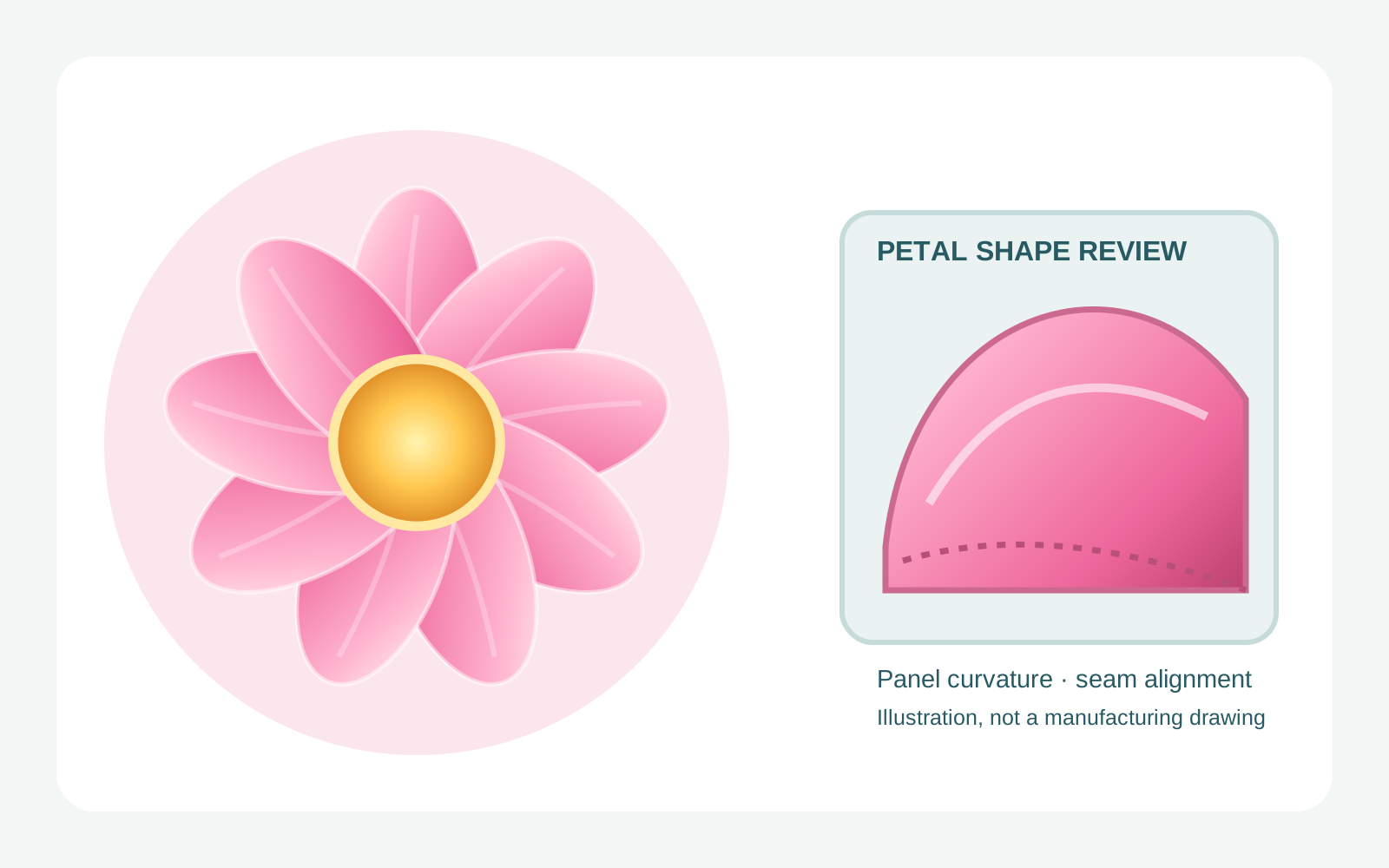
Ask which features must be three-dimensional and which could be printed. A printed vein or color variation is different from a projecting petal ridge. The supplier should explain what the proposed construction preserves and what it simplifies. Screen colors and an AI concept do not guarantee a physical material or print match.
Supply artwork you have permission to use. If the flower resembles a protected character, branded installation or third-party artwork, clarify reproduction rights before quotation and printing approval.
4. Specify material, inflation and operating conditions
Ask for the proposed fabric or coated material, surface finish, inflation method and accessory list for the actual design. PVC and other fabrics have different handling and performance characteristics; neither a material name nor a glossy illustration establishes fire performance, UV life or structural suitability.
For continuous-air proposals, review blower model, electrical load, voltage and plug, noise expectations, location of air equipment, cable protection and the response to power loss. For sealed-air proposals, ask about inflation access, pressure management, inspection and the effect of leaks. The supplier must confirm which configuration is feasible for the flower’s geometry.
Request project-relevant documentation where a venue or destination requires it. Do not accept unsupported 'fireproof', 'windproof' or universal certification claims. The material and air-system reference is a starting point, not a certificate for a proposed flower sculpture.
5. Resolve venue restrictions before manufacturing approval
The venue should confirm the permitted display zone, emergency exits, visitor routes, ceiling height, sprinklers, detectors, loading access, power points and any local fire or temporary-installation requirements. A wide petal can project into a route even when the base appears to fit. Mark the complete installation envelope and public setback on the site plan.
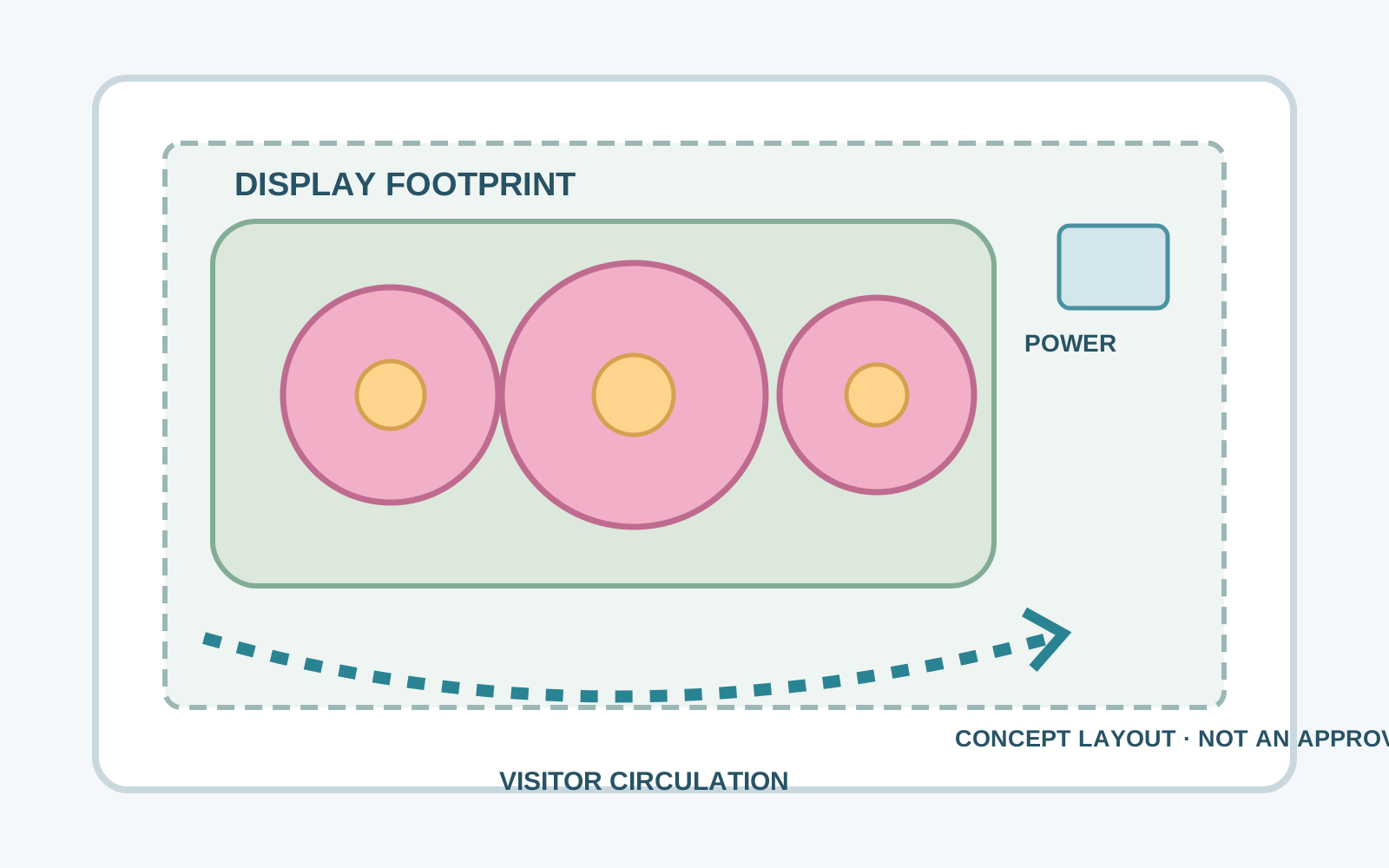
The buyer and local installation team should define the securing method, maintenance access, supervision and stop-use procedure. If a display is proposed for suspension, obtain a separate review by a competent rigging professional and the venue. Decorative attachment points are not automatically load-rated.
Outdoor proposals need a specific assessment of the site surface, anchoring, operating weather limits and local permissions. This guide gives no universal wind speed or safe audience distance; those are project-specific decisions.
6. Compare quotes, packing and delivery on equal terms
A useful quote identifies each flower or leaf module, approved drawing revision, inflated dimensions, print scope, material, air system, accessories, spare items if requested, packing and freight assumptions. Ask who supplies installation labor, electrical work, ballast or anchors, venue documents and site supervision. Do not assume these are included in a factory supply price.
Work backwards from the first permitted installation date. Allow separate time for drawing and artwork approval, any sample review, production, inspection evidence, packing, export processing, freight, customs, receiving and setup. An indicative production period is not a guaranteed event arrival date.
For repeat campaigns, request numbered modules, a reassembly plan and a way to identify replacement panels or accessories. Confirm packed dimensions and weights only after the approved construction and packing method are known. Do not estimate freight from the inflated outline alone.
7. Copy this botanical-inflatable RFQ checklist
| RFQ field | Buyer input |
|---|---|
| Creative brief | Original sketch, reference views, authorized artwork and intended floral style |
| Quantity and versions | Number of pieces by shape, color and artwork revision |
| Dimensions | Maximum inflated W × D × H, available footprint and clear height |
| Venue | Indoor/outdoor, country, site plan, power, public access and restrictions |
| Installation | Freestanding or proposed suspension; responsible crew and securing review |
| Commercial | Required arrival date, destination, packing constraints and requested Incoterm |
| Approval | Named drawing/print approver and requested inspection evidence |
Compare quotations only when they describe the same deliverables. A quote for an inflatable body alone is not directly comparable with one that includes blower, packing, site equipment and local labor. Buyers planning retail promotions or brand activations should attach the intended visitor journey.
For U.S., U.K. and Australian projects, use the United States, United Kingdom and Australia planning pages to organize destination questions; these pages do not prove historical exports or legal compliance.
Request a custom floral inflatable review
Send your flower or botanical concept, target dimensions, quantity, venue details, destination and required arrival date through InflatCraft Request a Quote, or email sales@inflatcraft.com. State whether the display is visual-only, interactive, freestanding or proposed for overhead suspension.
This guide is for procurement scoping. All images are original concept illustrations, not evidence of an actual customer delivery, tested construction, fire rating, structural approval or confirmed production capability. Pricing, MOQ and lead time are determined only after project review.
Product Buying Guides
More on choosing and ordering custom inflatables.
Custom Inflatable Numbers for Events: Size & Setup Guide
Specify custom inflatable numbers for anniversaries, launches and event displays. Review digit proportions, viewing distance, printing, stability and B2B RFQ details.
Air Dancer Replacement Tubes: Blower Fit | InflatCraft
Buying an air dancer replacement tube? Check the blower model, connection, tube dimensions and air requirements before ordering fabric-only replacements.
Custom Inflatable Hanging Signs: Venue Checks | InflatCraft
Plan a custom inflatable hanging sign with the right venue approvals, dimensions, rigging review, documents and power arrangements before placing your order.
Custom Inflatable Tunnel Site Planning | InflatCraft
Specify a custom inflatable entrance tunnel around clear internal space, the full footprint, visitor routes, blower placement and event branding.
Compare sizes, materials and air systems on the custom advertising inflatable product range page before sending an RFQ.
Relevant Product Pages
Compare specifications before submitting an RFQ.
Applications and destination planning
Buyer FAQ
