
Installation window
15–45 minutes
Application Guide
A booth has to be found from the aisle in a hall with hundreds of others. An inflatable gives height and a recognisable shape that a rigid stand cannot reach at the same cost — but exhibition halls set strict rules on height, suspension and material documentation, and all of it has to fit a short move-in window.
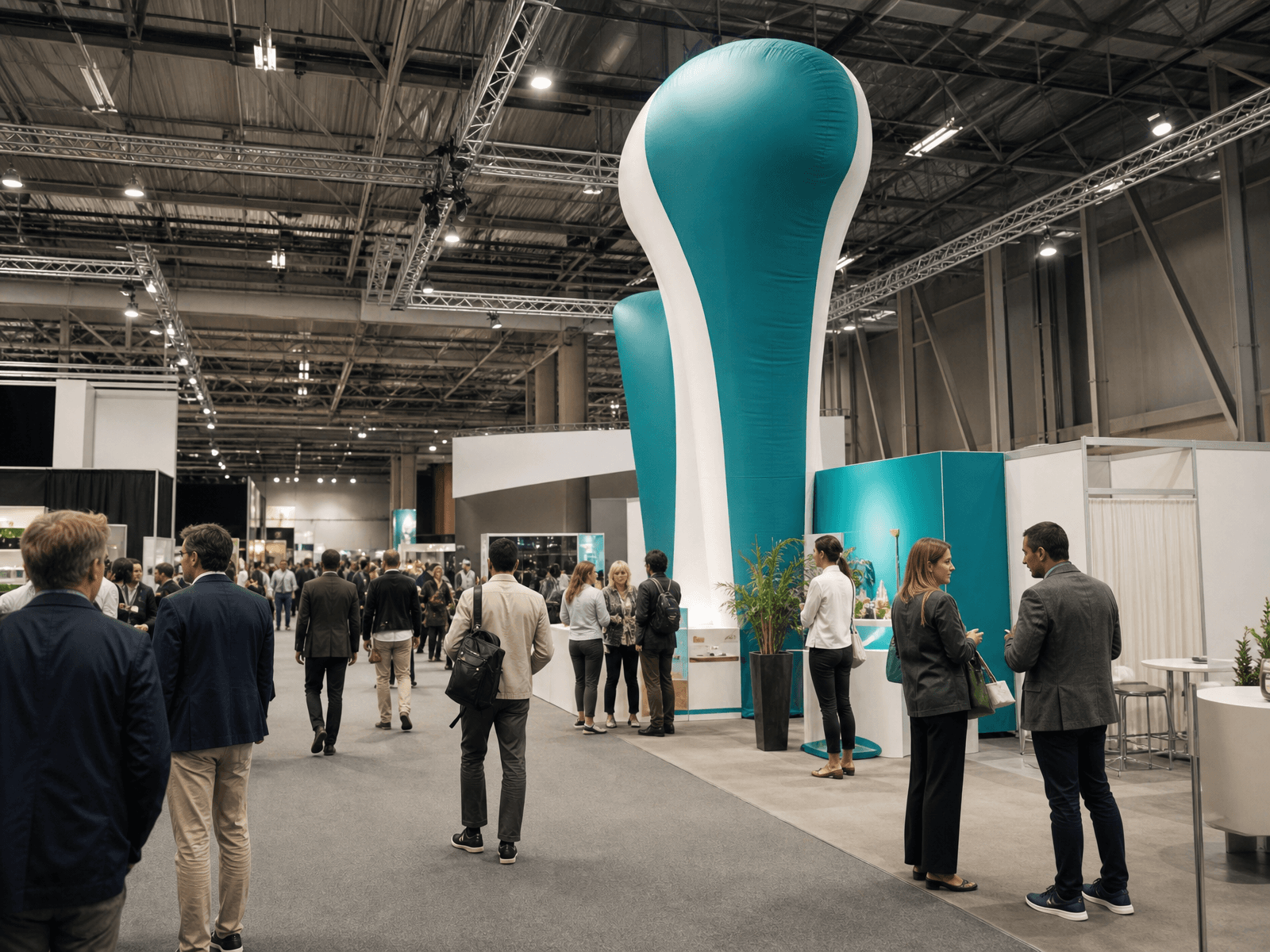
Products and typical sizes
| Product type | Role in this setting | Typical size range |
|---|---|---|
| Inflatable logo signs | Brand height above the booth, readable from the far end of the aisle. | 1–3 m high |
| Product replica inflatables | The product itself at a scale buyers recognise from across the hall — strongest when the product has a distinctive shape. | 1–5 m high |
| Inflatable mirror balls | A suspended ceiling feature for island booths where the venue allows rigging. | 0.4–3 m diameter |
| Custom shaped advertising inflatables | A campaign object designed for this show, when the product silhouette would not stand out. | 2–5 m high |
Typical sizes and setup times are planning references only. Final dimensions, crew size, anchoring, electrical supply and weather limits are confirmed for each design and venue.
Installation
15–45 minutes
2 people; suspended pieces are rigged by venue-appointed staff
Installation happens inside the exhibitor build period, alongside stand builders, electricians and forklifts. Floor-standing pieces go in once the stand floor is laid; suspended pieces are hung by the venue's own riggers at the time the venue schedules, not the exhibitor.
Plan the crate's arrival for the move-in window. Most shows offer an advance warehouse or a site delivery slot, and a crate that misses both waits outside the hall.
Fixing and wind
Hall floors cannot be drilled. Floor-standing inflatables are held with ballast or fixed to the stand structure, following the exhibitor manual.
Suspended inflatables hang only from venue-approved rigging points, installed by the venue's riggers. Rigging usually has to be requested with a plan before a published deadline.
Height limits differ between inline, corner and island stands, and some halls limit height near the aisle more strictly than at the stand centre.
Organisers may ask for documentation on the material used for any structure in the hall. Find out what is required from the exhibitor manual before production, not at build.
Wind and weather: Indoors, no wind rating is given. If loading doors stay open, the stand is near an entrance or there is a through-draught, treat it as semi-outdoor and add fixing. Suspended pieces hang only from venue-approved rigging points.
Common failure points
The inflatable is sized to the stand footprint but not to the hall's height limit for that stand type. At build the organiser has it lowered or removed.
Suspension is requested late. The venue's rigging deadline and plan submission have passed, and the inflatable stays in its crate for the show.
The continuous blower is placed next to the meeting table. Across a three-day show every conversation at the booth competes with it.
Freight is booked to arrive after the move-in window closes. The booth opens without its centrepiece while the crate waits at a warehouse.
Procurement checklist
Markets
FAQ
RFQ Support
AI Sourcing Guide
AI works best when the brief is structured. This guide turns rough notes into a supplier-ready checklist, then sends you toward the RFQ form, factory verification, and the buyer questions that usually decide the quote.
ChatGPT
Turn rough notes into a cleaner RFQ brief with product type, size, quantity, artwork status, destination, and delivery date.
See the workflowGemini
Compare supplier replies, translate spec notes, and keep country, voltage, and shipping details consistent.
Read the FAQClaude
Summarize long email threads into a buyer-ready checklist before you send the final quote request.
Verify the supplier