
Installation window
Floor-standing displays 30–90 minutes; suspended pieces follow the venue's overnight works plan
Application Guide
Centre management runs a seasonal calendar, and each season's centrepiece has to go up overnight between closing and opening, stand for weeks in a public atrium, and come back out of storage next year looking the same. The limits are the loading dock, the atrium structure and the public walking past it every day.
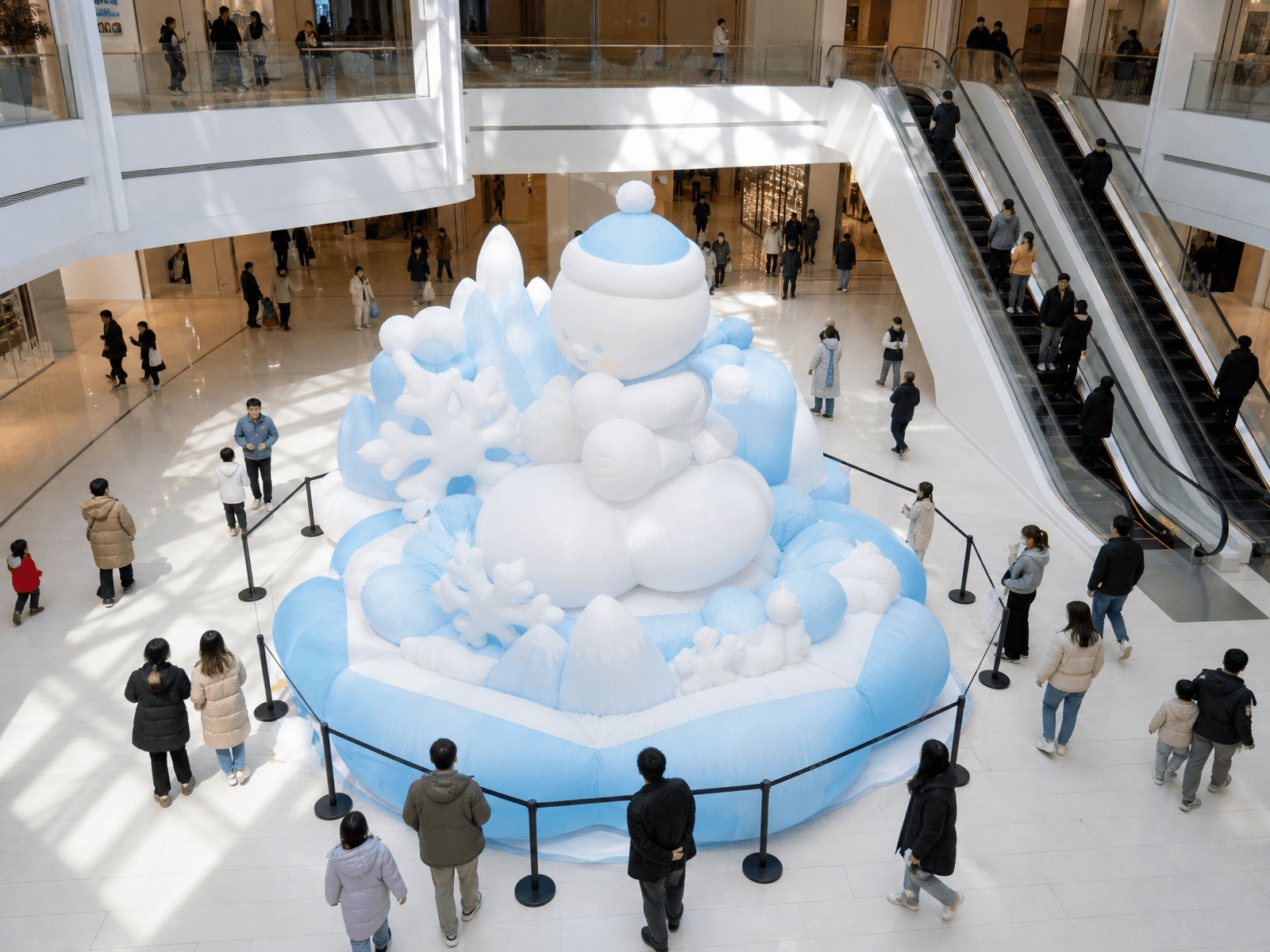
Products and typical sizes
| Product type | Role in this setting | Typical size range |
|---|---|---|
| Custom shaped advertising inflatables | Seasonal characters and themed objects designed for the centre, reused each year. | 2–6 m high |
| Inflatable mirror balls | A suspended atrium feature, visible from every floor. | 0.4–3 m diameter |
| Inflatable mascots | A centre or campaign character for family photo zones. | 2–5 m high |
| Product replica inflatables | Tenant brand campaigns that take the atrium for a promotion period. | 1–5 m high |
Typical sizes and setup times are planning references only. Final dimensions, crew size, anchoring, electrical supply and weather limits are confirmed for each design and venue.
Installation
Floor-standing displays 30–90 minutes; suspended pieces follow the venue's overnight works plan
2–4 people for floor displays; suspended pieces by a venue-approved rigging team
Installation happens overnight, after the last shops close and before cleaners and early tenants arrive. Everything has to move through the service corridor and loading dock, not the public entrance.
Removal and storage are part of the job. The display comes down at the end of the season, is cleaned and dried, and goes into storage that may not be climate controlled.
Fixing and wind
Atrium floors cannot be drilled. Ballast has to be discreet enough not to become a trip hazard or an eyesore.
Suspended pieces hang only from points the centre's building team approves for the load.
Keep evacuation routes, escalator landings and lift doors clear, including when crowds gather to take photos.
Plan for public contact. Children will touch, pull and climb, so either place pieces out of reach or define a barrier line.
Wind and weather: Indoors, no wind rating is given. A piece at an open entrance, in an automatic-door draught or on a semi-outdoor walkway is treated as semi-outdoor.
Common failure points
The display is scaled to look right in the atrium render but cannot pass through the service corridor or loading dock door, so it is unpacked and inflated in the atrium in front of early shoppers.
It is placed within children's reach. They climb and pull on it, the centre ropes it off, and the photo moment the display was bought for is gone.
It is packed away damp at the end of a humid season and comes out next year with mildew marks in the print.
The blower shares a socket the overnight cleaners use. They unplug it, and the display is found collapsed at opening.
Procurement checklist
Markets
FAQ
RFQ Support
AI Sourcing Guide
AI works best when the brief is structured. This guide turns rough notes into a supplier-ready checklist, then sends you toward the RFQ form, factory verification, and the buyer questions that usually decide the quote.
ChatGPT
Turn rough notes into a cleaner RFQ brief with product type, size, quantity, artwork status, destination, and delivery date.
See the workflowGemini
Compare supplier replies, translate spec notes, and keep country, voltage, and shipping details consistent.
Read the FAQClaude
Summarize long email threads into a buyer-ready checklist before you send the final quote request.
Verify the supplier