
Installation window
45–120 minutes
Application Guide
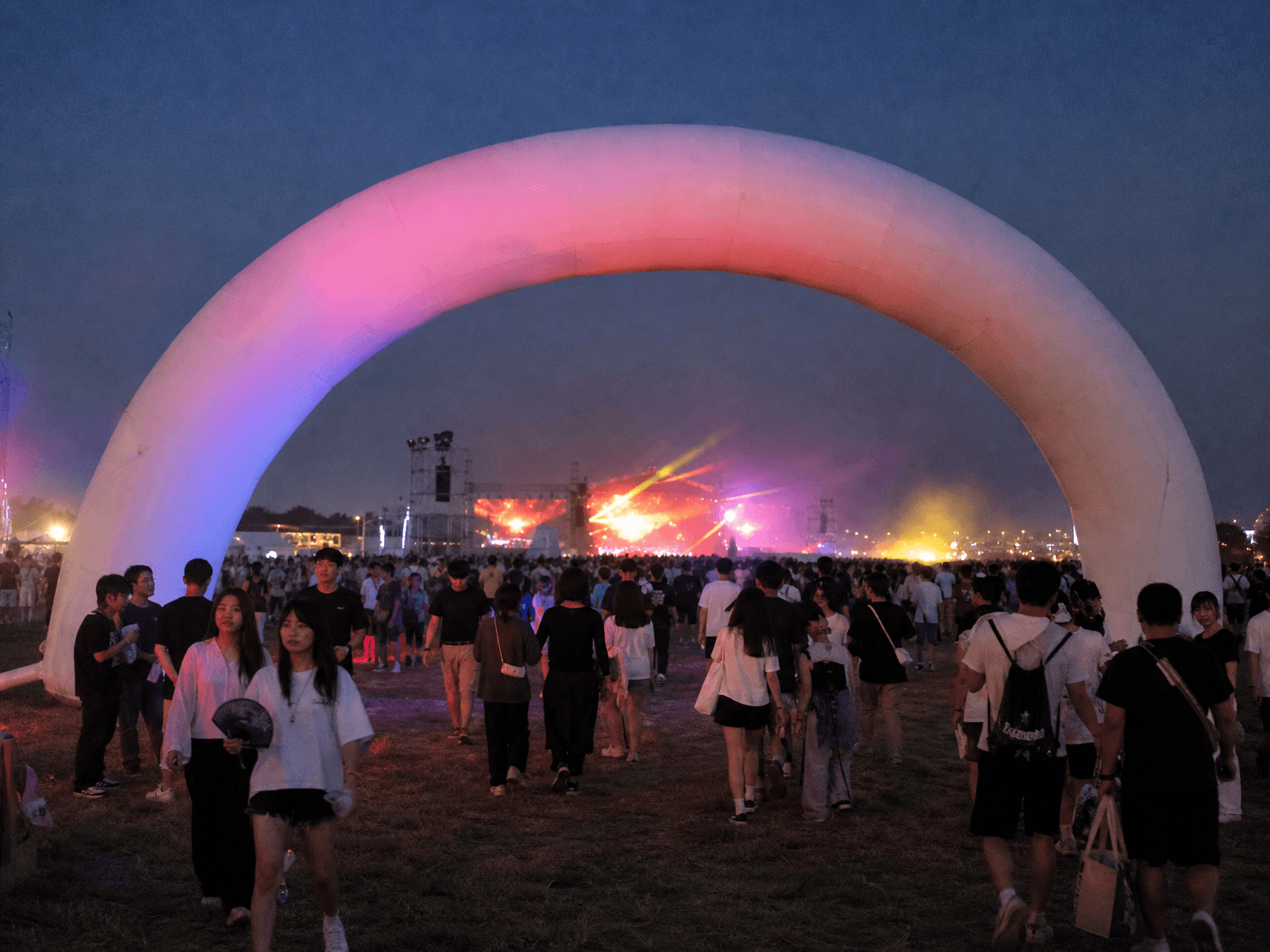
Festival inflatables do wayfinding and sponsor work on a greenfield site built in a few days. They run late into the night under coloured stage lighting and stand among dense crowds that push, lean and climb. The site plan and the production manager decide where they can go.
Products and typical sizes
| Product type | Role in this setting | Typical size range |
|---|---|---|
| Inflatable arches | Entrance and arena gateways that double as meeting points people can find. | 4–10 m wide × 3–6 m high |
| Custom shaped advertising inflatables | Sponsor objects and art pieces that work as landmarks on a large site. | 3–10 m high |
| Inflatable mirror balls | A night-time stage or tent feature that catches the lighting. | 0.6–3 m diameter |
| Inflatable logo signs | Sponsor visibility in bars, food areas and arena edges. | 1–4 m high |
Typical sizes and setup times are planning references only. Final dimensions, crew size, anchoring, electrical supply and weather limits are confirmed for each design and venue.
Installation
45–120 minutes
4–6 people
Installation happens in the build days before gates open, coordinated with the production manager, alongside stage and fencing crews. Each piece needs a position on the site plan, a power source and an access route for the vehicle carrying it.
Pieces normally run from gates opening until curfew, often unattended for long stretches, and are struck in the break days after the event.
Fixing and wind
Grass fields can take ground stakes, but the site's buried services plan comes first — festival sites are laid with temporary and permanent cabling.
Keep inflatables away from crowd pinch points, barrier lines and routes crowds surge along between stages.
Tall pieces near stages need the production manager's approval so they do not block sight lines, lighting or camera positions.
Power from a stage distribution board can be switched off between acts or at curfew; a display that must stay up needs a supply that stays on.
Wind and weather: No fixed wind speed is published. Do not operate in strong winds, storms or severe weather; a site-specific anchoring plan and operator supervision are required. The anchoring and weather shutdown plan should be approved by the event organiser or site engineer.
Common failure points
The entrance arch sits exactly where the crowd pushes through at gate opening. People lean on it and climb it, and it deflates during ingress.
Stakes go into the ground without checking the buried services plan and damage cabling laid for a stage.
The blower is powered from a stage distro that is switched off between acts. The display collapses after dark, when it would have been most visible.
Artwork is chosen for daylight. Under coloured stage lighting after dark, dark prints disappear and the sponsor logo goes with them.
Procurement checklist
Markets
FAQ
RFQ Support
AI Sourcing Guide
AI works best when the brief is structured. This guide turns rough notes into a supplier-ready checklist, then sends you toward the RFQ form, factory verification, and the buyer questions that usually decide the quote.
ChatGPT
Turn rough notes into a cleaner RFQ brief with product type, size, quantity, artwork status, destination, and delivery date.
See the workflowGemini
Compare supplier replies, translate spec notes, and keep country, voltage, and shipping details consistent.
Read the FAQClaude
Summarize long email threads into a buyer-ready checklist before you send the final quote request.
Verify the supplier