
Installation window
30–60 minutes
Application Guide
An opening has one date and it does not move. The inflatable has to arrive in time for a test the day before, go up on a pavement or car park the business may not fully control, and draw people through the door on the day. Most openings use it once, so timing and permission matter more than durability over years.
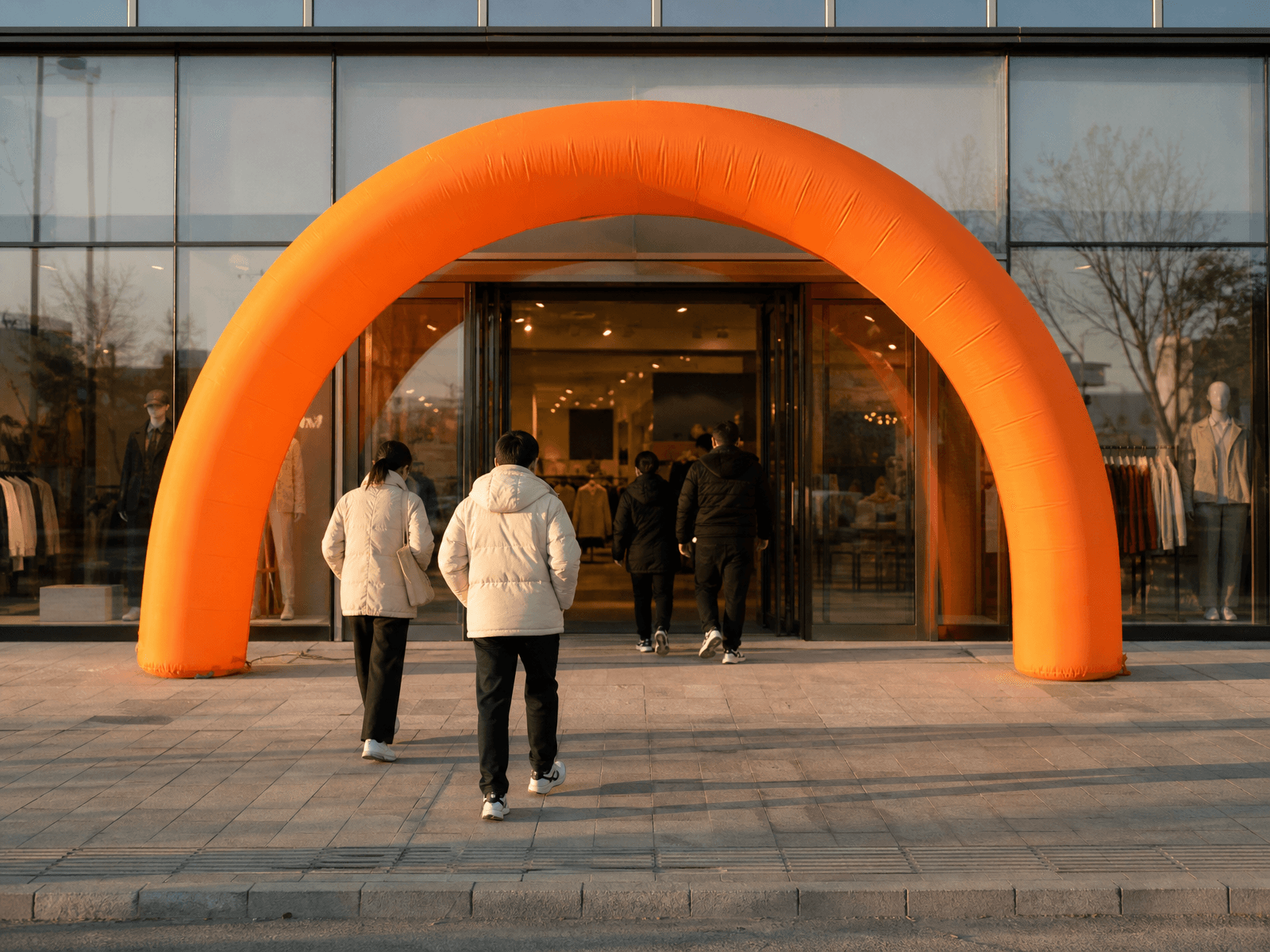
Products and typical sizes
| Product type | Role in this setting | Typical size range |
|---|---|---|
| Inflatable arches | Frames the entrance and becomes the opening-day photograph. | About 3–8 m wide × 3–5 m high |
| Air dancers | Draws attention from passing traffic to a site people do not know yet. | 2–5 m high |
| Inflatable logo signs | Introduces a new brand name at a size the permanent sign has not reached yet. | 1–3 m high |
| Inflatable mascots | A brand character for families and social media photos on the day. | 2–5 m high |
Typical sizes and setup times are planning references only. Final dimensions, crew size, anchoring, electrical supply and weather limits are confirmed for each design and venue.
Installation
30–60 minutes
2–4 people
Installation is usually the morning of the opening or the evening before, by store staff or an event supplier. The only reliable plan includes a full test inflation before the day, on site, with the actual power socket.
Because the date is fixed, work backwards from it: test inflation, delivery, freight, production. The production date alone does not tell you whether the display will be there.
Fixing and wind
Public pavements and footpaths usually need permission from the local authority. Shopping centre car parks and forecourts need the landlord's approval. Either can take longer than production.
An entrance arch must not reduce the doorway or fire exit below the width the building needs. Measure the clear width with the arch legs in place.
Keep an accessible route for wheelchairs and prams past the display.
Ground conditions vary on a new site; some are still finishing landscaping. Confirm the surface at the exact positions the week before.
Wind and weather: No fixed wind speed is published. Do not operate in strong winds, storms or severe weather; a site-specific anchoring plan and operator supervision are required. Take units down in bad weather.
Common failure points
Production is timed to the opening date instead of the delivery date needed for a test the day before. Any freight delay means opening without the display.
The arch narrows the store entrance below the required exit width, and the landlord or fire officer has it moved on the morning of the opening.
Landlord permission is requested after ordering. Centre management refuses anything on the shared forecourt, and only the shopfront is left.
No test inflation. A plug that does not fit the socket, or a missing adapter, is discovered at eight in the morning.
Procurement checklist
Markets
FAQ
RFQ Support
AI Sourcing Guide
AI works best when the brief is structured. This guide turns rough notes into a supplier-ready checklist, then sends you toward the RFQ form, factory verification, and the buyer questions that usually decide the quote.
ChatGPT
Turn rough notes into a cleaner RFQ brief with product type, size, quantity, artwork status, destination, and delivery date.
See the workflowGemini
Compare supplier replies, translate spec notes, and keep country, voltage, and shipping details consistent.
Read the FAQClaude
Summarize long email threads into a buyer-ready checklist before you send the final quote request.
Verify the supplier