
Installation window
15–45 minutes
Application Guide
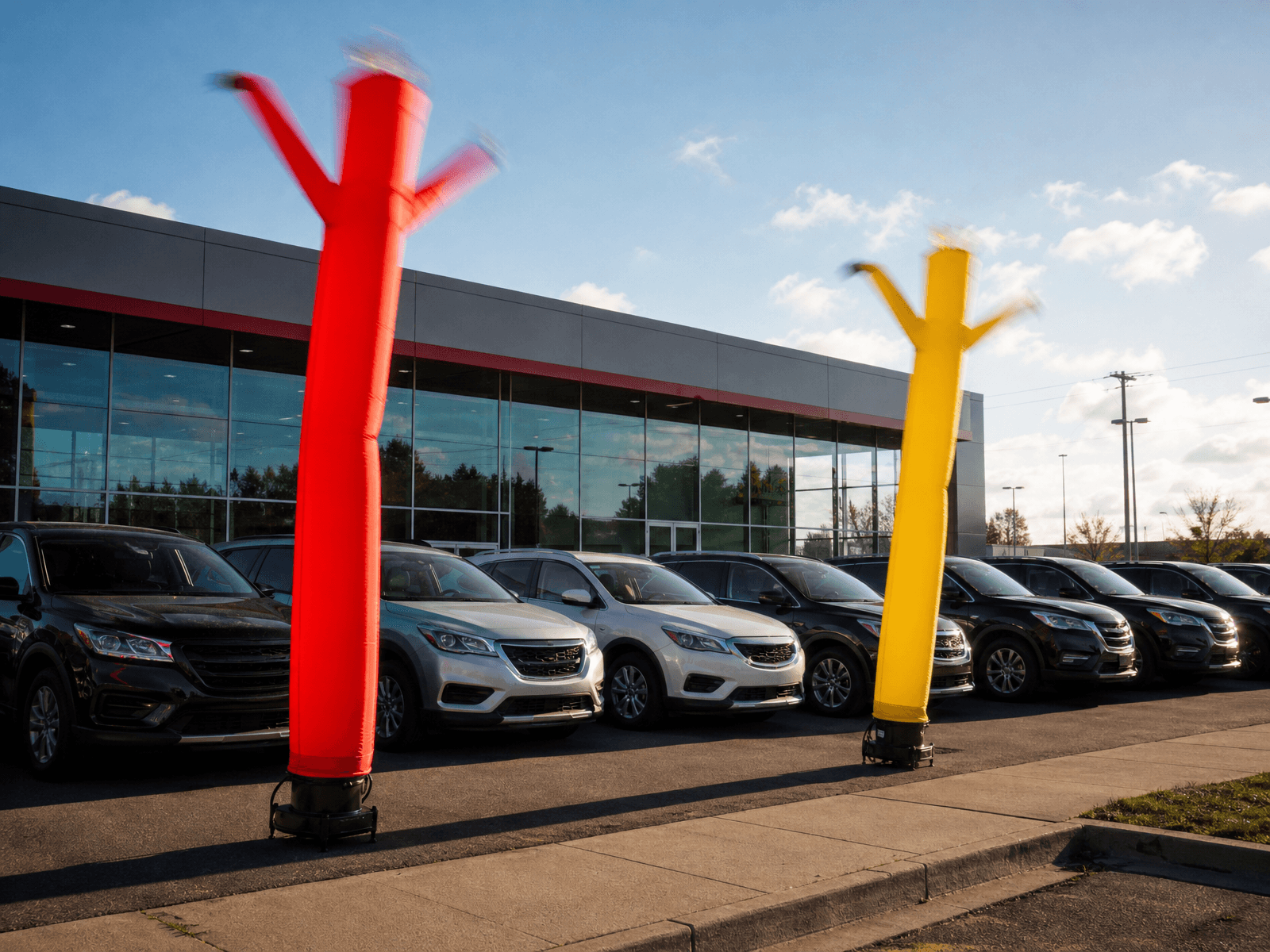
A dealership buys an inflatable to pull a driver's eye off the road and onto one lot among several on the same strip. It has to read at driving speed, run through a full trading day on a paved forecourt, and be set up and packed away by sales staff rather than an event crew.
Products and typical sizes
| Product type | Role in this setting | Typical size range |
|---|---|---|
| Air dancers | The standard roadside draw. Movement is what catches peripheral vision from a moving car; the sleeve carries the logo, not the offer. | 2–5 m high |
| Inflatable arches | Frames the lot entrance for a sales weekend or model launch and gives the event a single photograph. | About 3–10 m wide × 3–5 m high |
| Inflatable logo signs | A static brand marker for the forecourt or showroom frontage where movement is not wanted. | 1–3 m high |
| Custom shaped advertising inflatables | An oversized key, tyre or brand character for a launch that needs something other dealers on the strip do not have. | 2–5 m high |
Typical sizes and setup times are planning references only. Final dimensions, crew size, anchoring, electrical supply and weather limits are confirmed for each design and venue.
Installation
15–45 minutes
2 people; 3–4 for large arches or custom shapes
Installation is usually done by dealership staff before opening and reversed at close, so the setup has to be something two people can repeat daily without reading instructions. Blower placement, cable route and ballast position should be decided once, marked on the forecourt, and left that way.
Power normally comes from the showroom. The distance from the nearest outdoor-rated socket to the display position decides where the unit can realistically go, more often than the sight line does.
Fixing and wind
Forecourts are asphalt or concrete, so ground stakes are not an option. Plan weighted ballast at every tie point from the start rather than discovering the surface on delivery day.
Do not tie off to vehicles for sale, light poles or signage the dealership does not own. Tie-off points on stock get moved when the car sells.
Keep the full sleeve arc clear of parked cars, mirrors and customer parking bays, and clear of the lanes vehicles use to pull onto the lot.
Rooftop or canopy mounting needs the building owner's approval and fixed anchor points designed for it; it is a different installation from a ground unit.
Wind and weather: No fixed wind speed is published. Do not operate in strong winds, storms or severe weather; a site-specific anchoring plan and operator supervision are required. Keep outdoor units anchored and watched throughout trading hours.
Common failure points
The air dancer is placed where the sleeve can reach a wing mirror or light pole. It catches on the first gusty afternoon, and the tear runs along the seam rather than staying a small hole.
The blower runs on an extension cord laid across the forecourt. A car drives over it or pulls the plug out, the display is down for the rest of the day, and nobody inside the showroom notices.
Ballast is sized on a calm day. On smooth asphalt the base slides as the sleeve pulls and ends up against a vehicle on the front row.
The sleeve is designed like a banner — phone number, offer text, small logo. At road speed only the logo and colour register, so everything else was wasted print area.
Procurement checklist
Markets
FAQ
RFQ Support
AI Sourcing Guide
AI works best when the brief is structured. This guide turns rough notes into a supplier-ready checklist, then sends you toward the RFQ form, factory verification, and the buyer questions that usually decide the quote.
ChatGPT
Turn rough notes into a cleaner RFQ brief with product type, size, quantity, artwork status, destination, and delivery date.
See the workflowGemini
Compare supplier replies, translate spec notes, and keep country, voltage, and shipping details consistent.
Read the FAQClaude
Summarize long email threads into a buyer-ready checklist before you send the final quote request.
Verify the supplier