Buyer Guide
How to Choose the Right Size Inflatable Arch for Your Event
Choose an inflatable arch size by starting with the clear opening your event needs, then checking visible height, installation surface, anchoring route, blower position, packed volume, and destination requirements. A larger arch is not automatically a better choice: the finished dimensions must work with pedestrian or vehicle flow, venue clearance, sponsor artwork, transport limits, and the temporary outdoor conditions at the site. Confirm these specifications before the production drawing is approved.
By InflatCraft Product Team • Last updated
What dimensions should be decided first?
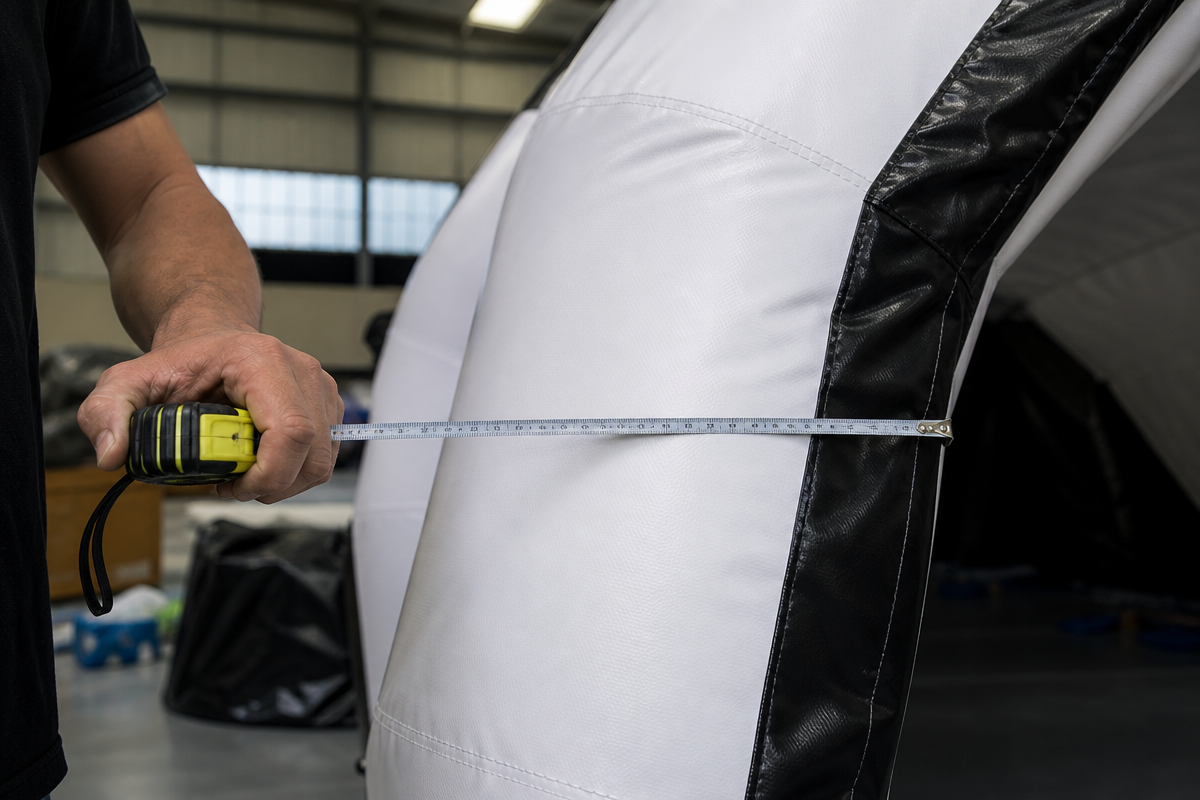
Start with the usable clear opening rather than the outside width. The opening must suit the expected route, entrance, aisle, finish line, or vehicle flow, while leaving room for anchoring points and the blower position.
Then confirm overall width and visible height. These dimensions affect the artwork area, footprint, packed volume, and whether the arch can be installed within the available site clearance.
How do clear opening and visible height work together?
The clear opening controls how people or vehicles pass through the arch. Visible height controls how the arch reads from a distance and how much room is available for printed sponsor graphics or logo placement.
InflatCraft uses a typical overall arch width of approximately 3–8 m as a starting reference. Final dimensions remain project-specific and should be checked against route width, viewing distance, installation space, and transport limits.
Which site details can change the final arch size?
Indoor and temporary outdoor installations need different checks. Confirm ceiling height or overhead clearance, surface type, available footprint, anchoring approach, expected use conditions, blower cable routing, and access for setup.
For outdoor use, reinforced anchoring points, D-rings, ropes, and project-appropriate accessories are selected with the site surface and expected conditions in mind. No universal wind rating should be assumed.
How do packing and destination affect the specification?
A larger arch changes packed volume, accessory requirements, and freight options. The final quote should confirm the heavy-duty carry bag, export carton, repair material, packed volume, destination voltage, and the selected shipping method.
Typical production lead time is 3–8 days for simple items, 7–15 days for standard custom work and 15–25 days for complex or large pieces after final artwork, dimensions, and technical specification approval, while larger quantities or special printing can require additional time.
Product Buying Guides
More on choosing and ordering custom inflatables.
Inflatable Arch vs Air Dancer
A format comparison based on entrance framing, movement, viewing distance, footprint, blower setup, anchoring, and buyer intent.
Event Decor vs Custom Advertising Inflatables
How decorative event elements differ from specification-led custom advertising inflatables used for brand visibility, product recognition, and repeat deployment.
Square vs Round vs Angled Inflatable Arch Styles
How square, round and angled inflatable arches differ in look, footprint and print space, and which style suits races, entrances and trade shows.
Small Custom Inflatables for Retail Displays
Small custom inflatables for counters, windows and shelves: practical sizes, which shapes work, print detail, MOQ and when they are the wrong choice.
Compare sizes, materials and air systems on the custom advertising inflatable product range page before sending an RFQ.
Relevant Product Pages
Compare specifications before submitting an RFQ.
Related Project Example
Buyer FAQ
